A-B-C Blog
10 Best Case Erector Machines for Global Buyers?
Choosing among the 10 Best Case Erector Machines for Global Buyers requires more than comparing catalog prices. A reliable Case Erector Machine must match carton dimensions, board quality, production speed, and available floor space. It should also support stable forming during long shifts.
Packaging automation consultant Daniel Mercer explains, “The best case erector is not the fastest machine; it is the one that keeps forming accurately when conditions change.” This practical view matters. Cartons may arrive with slight warping, dusty surfaces, or inconsistent creases. A machine that performs well only in a showroom may disappoint on a busy factory floor.
This guide examines machines through measurable buying criteria. These include forming speed, changeover time, tape or hot-melt sealing, servo control, sensor accuracy, and operator access. Maintenance needs also deserve attention. A guarded drive system, clear fault messages, and accessible wear parts can reduce unnecessary downtime.
Global buyers must consider more than machine specifications. Local technical support, spare-parts availability, electrical compatibility, documentation, and training can influence the total cost of ownership. A low purchase price may become expensive after repeated stoppages or delayed service.
No ranking is perfect. That deserves attention.
Some factories need compact equipment for limited space. Others require high-speed systems for continuous case packing. The following selection compares practical strengths and limitations, helping buyers identify a Case Erector Machine that fits their products, workforce, and long-term operating conditions. Real production trials remain essential before any final purchase.
What Is a Case Erector Machine and How Does It Work?
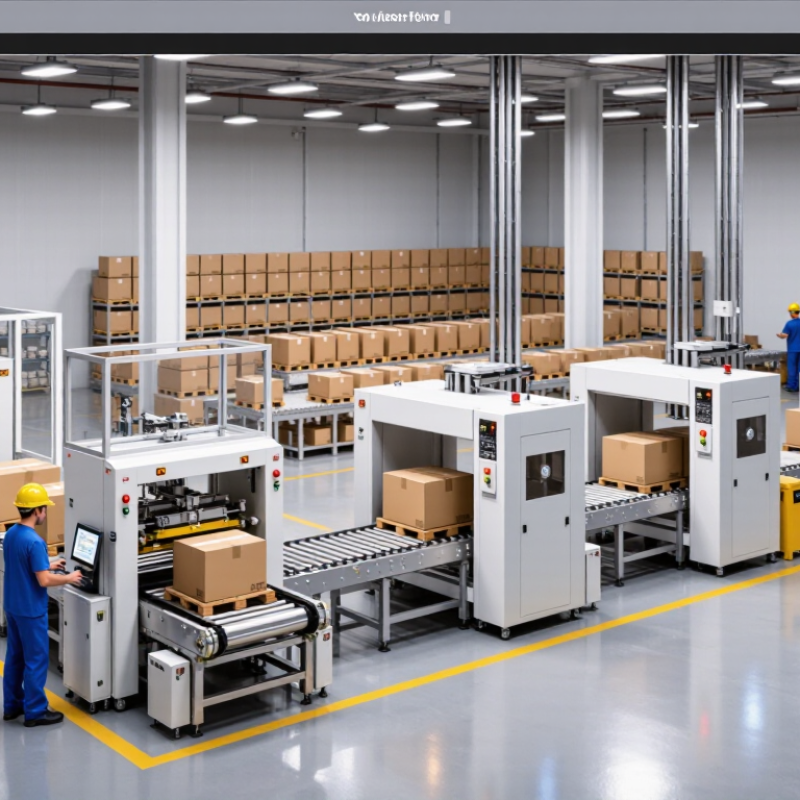
A case erector machine automatically opens, squares, folds, and seals flat corrugated cartons. It replaces repetitive manual setup with controlled mechanical movements. The process starts in a carton magazine. Suction cups or belts separate one blank and move it toward the forming station. Guides then square the carton before lower flaps fold into position.
Most machines use pressure-sensitive tape or hot-melt adhesive for sealing. A PLC coordinates sensors, drives, and safety interlocks. Photoelectric sensors check carton presence and flap position. If a blank arrives crooked, the system should stop or reject it. Small details matter. A two-millimeter guide error can create unstable boxes.
Smithers’ Future of Corrugated Packaging to 2028 report projects the global corrugated packaging market will exceed 200 billion US dollars by 2028. This growth increases interest in automated case forming. PMMI industry reports also identify labor availability and packaging-line efficiency as major automation drivers. However, speed alone can mislead buyers. A machine rated at 30 cases per minute may perform slower with recycled board, mixed sizes, or weak creases.
Global buyers should compare carton dimensions, board grades, changeover time, air consumption, and sealing quality. Ask for a test using your actual cartons. A fast machine can still be wrong. Real production conditions expose problems that brochures often hide. Nakne? That assumption needs checking. Rugged design, clear controls, and accessible spare parts usually matter more than impressive headline speed.
Key Features to Compare in Case Erector Machines
When comparing case erector machines, start with the cartons you actually use. Measure length, width, height, board thickness, and joint quality. A machine rated for broad sizes may still struggle with soft or slightly warped corrugated board.
Speed matters, but stable feeding matters more. Check the practical output under normal production conditions, not only the advertised maximum. Ask how quickly operators can change carton sizes. A tool-free adjustment system can reduce downtime during mixed orders. Watch the forming process closely. Flaps should fold squarely, without crushing corners or leaving open seams.
Adhesive or tape systems also deserve careful comparison. Confirm sealing consistency at different speeds and temperatures. Inspect sensors, jam detection, guarding, and emergency stops during a live test. These details protect operators and reduce damaged cartons. Maintenance access should be simple, with clear lubrication points and replaceable wear parts. Request power consumption data and control-system documentation before purchase.
In plant evaluations, I have found that a machine’s weakest carton often reveals its real value. It may run perfectly with strong board, then misfeed after a small material change. That is easy to overlook. Ask for sample testing using your own cartons. Review installation requirements, operator training, spare-part availability, and remote support across regions. A polished demonstration helps, but production evidence is better.
10 Best Case Erector Machines for Global Buyers
Global buyers need more than high speed when selecting case erector machines. Carton size range, sealing accuracy, changeover time, and local service matter equally. Fortune Business Insights valued the global packaging machinery market at about USD 45.92 billion in 2023. It also projects continued growth through 2032. This expansion increases equipment choices, but not every machine suits every factory.
The strongest options usually combine servo-driven movements, tool-free adjustments, and reliable carton detection. Look for machines that handle recycled corrugated board, because board quality can vary between suppliers. A practical target is stable operation above 15 cases per minute, although real output depends on carton design and operator skill. Safety guarding, clear fault messages, and remote diagnostics can reduce unnecessary downtime. These features often matter more than a higher advertised speed.
Tips: Request production samples before purchasing. Test your smallest and largest cartons. Measure changeover time with a real operator. Review spare-part delivery terms in writing. PMMI industry reports continue to identify labor availability and automation as major packaging priorities. However, automation is not maintenance-free. A poorly specified erector may create jams, waste cartons, and frustrate workers. That uncomfortable detail deserves attention. Choose measurable performance over attractive brochures.
10 Best Case Erector Machines for Global Buyers
Comparison of representative case-erector configurations by typical rated output.
The chart compares commonly available case-erector configurations using typical rated speeds in cases per minute. Actual performance depends on carton dimensions, board quality, adhesive or tape selection, changeover time, and production-line conditions.
How to Match Machine Types With Packaging Requirements
Choosing a case erector starts with the carton, not the machine. Record box length, width, height, board grade, flap design, and required output. A fixed-size intermittent-motion erector suits stable production. A servo-controlled model fits mixed carton sizes and frequent changeovers. Robotic forming can support unusual formats, but it usually needs more floor space and integration work.
Throughput must match the complete line. A machine rated at 30 cases per minute may slow down with warped board, dusty blanks, or manual loading. PMMI’s 2024 State of the Industry report valued U.S. packaging machinery shipments at approximately 10.2 billion dollars in 2023. The report also identifies labor availability and automation as major investment drivers. That data supports automation, but speed alone should not decide the purchase. An experienced operator may prefer steady 18 cases per minute over unstable peak performance. I would challenge any specification that ignores changeover time.
Tips: Test your actual cartons. Measure changeover in minutes. Confirm glue or tape compatibility. Ask for performance data using your board grade, not ideal samples. Keep 20 percent capacity headroom for seasonal demand. Also check controls, guarding, spare parts, and service response before comparing prices. A compact machine may appear efficient, yet a narrow infeed can create hidden labor costs. Specification sheets rarely show that clearly.
Global Purchasing Factors: Cost, Support, Safety, and Compliance
10 Best Case Erector Machines for Global Buyers?
Cost should begin with total cost of ownership, not the purchase quote. PMMI’s 2023 U.S. Packaging Machinery Shipments Study reported machinery shipments of about $10.2 billion in 2022. That growth reflects rising automation demand, but buyers still need practical calculations. Include tooling, freight, installation, training, spare belts, and compressed-air use. A machine running at 25 cases per minute may look attractive. It may fail when cartons vary by two millimeters. Request tested samples, changeover time, and energy data.
Support can decide whether production stops for two hours or two days. Check remote diagnostics, local technicians, response times, and spare-part stock near your plant. The IFR World Robotics 2023 report recorded 553,052 industrial robot installations worldwide in 2022. More automation also means higher expectations for controls expertise. Ask for electrical drawings, software backups, and operator training. Do not accept “global support” without service addresses and escalation contacts.
Safety and compliance require documented evidence. The supplier should provide a machine risk assessment aligned with ISO 12100, guarding details, emergency-stop tests, and safety-control validation under ISO 13849-1. Electrical documentation should address IEC 60204-1 and your destination’s conformity rules. Verify voltage, frequency, plug standards, noise, and guarding before shipment. No spreadsheet catches every jam. I would still question optimistic uptime claims, especially when carton dust, humidity, and inexperienced operators are ignored.
10 Best Case Erector Machines for Global Buyers? — Global Purchasing Factors: Cost, Support, Safety, and Compliance
Buyer-oriented comparison of common industrial case-erector configurations. Performance and pricing are indicative market ranges for new equipment and should be confirmed through a technical quotation, packaging trial, and site acceptance review.
| Rank | Machine configuration | Recommended application | Typical output | Case size range (L × W × H) |
Closure method | Carton specification | Indicative equipment cost (USD) |
Typical utilities | Safety and compliance priorities | Global buyer score |
|---|---|---|---|---|---|---|---|---|---|---|
| 1 | Automatic regular-slotted-carton erector with hot-melt sealing | High-volume food, beverage, and consumer-goods lines requiring consistent bottom sealing | 25–40 cases/min | 250–600 × 150–400 × 150–500 mm | Hot-melt adhesive; automatic flap folding | Single-wall corrugated board; commonly E, B, or C flute; approximately 32–44 ECT depending on load | $25,000–$65,000 | Electrical supply plus clean, dry compressed air; adhesive melting system | CE/UKCA reviewGuard interlocksEmergency stops | 9.2 / 10 |
| 2 | Fully automatic tape-sealing case erector | Warehouses and exporters seeking lower initial investment and simple consumables | 18–30 cases/min | 200–500 × 150–350 × 150–450 mm | Pressure-sensitive carton sealing tape | Regular slotted cartons with flat, uniform flaps; single- or double-wall board | $18,000–$45,000 | Electrical supply; compressed air may be required for pneumatic adjustments | Moving-part guardingTape-blade protectionElectrical conformity | 9.0 / 10 |
| 3 | Servo-driven high-speed case erector | Large distribution centers with multiple shifts and narrow speed tolerances | 35–55 cases/min | 250–700 × 180–450 × 150–600 mm | Hot-melt adhesive or integrated tape module | Consistent corrugated blanks with controlled moisture and dimensional tolerances | $55,000–$110,000 | Electrical supply and compressed air; servo motion control | Risk assessmentSafety PLCLockout/tagout | 8.9 / 10 |
| 4 | Compact intermittent-motion case erector | Small factories, contract packers, and production areas with limited floor space | 10–20 cases/min | 180–450 × 120–300 × 120–400 mm | Tape or hot-melt adhesive, depending on configuration | Light- to medium-duty single-wall cartons with stable dimensions | $12,000–$32,000 | Electrical supply; low-to-moderate compressed-air demand | Compact guardingOperator access controlManual reset | 8.7 / 10 |
| 5 | Servo case erector for mixed carton sizes | E-commerce and third-party logistics operations handling frequent SKU changes | 15–35 cases/min | 200–650 × 150–450 × 120–550 mm | Hot-melt adhesive; recipe-based format changes | Multiple regular-slotted-carton formats; barcode or recipe selection may be integrated | $40,000–$90,000 | Electrical supply, compressed air, and controls-network connection where required | Recipe access controlGuard monitoringChangeover validation | 8.6 / 10 |
| 6 | Heavy-duty case erector for double-wall cartons | Industrial parts, chemicals, hardware, and export packaging with heavier case loads | 8–18 cases/min | 250–800 × 180–550 × 200–700 mm | Hot-melt adhesive, reinforced tape, or combined closure | Double-wall corrugated board, often B/C, BC, or equivalent heavy-duty construction | $35,000–$80,000 | Electrical supply and higher-capacity compressed air | Structural guardingLoad-rated componentsDust management | 8.5 / 10 |
| 7 | Stainless-steel hygienic case erector | Food, beverage, nutraceutical, and other washdown-sensitive environments | 12–30 cases/min | 220–600 × 150–400 × 150–500 mm | Hot-melt adhesive or tape, selected for the hygiene zone | Clean, dry corrugated cartons; material and adhesive must suit the production environment | $45,000–$100,000 | Electrical supply and oil-free or suitably filtered compressed air | Washdown designFood-contact reviewHygienic construction | 8.4 / 10 |
| 8 | Robotic case-forming cell with integrated blank handling | Flexible lines that combine case forming with robotic loading or palletizing | 10–25 cases/min | 200–700 × 150–500 × 150–650 mm | Hot-melt adhesive or tape; robotic or pneumatic flap control | Multiple carton styles, provided blank quality and dimensional consistency are controlled | $70,000–$160,000 | Electrical supply, compressed air, and robot-control integration | Robot safeguardingSafety-rated scannersCell risk assessment | 8.3 / 10 |
| 9 | Low-level carton magazine case erector | Lines where operators need easy access for carton replenishment and visual monitoring | 12–25 cases/min | 200–550 × 150–400 × 150–500 mm | Tape or hot-melt adhesive | Regular slotted cartons with reliable blank separation and flat magazine loading | $20,000–$50,000 | Electrical supply; compressed air depending on actuation design | Ergonomic loadingGuarded drivesEmergency-stop circuit | 8.1 / 10 |
| 10 | Modular case erector for line integration | Global buyers requiring compatibility with conveyors, fillers, checkweighers, and palletizers | 15–40 cases/min | 200–700 × 150–450 × 150–600 mm | Interchangeable tape or hot-melt sealing module | Standard corrugated cases; integration depends on carton strength and line-control protocol | $30,000–$85,000 | Electrical supply, compressed air, and industrial communication interface | Interface documentationCE/UKCA reviewMachine-network security | 8.0 / 10 |
Related Posts
-
Top 10 Carton Erecting Machines You Should Know About?
-
Envisioning Tomorrow: The Evolution of Case Erector Machines in Packaging Industries
-

7 Essential Insights for Sourcing the Ideal Case Erector Machine Globally
-
Case Erector Machine Top Tips for Optimal Efficiency?
-
2025 Breakthroughs in Industrial Packing Machines: A Comprehensive Guide for Businesses
-
15 Best Pallet Dispenser Machines for Efficient Packaging Solutions