A-B-C Blog
2026 Best Types of Animal Ear Tags for Livestock
Choosing the right livestock ear tag affects more than identification. It can shape daily handling, record accuracy, and the time needed to find an animal’s history. In 2026, producers can compare visual tags, electronic RFID tags, button-style designs, and durable metal options. Each type serves a different purpose. A bright visual tag may be easy to read from a pen gate, while an RFID tag can connect identification with digital records. The best choice depends on herd size, animal age, handling routines, and the equipment already in use.
This guide compares practical options and the details that matter in real conditions. We look at readability, retention, material, application tools, and compatibility with record systems. A tag that looks sturdy in a catalog still needs to fit the animal and remain legible after exposure to mud, sun, and routine movement. Small details count. Placement and application technique also influence comfort and retention, so follow the manufacturer’s instructions and seek trained guidance when needed. “Ear Tag Animal” searches may bring up many products, but the label alone does not tell you whether a tag suits cattle, sheep, goats, or pigs. No single design is perfect. Even careful buyers can overlook a detail, and farm conditions are rarely as tidy as product photos suggest. Use the comparisons here to narrow your options, then check specifications against your own animals and workflow before buying.
How Livestock Ear Tags Identify and Track Animals
2026 Best Types of Animal Ear Tags for Livestock
Livestock ear tags connect an animal to its identification and health records. A printed number can be read from several steps away in a handling pen. Staff use it to check details such as birth date, vaccinations, breeding history, or weight. The number should match the animal’s record exactly. One swapped digit can create confusion later.
Electronic identification tags contain a unique code that a compatible reader can scan. When the tag is scanned, the code can link to a database or farm record. This helps staff update an animal’s location, treatment, or movement between groups. It does not automatically show the animal’s live location. Paper records and scanning routines still matter. A tag can also become hard to read if it is damaged or placed poorly.
Tips: Choose a tag size suited to the animal, and apply it in a clean, dry ear area according to the tag instructions. Check that it hangs clearly and does not press against the ear’s edge. Scan electronic tags after application, then compare the displayed code with the animal’s record. Small checks help. Even a careful system can miss a scan, so review records when something seems inconsistent.
Visual, Electronic, and Hybrid Ear Tag Types
Visual ear tags use large, contrasting numbers that workers can read across a pen or race. They suit farms where quick visual checks matter more than automated records. Choose a size that remains visible after mud, rain, and ordinary wear. A tag that looks clear indoors may be harder to read in a crowded yard. Easy to inspect. Yet handwriting or manual entry can still create record errors.
Electronic ear tags store an identification number that a compatible reader can capture. They can reduce repeated typing during weighing, treatment, or movement checks. Their usefulness depends on reader placement, battery design, and reliable record-keeping routines. Staff should test the reading process in the actual handling area, not just in an office. Still, not magic. A missed scan or mismatched record can undermine the time saved.
Hybrid tags combine a visible number with electronic identification, giving staff a backup when a reader is unavailable. This can be practical for mixed workflows, especially when animals move between pens and equipment. The extra cost and handling details deserve consideration, and a larger tag may not suit every animal. There is no perfect type for every herd. Think about animal comfort, visibility, data needs, and daily routines before choosing.
Tag Materials, Designs, and Attachment Systems
A good livestock ear tag must remain readable after rain, dust, rubbing, and months outdoors. Flexible plastic tags are common because they bend with the ear, while harder materials can suit specific handling needs but may feel less forgiving. Look closely at UV resistance, cold-weather flexibility, edge shape, and print contrast. A number that fades or folds against the ear is not useful.
Attachment design matters just as much. Two-piece tags use a male pin and female panel; a well-matched applicator helps create a secure fit without excessive pressure. RFID tags add electronic identification, but the antenna and tag orientation affect scanning. USDA NASS estimated 87.2 million U.S. cattle and calves in its January 2024 Cattle report. That inventory report does not compare tag performance, but it shows the scale at which lost or unreadable tags can create extra work. Small failures add up. Check fit on the animal, not only the tag’s catalog dimensions; ear thickness and placement vary, and a “universal” fit may not be universal.
2026 Best Types of Animal Ear Tags for Livestock
Tag Materials, Designs, and Attachment Systems
Typical density values are approximate and vary by formulation or alloy. Flexible polyurethane and TPU are commonly used for tag bodies; aluminum and stainless steel may be used in metal tags or components. Density alone does not indicate durability or animal suitability. Choose the tag design and one-piece or two-piece attachment system for the species, identification requirements, and compatible applicator.
Choosing Ear Tags by Species and Management Needs
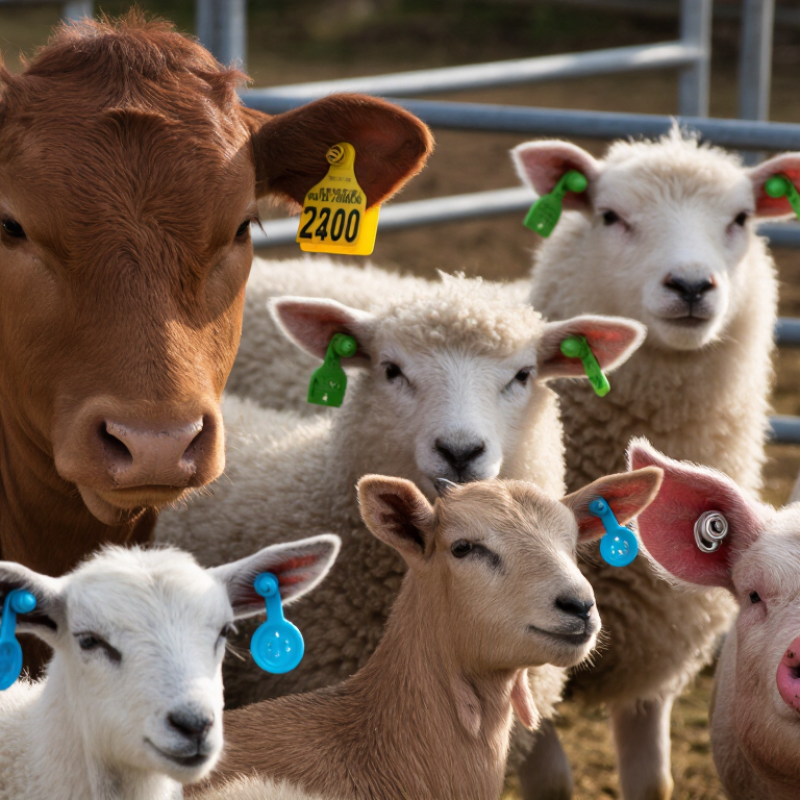
Choosing ear tags by species starts with ear size, coat, and handling routines. Cattle often need large, readable visual tags that can be identified across a pen or pasture. Electronic RFID tags can speed up scanning when records or weighing systems use digital identification. For sheep and goats, choose a lighter, appropriately sized tag; bulky designs may snag in fleece or brush. Fit matters.
Pigs may need secure tags that remain legible in close-contact housing, while smaller ears call for careful sizing. Match the tag style to the job. Visual tags suit quick sorting; RFID supports digital records. Paired tags help teams that use both. Check readability from a normal working distance. Mud can hide a number. Consider applicator compatibility, tag retention, and how replacement tags will be recorded.
Management needs matter just as much as species. Breeding groups, treatment records, pen movements, and long-term tracking may require different levels of detail. Check that the tag and placement guidance suit the animal and applicable identification requirements. Ask a veterinarian or qualified livestock adviser if uncertain. Keep spare tags and a consistent numbering log. There is no perfect tag. A tag that works well on one farm may be awkward on another, especially when staff wear gloves or animals pass through narrow races. Review lost-tag rates and scanning errors after a season, then adjust the system.
Tagging Practices, Recordkeeping, and Animal Welfare in 2026
2026 Best Types of Animal Ear Tags for Livestock
Tagging Practices, Recordkeeping, and Animal Welfare in 2026
A useful ear tag does more than display an ID. It links an animal to health treatments, breeding dates, movement records, and sale information. USDA’s 2022 Census of Agriculture counted 87.2 million cattle and calves on U.S. farms, illustrating the scale of livestock recordkeeping. For each animal, record the tag number, application date, and any replacement. USDA APHIS’s traceability requirements, effective November 2024, call for visually and electronically readable official tags for certain cattle and bison moving interstate. Requirements vary by animal and movement, so confirm current guidance before selecting tags.
Welfare begins with handling. Restrain animals calmly, use a clean applicator, and place the tag according to its instructions. Check for bleeding, swelling, or a tag that catches on fencing. Small details matter. A lost tag can break a record chain; an overly tight or poorly placed tag can irritate the ear. Visual tags are easy to read at close range, while RFID tags can speed electronic data entry. Neither helps if staff skip updates. That part is easy to overlook.
Tips: Keep a backup list linking tag IDs to animal records. Check tags during routine handling, and replace damaged ones promptly. Note who made each change. Imperfect records happen; date-stamped corrections make them easier to review.
2026 Best Types of Animal Ear Tags for Livestock - Tagging Practices, Recordkeeping, and Animal Welfare in 2026
| Ear Tag Type | Common Livestock Uses | What It Records or Enables | Practical Strengths | Limitations and Welfare Practices |
|---|---|---|---|---|
| Visual numbered tags | Cattle, sheep, goats, and pigs where visual identification is suitable. | A printed identification number linked to an animal record, such as birth date, treatments, breeding, or movements. | Simple to inspect and use without an electronic reader; can be paired with a farm’s written or digital records. | Numbers may become dirty, faded, or difficult to read. Check legibility during routine handling and use a properly sized tag and applicator for the species. |
| Electronic identification (RFID) tags | Cattle, sheep, and goats in systems that use electronic identification; approved tag requirements depend on the jurisdiction and animal category. | A unique electronic identifier that can be read by a compatible reader and linked to digital animal records. Some official systems use ISO 11784/11785-compatible devices. | Can speed up individual identification and reduce manual number entry when paired with suitable readers and recordkeeping software. | Requires compatible equipment and a reliable process for backing up records. Confirm local approval and reader compatibility; the tag itself does not automatically create complete health or movement records. |
| Two-piece panel tags | Commonly used for cattle and other animals where a larger visible surface is useful. | A large visual number or management code; some formats can be combined with electronic identification. | The broad panel can make the number easier to see at a distance than a small tag. | A larger tag can snag or be lost in some environments. Choose an appropriate shape and size, apply it in the recommended ear position, and inspect for irritation or injury. |
| Management or color-coded tags | Farm-level grouping and visual management across cattle, sheep, or goats. | A color or short code can indicate a group or task, such as a breeding group or a follow-up check, when the meaning is documented. | Provides a quick visual cue during routine checks and can complement an official identification method. | Color alone is not a unique animal identifier. Keep a written color-code key and link any management tag to the animal’s primary identification number. |
| Tamper-evident official identification tags | Animals subject to official identification and traceability requirements, depending on local rules. | An official identifier used to support regulated identification and traceability records. | Designed for official identification workflows and may help show whether a tag has been removed or replaced. | Rules for tag type, timing, placement, replacement, and reporting vary by jurisdiction. Check current requirements with the relevant animal-health authority before tagging or replacing a tag. |
| Small-format tags for sheep and goats | Sheep and goats, with tag size and format selected for the animal and any applicable identification rules. | A visible or electronic individual identifier, depending on the tag format and local system. | Species-appropriate formats can reduce unnecessary tag bulk while still supporting identification. | Use a tag and applicator intended for the animal’s size. Avoid tagging through damaged tissue, follow hygiene instructions, and check young animals after application. |
| Replacement identification tags | Any tagged livestock that has lost a tag or has an unreadable identifier. | Restores identification and maintains a record of the old and new identifiers when required. | Helps keep animal records usable when an original tag is missing or damaged. | Verify the animal’s identity before replacement, record the date and reason, and follow official rules on replacement identifiers and notifications. |
Good practice in 2026: use clean, well-maintained applicators; follow the tag maker’s application instructions and local regulations; restrain animals calmly; and check tagged ears during routine handling for swelling, discharge, tearing, or a lost tag. Keep identification numbers, tag changes, treatments, movements, and other required events in accurate, securely backed-up records. Requirements vary by jurisdiction and species.