A-B-C Blog

2026 Best Walnut Food Suppliers for Global Buyers?

Choosing a walnut supplier in 2026 takes more than comparing prices. Buyers need dependable harvest volumes, clear grading, food-safety documentation, and shipping that protects quality. Walnut Food products may arrive as whole kernels, halves, pieces, or in-shell nuts, and each format suits different buyers. A bakery may prioritize color and breakage rates. A retailer may focus on packaging, origin, and shelf life. Small details matter.

Industry reports help frame the search. The USDA Foreign Agricultural Service’s 2024/25 Tree Nuts Annual reports track walnut production, trade, and supply conditions across major producing countries. FAOSTAT provides longer-term agricultural production data, while International Trade Centre Trade Map can help buyers examine export patterns. These sources offer useful context, but they do not certify an individual supplier. Figures can also vary by reporting period and whether walnuts are measured in-shell or as kernels. That is not always neat.

This guide highlights suppliers for global buyers and outlines practical checks before requesting samples or quotations. Compare kernel size, moisture specifications, harvest timing, processing capacity, and lot traceability. Ask for current food-safety certificates and recent test documentation, then confirm that the documents match the product and facility being offered. A polished website is not proof. Neither is a low quotation. Reliable sourcing takes evidence, careful questions, and, occasionally, a second look.

2026 Best Walnut Food Suppliers for Global Buyers?

Understanding the Global Walnut Supply Landscape

Walnut supply is shaped by geography, harvest timing, and the form buyers need. Production spans China, the United States, Chile, and parts of Europe and Central Asia. Harvest calendars differ by region, so overlapping seasons can help buyers plan, but they do not guarantee steady availability. Weather can reduce yields or affect kernel color, size, and shell quality. Small details matter.

The market includes in-shell walnuts and kernels, sold in different sizes, colors, and grades. Buyers should compare written specifications, not just quoted prices. Ask about moisture limits, sorting methods, recent test results, packaging, and storage conditions. Fresh samples can reveal rancidity or broken pieces that a product sheet may not show.

That is not always easy. Transport time, temperature changes, and warehouse handling can alter quality after harvest. Reliable suppliers should explain where a lot came from and how it was handled, with records that can be checked. Certifications may support a review, but they do not replace lot-specific checks.

A supplier’s available volume can also change quickly; planning around one harvest estimate may prove too optimistic.

Identifying Supplier Types and Walnut Product Specifications

Global walnut sourcing starts with identifying what kind of supplier controls the product. Growers and cooperatives offer closer access to harvest conditions, while processors sort, dry, grade, and pack kernels. Exporters may combine lots from several farms, which can improve volume but complicate traceability. The International Nut and Dried Fruit Council’s 2024 statistical yearbook puts global walnut production at roughly 2.7 million metric tons for the 2023/24 season, measured in-shell. That is a large crop. But it does not mean every supplier can provide matching kernel grades or steady delivery.

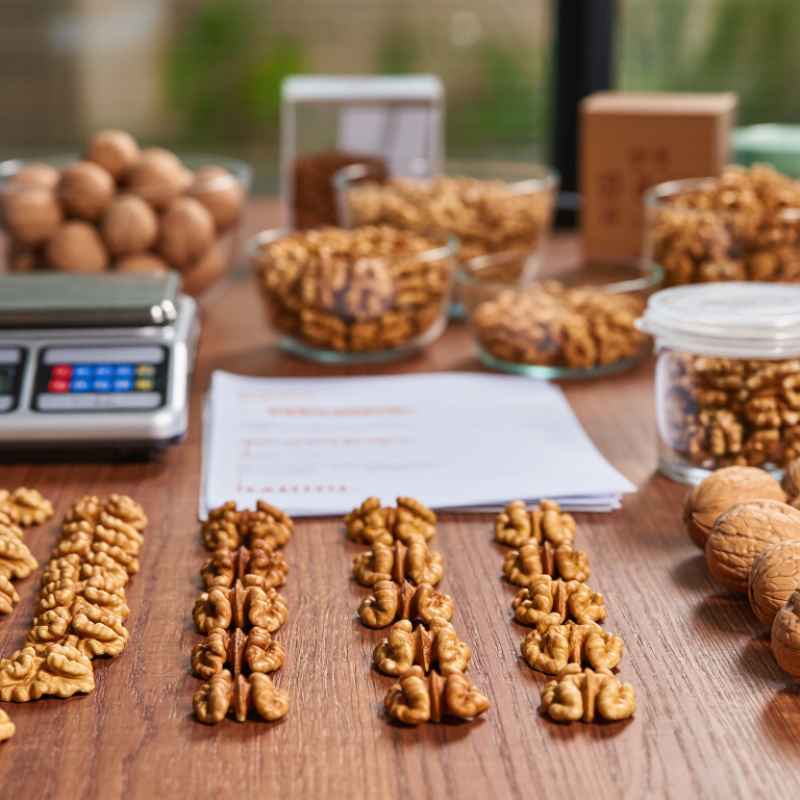
Buyers should specify whether they need in-shell walnuts or kernels, then define halves, quarters, or pieces. Record the required color, size range, moisture limit, packaging, crop year, and tolerances for broken or damaged kernels. Ask for recent lot photographs and a representative sample, not only a polished product sheet. A specification without a sampling method leaves room for disagreement. USDA Foreign Agricultural Service market reports distinguish in-shell production and trade data; buyers should not compare those figures directly with kernel shipment weights.

For each lot, request a certificate of analysis covering moisture and relevant food-safety tests, plus harvest and packing dates. Confirm how the supplier segregates lots and handles complaints. A few darker kernels may be acceptable for one use and costly for another. Specs are not perfect; agree on inspection methods before shipment, and document any exceptions in writing.

2026 Best Walnut Food Suppliers for Global Buyers? Identifying Supplier Types and Walnut Product Specifications

Raw English walnuts provide about 65.21 g fat, 15.23 g protein, 13.71 g carbohydrates, and 6.7 g fiber per 100 g. Fiber is part of total carbohydrates, so these values are not additive. Nutrition figures are from USDA FoodData Central. Global buyers commonly source from growers or processors, export specialists, and trading companies; compare product form, origin, moisture, size, color, defect limits, packaging, and food-safety documentation in each specification.

Source: USDA FoodData Central — walnuts, English, raw.

Assessing Quality Standards, Certifications, and Traceability

For global buyers, walnut quality should be verified lot by lot, not judged by appearance alone. Ask suppliers for written specifications covering moisture, size, color, foreign matter, and packaging. Recent laboratory reports can help confirm microbiological and chemical results. Check that the testing method, sample date, and lot number are clearly stated. A certificate matters only when its scope covers the product and facility being offered.

Tips: Request a sample from the same production lot as the shipment. Match its lot code against the test report and packing documents. Confirm certification status directly with the issuing body, where possible.

Traceability should connect each carton to its processing site, production date, and harvest or raw-material records. Ask how quickly the supplier can identify affected lots and provide supporting documents. Keep those records with your purchase file. A polished certificate is not the whole story. Harvest conditions can change flavor, color, and breakage rates, even when paperwork looks consistent. Buyers should compare samples across seasons and document any agreed tolerances. Some records may arrive late; treat that as a gap to resolve, not a detail to overlook.

Comparing Supplier Capacity, Pricing, and Export Logistics

For global walnut buyers, supplier capacity should mean more than a large crop estimate. USDA NASS forecast California’s 2024 walnut production at 670,000 tons. That figure offers useful context, but it does not confirm any supplier’s available export volume. Ask for monthly shipment capacity, current inventory, kernel grades, and recent inspection records. Small details matter. A clear capacity schedule can reveal whether a supplier can meet a repeat order without mixing lots. Pricing also needs careful comparison. Request quotes that separate product cost, packing, inland transport, and ocean freight. Walnut prices can shift with crop quality, moisture, and grade, so a low headline price may hide costly specifications.

Export logistics deserve equal weight. The World Bank’s 2023 Logistics Performance Index assessed 139 economies across six areas, including customs, infrastructure, and shipment timeliness. Use those categories as prompts when checking a supplier’s route and freight partners. Ask for the named port, typical transit time, container conditions, and a plan for delays. Confirm that lot numbers and quality documents match the shipment before loading. This takes time. It can prevent disputes later. One limitation is that published logistics rankings describe national systems, not a particular exporter’s service. A supplier may still perform well in a slower corridor—or disappoint on a fast one. Compare recent shipment records with the quoted schedule, and leave room for imperfect estimates.

2026 Best Walnut Food Suppliers for Global Buyers? — Comparing Supplier Capacity, Pricing, and Export Logistics

This comparison covers sourcing origins and product categories, not individual companies. Harvest windows are indicative and vary by cultivar and growing area. Walnut prices change with crop, grade, origin, currency, and shipment terms; obtain a current, written quotation before making a purchase decision.

Sourcing profile Typical product options Supply capacity checks Pricing comparison Export logistics to confirm Best suited to
United States origin
Major commercial walnut-growing origin; harvest is generally in the Northern Hemisphere autumn.
In-shell walnuts; kernel halves, quarters, and pieces; conventional and certified-organic options may be available depending on the supplier. Request the supplier’s committed volume by crop year, available pack sizes, current inventory, and evidence that the offered lot is allocated to your order. No reliable fixed 2026 price applies across grades. Compare like-for-like quotes by variety, color, size, defect limits, packaging, crop year, and Incoterm. Confirm export eligibility for the destination, phytosanitary and food-safety documents, packing details, transit plan, and whether the quote is FOB, CFR, or CIF. Buyers seeking a range of kernel specifications and established export documentation processes.
China origin
Large walnut-producing origin; crop timing is generally in the Northern Hemisphere autumn and varies by region.
In-shell walnuts and kernels in whole, half, and broken-piece grades; exact grade definitions should be stated in the sales specification. Verify the exporter’s own processing capacity separately from its stated sourcing volume. Ask for lot-level stock, production schedule, and recent inspection records. Request separate prices for in-shell and kernel products. Processing yield, kernel color, breakage, cleaning, and packaging can materially affect the quoted price. Check destination-country import rules, required certificates, labeling language, container loading plan, and any inspection or testing requirements before shipment. Buyers comparing multiple kernel grades or considering larger-volume sourcing, subject to lot and compliance verification.
Chile origin
Southern Hemisphere origin; harvest generally falls in the first half of the calendar year, with timing varying by area and season.
In-shell walnuts and kernels; availability of particular sizes, colors, and organic certification depends on the crop and supplier. Confirm the current crop’s available tonnage, packing schedule, and whether the supplier can maintain the same specification across repeat shipments. Compare the same grade and delivery basis. Include ocean freight, insurance where applicable, and any destination-side charges when comparing landed cost. Ask for estimated sailing schedule and transit time for the specific route, plus the required export and phytosanitary documents for the destination market. Buyers planning Southern Hemisphere seasonal coverage or looking to balance sourcing across harvest periods.
Turkey origin
Walnut supply can include domestic production and traded product; origin and crop year should be stated clearly for each lot.
In-shell walnuts and kernel grades may be offered; confirm whether the product is locally grown, imported, or blended before contracting. Request traceability to growing origin, warehouse location, available quantity, and confirmation that proposed volumes are physically available. Compare origin, crop year, grade, and delivery terms. Do not compare a broker’s indicative offer with a confirmed, inspected lot as if they were equivalent. Confirm the actual port of loading, routing, customs documentation, food-safety requirements, and any restrictions applicable to the product’s declared origin. Buyers who value regional sourcing options and can verify origin and lot traceability before shipment.
Iran origin
Established walnut-growing origin; export availability and permissible trade routes depend on the destination and applicable regulations.
In-shell walnuts and kernels may be available in different grades; specification, origin, and crop year should be documented for each offer. Verify legal ability to transact, the exporter’s current export authorization where required, lot availability, and the identity of all parties involved in payment and shipment. Obtain a written, date-valid quotation with currency, payment terms, delivery basis, and any additional compliance-related costs clearly identified. Screen the transaction against applicable sanctions and import controls. Confirm acceptable banking, carrier, insurance, documentation, and destination customs arrangements before ordering. Buyers with established compliance procedures and the ability to clear all trade, banking, and shipping requirements in advance.
Kernel-focused processor
A supplier profile that may source raw walnuts from one or more origins and process them into buyer specifications.
Halves, quarters, pieces, and other agreed kernel grades; custom sorting, packaging, or certification may be possible if verified. Assess documented processing throughput, food-safety certification scope, traceability system, allergen controls, and capacity available during your required production window. Compare price per net kilogram on the same grade basis. Clarify moisture, color, defect tolerances, broken-kernel limits, and deductions for out-of-spec product. Agree pre-shipment inspection criteria, packaging material, palletization, container conditions, and the process for claims or replacement shipments. Food manufacturers and distributors needing consistent, specification-based kernel supply.
In-shell-focused supplier
A supplier profile specializing in whole walnuts for retail, food service, or further processing.
Whole in-shell walnuts graded by the specification agreed with the buyer; shell size, cleanliness, defects, and packaging should be defined in the contract. Check sorting and sizing capability, seasonal stock, pack-line capacity, and the supplier’s ability to preserve quality during storage. Compare by grade, size range, pack format, crop year, and net weight. Ask whether quoted pricing includes sorting, packaging, and export preparation. Confirm container loading, moisture protection, packaging suitability for the route, and the destination’s labeling and plant-health requirements. Retailers, wholesalers, and processors purchasing whole walnuts rather than ready-to-use kernels.

Selecting Suppliers for Different Global Buying Needs

Global buyers should match walnut suppliers to the job, not just the quoted price. FAOSTAT recorded roughly 3.8 million tonnes of in-shell walnuts worldwide in 2022. That broad supply base does not guarantee uniform kernel size, color, or harvest timing. For bakeries and snack manufacturers, request recent samples, defect limits, moisture specifications, and lot-level test records before agreeing on volume.

For bulk processing, prioritize steady shipments, documented traceability, and specifications suited to the end use. Ask whether the supplier can provide halves, pieces, or meal consistently, and how it controls moisture during storage. USDA Agricultural Marketing Service grade standards offer a useful reference for evaluating shelled walnuts, though buyers should also confirm requirements in their destination market. Check certificates of analysis against agreed limits; a certificate alone is not a substitute for representative sampling.

Retail-focused importers may need smaller, retail-ready packs, clear origin details, and packaging that protects kernels from light and crushing. Confirm pallet dimensions, loading plans, lead times, and contingency stock in writing. A low offer can look attractive until a delayed container disrupts a production schedule. I would compare suppliers using the same sample protocol and specification sheet. Still, paperwork can miss a real-world issue: the sample may not represent every lot. Recheck incoming shipments.