


Best Chemical Fertilizer Types for Buyers in 2026
Choosing the best Chemical Fertilizer in 2026 means matching nutrients to crops, soil conditions, and application timing. A bag marked 20-10-10 may suit one field but oversupply phosphorus in another. Buyers should compare guaranteed nutrient analysis, nitrogen forms, granule consistency, packaging, and delivery reliability. Check local soil-test results before ordering. Small differences matter.
The science behind modern fertilizers also matters. Historian and technology scholar Vaclav Smil wrote, “The Haber-Bosch process is the most important invention of the twentieth century.” His work highlights how nitrogen fertilizer reshaped food production, while also reminding buyers that supply chains depend on energy and manufacturing. Product choice still requires practical judgment. A soluble grade can support fertigation, while a granular blend may fit established spreading equipment. Confirm compatibility with your crop plan and machinery.
There is no universal best product. Not always. Compare cost per unit of available nutrient, not just price per bag. Ask suppliers for current specifications, storage guidance, and batch documentation. For urea, ammonium nitrate, or NPK blends, review nitrogen content and relevant handling instructions. Keep records of rates, dates, and field response. The numbers can mislead. Weather, soil pH, and application losses can change results, and even experienced buyers sometimes misjudge a season. This guide examines leading fertilizer types, their strengths, trade-offs, and the questions worth asking before a 2026 purchase.
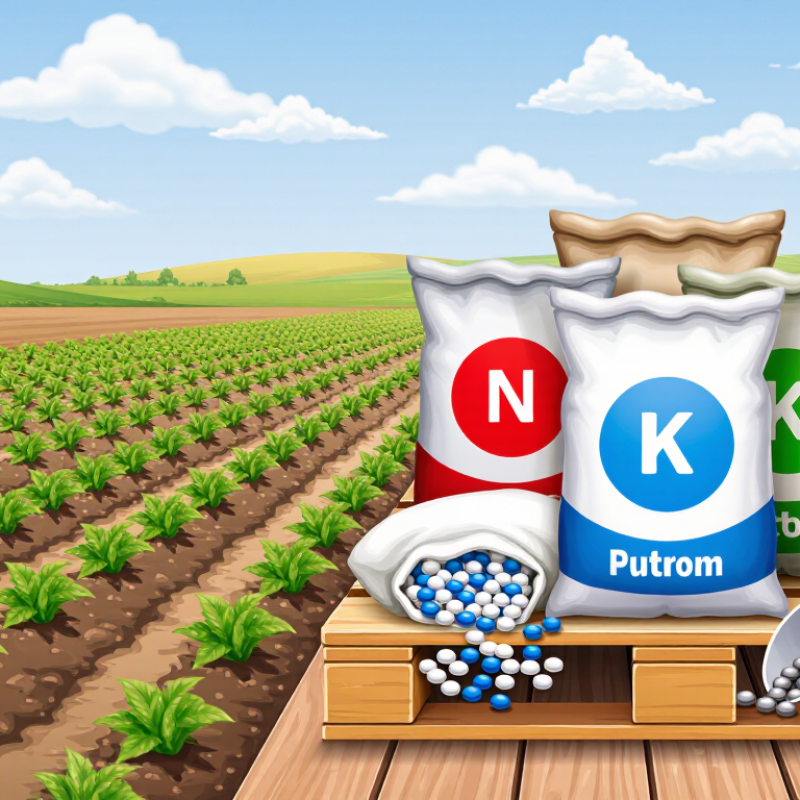
How Chemical Fertilizers Are Classified by Nutrient Content
Chemical fertilizers are commonly classified by their guaranteed nutrient content. On many labels, three numbers show nitrogen, phosphate, and potash percentages by weight. This N-P2O5-K2O order uses oxide equivalents for the last two nutrients. A 15-15-15 grade provides equal labeled proportions of all three. Urea marked 46-0-0 is a concentrated nitrogen fertilizer, not a complete one. Numbers matter.
By nutrient profile, products may be nitrogen-based, phosphorus-based, potassium-based, or multi-nutrient. Compound fertilizers contain multiple nutrients in each granule, while blended grades mix separate fertilizer granules. Some products also supply calcium, sulfur, magnesium, or micronutrients such as zinc. These additions are useful when soil tests or crop needs point to a specific gap. A high number is not automatically better.
Compare the grade with the crop’s nutrient demand and soil results, then check the recommended application rate. Nutrient percentages alone do not show how quickly nutrients become available or how they may be lost after application. I would not treat a label as a full recommendation; it leaves important field conditions out. Check product directions and regional agronomic guidance, especially when soil conditions vary across a field.
Best Chemical Fertilizer Types for Buyers in 2026 — How Chemical Fertilizers Are Classified by Nutrient Content
Fertilizer grades show the percentage by weight of nitrogen (N), available phosphate expressed as P2O5, and soluble potash expressed as K2O, in that order. Values below are common representative analyses; exact guaranteed analyses can vary by product and market. Select a grade based on soil-test results and crop requirements.
| Nutrient classification | Fertilizer type | Typical grade (N–P2O5–K2O) | Main nutrient contribution | Common use considerations | Buyer checks |
|---|---|---|---|---|---|
| Nitrogen fertilizer | Urea | 46–0–0 | High-concentration nitrogen | Used for a range of crops and application programs. Nitrogen can be lost as ammonia if urea remains on the soil surface under conditions that favor volatilization. | Check whether incorporation, rainfall, or an appropriate urease inhibitor is needed for the intended application. |
| Nitrogen fertilizer with sulfur | Ammonium sulfate | 21–0–0 | Nitrogen and approximately 24% sulfur in common grades | Can supply sulfur as well as nitrogen. Its acidifying effect may be relevant with repeated use, depending on soil conditions and application rate. | Confirm sulfur content and account for both nutrients in the fertilizer plan. |
| Nitrogen fertilizer | Ammonium nitrate | 34–0–0 | Readily available nitrogen in ammonium and nitrate forms | Used where permitted and suitable for the crop and application system. Product availability and regulations differ by location. | Verify local legal requirements, storage rules, and the guaranteed analysis before purchase. |
| Phosphate fertilizer with nitrogen | Diammonium phosphate (DAP) | 18–46–0 | Nitrogen and concentrated phosphate | Commonly used as a pre-plant or starter phosphate source. Placement should be managed to avoid excessive fertilizer contact with seed. | Include its nitrogen contribution when calculating total nitrogen application. |
| Phosphate fertilizer with nitrogen | Monoammonium phosphate (MAP) | 11–52–0 | Nitrogen and concentrated phosphate | Used in blends and starter programs where both nitrogen and phosphate are required. | Compare the guaranteed analysis and suitability for the crop, soil, and placement method. |
| Phosphate fertilizer | Triple superphosphate (TSP) | 0–46–0 | Concentrated phosphate without nitrogen or potash | Useful when phosphate is needed without adding nitrogen or potassium. | Check soil-test phosphate levels and the product’s stated available phosphate analysis. |
| Potassium fertilizer | Muriate of potash (potassium chloride) | 0–0–60 | Potassium; common grades contain about 60% K2O equivalent | A widely used potassium source for many crops. Chloride sensitivity varies among crops and growing conditions. | Consider crop sensitivity to chloride and the soil’s salinity and drainage conditions. |
| Potassium fertilizer with sulfur | Sulfate of potash (potassium sulfate) | 0–0–50 | Potassium and commonly about 17–18% sulfur | Provides potassium without chloride and can supply sulfur where needed. | Compare the cost per unit of potassium and sulfur with other suitable sources. |
| Compound NPK fertilizer | Balanced NPK grade | 15–15–15 | Equal stated percentages of N, P2O5, and K2O | May suit crops or fields that require all three primary nutrients in similar proportions; it is not a universal formulation. | Match the grade to soil-test recommendations to avoid applying excess nutrients. |
| Compound NPK fertilizer | High-nitrogen NPK grade | 20–10–10 | More nitrogen than phosphate or potash by stated grade | Can be considered where nitrogen demand is relatively high and phosphate and potassium are also required. | Check whether the nutrient ratio fits the crop stage and soil-test recommendation. |