A-B-C Blog
10 Best Frozen Chicken Gizzard Suppliers for Global Buyers
Sourcing Frozen Chicken Gizzard for international markets takes more than comparing prices. Buyers need a clear view of product specifications, processing practices, export experience, and cold-chain handling. A supplier’s quote may look attractive, but the details matter: cleaned or uncleaned product, size range, glazing percentage, packing format, and whether the gizzards are individually quick-frozen or packed in blocks. Small differences can affect preparation time, yield, and total landed cost.
This guide introduces ten suppliers for global buyers to evaluate. It is a starting point, not a guarantee of suitability. Ask each company for current product specifications, sample availability, production capacity, traceability information, and export documents relevant to your destination. Check how products are packed—such as in lined cartons—and how shipment temperatures are monitored. A polished website is useful, but it cannot replace clear answers and verifiable records. No shortlist is perfect. Availability, lead times, and product consistency can change, so confirm details directly before placing an order. Where possible, compare samples against the same requirements and record any differences in size, cleanliness, or packaging. A careful review helps buyers identify suppliers that fit their operational needs, rather than simply choosing the lowest quoted price.
Frozen Chicken Gizzards: Product Forms, Grades, and Global Supply
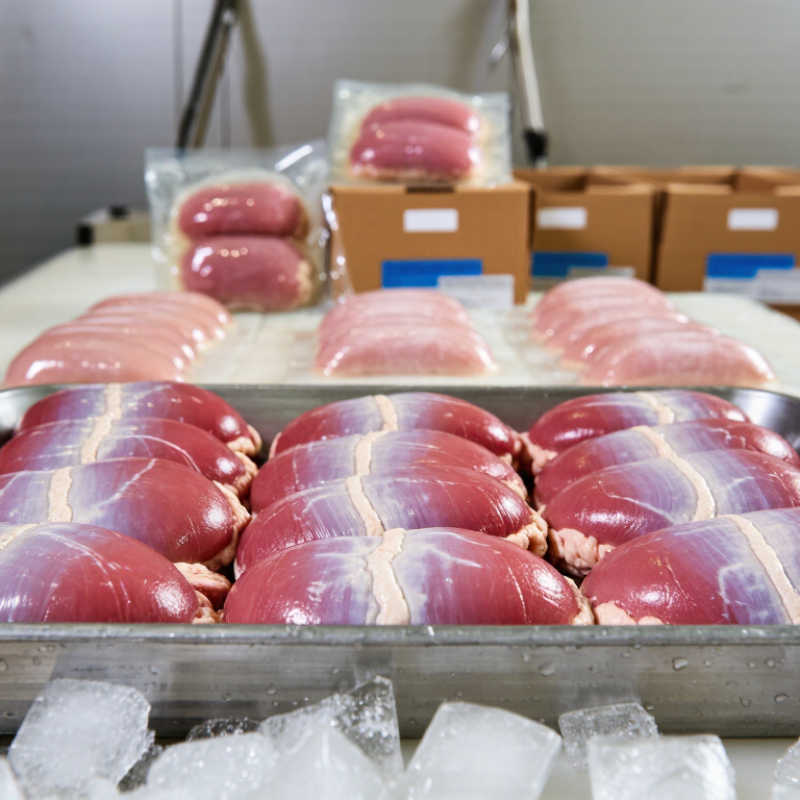
Frozen Chicken Gizzards are commonly supplied whole or cut, with cleaned and uncleaned options depending on the buyer’s processing needs. Whole gizzards suit further preparation; halved pieces can make portioning easier. Some suppliers offer individually quick-frozen pieces, while others pack them in blocks. The choice affects handling and thawing time. Check the product description carefully.
Grades are not always directly comparable across suppliers or markets. Ask how size, trimming, cleanliness, and visible defects are assessed, and request a written specification with sample photos. Color and shape can vary naturally, but excess tissue, ice, or inconsistent sizing may affect yield. A spec sheet can look complete and still leave an awkward gap: it may not define acceptable variation.
For global supply, confirm the packing date, net weight, carton format, storage conditions, and temperature records during transport. Ask whether the shipment is inspected and what product and traceability documents accompany it. Labels should clearly state the product form and storage instructions. Details matter. A small mismatch between sample and delivered lot can complicate production, so buyers should agree on tolerances before ordering and retain a reference sample when practical.
10 Leading Frozen Chicken Gizzard Suppliers for International Buyers
International buyers assessing ten leading frozen chicken gizzard suppliers should compare more than quoted price. Product consistency, cold-chain records, export experience, and clear lot traceability matter. FAO’s Food Outlook, published in November 2024, projected global meat production at about 365 million tonnes, with poultry contributing significantly to growth. That wider expansion supports a large poultry-processing sector, but it does not guarantee steady gizzard availability. Organ meats depend on processing volumes and buyer specifications.
A practical supplier review should check gizzard size range, cleaning standard, glazing percentage, packing date, and storage temperature. Ask for recent product specifications, sample photographs, and shipment-level temperature records. Frozen pieces should arrive firm, separated where specified, and without obvious freezer burn or excess ice. Details matter. USDA Foreign Agricultural Service reports on global poultry trade can help buyers understand production and export trends, while supplier documents verify the actual product and shipment.
For each supplier, compare minimum order quantities, lead times, payment terms, and experience with the destination market. Request lot codes that connect cartons to processing and freezing records. A factory audit or independent inspection can add useful evidence, especially for repeat orders. Still, paperwork may look complete while service varies between shipments; buyers should test samples and record defects before committing to volume. A strong shortlist balances verifiable controls with dependable communication, not just attractive prices.
Supplier Verification: Apply Codex HACCP’s 7 Principles and Export-Plant Checks
When assessing frozen chicken gizzard suppliers, request a HACCP plan that follows Codex’s seven principles. Check that its hazard analysis covers receiving, washing, trimming, freezing, and packing. The plan should identify critical control points, set measurable limits, and explain monitoring and corrective actions. Ask how the supplier verifies controls and keeps records. A clean-looking checklist is not enough.
Tips: Match lot codes across cartons and records. Check recent temperature logs, not just a sample screenshot. Small details matter.
At the export plant, confirm that its approval and inspection status fit the destination market. Walk through the process if possible: look for clean contact surfaces, separated raw and finished areas, and clear handwashing controls. Review traceability by selecting one carton and following its lot code back to production and incoming material records. Check that frozen stock stays at the agreed temperature, with continuous logs and a procedure for excursions. Ask for recent corrective-action examples; real records often reveal more than polished presentations. Paperwork can still miss a weak shift handover, so verify practices on the floor.
Cold-Chain Compliance: Keep Quick-Frozen Poultry at −18°C or Below
For frozen chicken gizzards, −18°C is a working limit, not a target to approach casually. The Codex Standard for Quick Frozen Foods (CXS 8-1976) uses −18°C or colder as the benchmark for maintaining quick-frozen products through the cold chain. Buyers should request shipment records, not just a supplier’s assurance. Small details matter.
A data logger placed near the load’s warmest-risk area can reveal brief temperature rises that a single arrival reading misses. Check the vehicle display, door seals, and carton condition at receipt; use a calibrated probe on a representative product sample. Wet cartons, clumped pieces, or heavy frost may signal handling or temperature problems, though none proves a breach alone. Keep records. Probe readings can also be imperfect if the sample is poorly chosen.
The stakes are wider than one shipment. FAO’s The State of Food and Agriculture 2019 estimated that 14% of food is lost between harvest and retail worldwide; this figure is not poultry-specific, but it shows why careful handling matters. Ask suppliers how they document loading temperatures, transit interruptions, and corrective actions. A logger cannot fix a weak cold chain. It can make gaps visible, which is useful—and sometimes uncomfortable.
10 Best Frozen Chicken Gizzard Suppliers for Global Buyers - Cold-Chain Compliance: Keep Quick-Frozen Poultry at −18°C or Below
Candidate sourcing markets for buyer evaluation—not a ranking of companies. Product availability and export eligibility vary by establishment and destination.
| No. | Candidate sourcing market | Buyer screening focus | Documents and checks to request | Cold-chain acceptance check |
|---|---|---|---|---|
| 1 | Brazil | Confirm that the proposed establishment is authorized to export the product to the destination market. | Destination-required health certificate, establishment approval details, product specification, and recent lot test results. | Require evidence that the product is maintained at −18°C or colder and review shipment temperature records. |
| 2 | United States | Verify export eligibility for the destination and that the establishment’s inspection status covers the product offered. | Applicable export certificate, establishment identification, lot traceability, and agreed packing and grading details. | Check loading temperature, reefer records, seal details, and product condition on arrival; investigate any temperature excursion. |
| 3 | Poland | For EU-origin supply, confirm the establishment and product meet the destination’s current import requirements. | Health certification where required, traceability records, lot-specific specification, and applicable inspection documentation. | Request continuous temperature monitoring where available and confirm the shipment stayed at −18°C or colder. |
| 4 | Netherlands | Clarify whether the offer is locally processed product or a re-export, and verify the actual country of origin. | Country-of-origin evidence, establishment details, health documents, and a complete lot-level chain of custody. | Match logger data and shipment records to the lot; do not treat the reefer setpoint alone as proof of product temperature. |
| 5 | Thailand | Ask whether frozen gizzards are available for the requested destination and confirm the exporting establishment is approved. | Destination-specific export health certificate, product origin, processing details, and agreed microbiological criteria. | Confirm pre-cooling, frozen storage, reefer operation, and documented maintenance at −18°C or colder. |
| 6 | Türkiye | Check current market access, establishment approval, and any destination-specific import restrictions before contracting. | Required veterinary certificate, establishment identification, origin statement, and lot-specific product records. | Obtain dispatch and transit temperature records and agree on procedures for rejected or temperature-abused loads. |
| 7 | Argentina | Confirm the product category is eligible for export to the buyer’s country and that the establishment is listed where required. | Official health documentation, origin and lot traceability, agreed carton labeling, and product specification. | Review temperature records across storage and ocean transit; require delivery at −18°C or colder. |
| 8 | China | Verify applicable bilateral access conditions and that the exporting establishment is eligible for the destination. | Destination-required health certificate, establishment approval, origin information, and lot-specific inspection records. | Check that packaging is intact and frozen solid on receipt, and reconcile logger readings with the shipment timeline. |
| 9 | Ukraine | Check current export routes, establishment eligibility, and any restrictions applicable to the shipment’s origin. | Health certificate, establishment details, traceability information, and documents required by the destination authority. | Confirm the cold store and carrier can maintain −18°C or colder throughout loading, transit, and delivery. |
| 10 | South Africa | Confirm destination approval for the product and establishment, plus the availability of the requested cut and pack format. | Official export health documents, origin and lot records, packaging specification, and agreed shelf-life information. | Request shipment monitoring records and document arrival temperature and product condition before accepting the lot. |
Buyer note: Import rules differ by destination and can change. Verify current requirements with the relevant competent authority before placing an order. Use a calibrated temperature logger where appropriate; a reefer setpoint does not by itself establish the product’s actual temperature.
Compare Suppliers by MOQ, Incoterms, Lead Time, and Export Documents
When comparing frozen chicken gizzard suppliers, record the minimum order quantity in cartons, pallets, or full containers. The unit matters. A low carton MOQ may still require costly refrigerated transport. Ask whether the quoted quantity includes mixed sizes and packaging, and request a specification sheet showing cleaning, grading, glazing, and frozen storage conditions.
Incoterms affect who arranges freight, insurance, and risk transfer. Under FOB, buyers generally handle ocean freight; under CIF, the seller arranges freight and minimum insurance to the named port. Confirm the exact port and named Incoterm version in writing. A low price can look less attractive after destination charges appear. Compare lead times as separate stages: production, inspection, port handling, and transit. Ask for recent shipment estimates, not just the fastest possible schedule.
Check which export documents the supplier can provide and whether they match the destination market’s requirements. Common records include a commercial invoice, packing list, bill of lading, certificate of origin, and applicable veterinary or health certificate. Requirements differ by country. Verify them with your customs broker or relevant authority before payment. Request sample documents with sensitive details removed. Small details count: product descriptions, net weights, lot numbers, and dates should agree across records. A spreadsheet can miss a mismatch. Review one real shipment file before scaling an order.
Frozen Chicken Gizzard Suppliers: A Global Buyer Comparison
Incoterms 2020 options relevant to comparing supplier quotations
Incoterms 2020 includes seven rules for any mode of transport and four for sea and inland waterway transport. These counts describe the official rule set, not individual suppliers. Confirm each supplier’s MOQ, production lead time, export documents, and offered Incoterm for your destination before comparing quotations.