


What Is the Best Profile Wrapping Machine in 2026?
Choosing the best Profile Wrapping Machine in 2026 requires more than comparing speed, price, or brochure claims. The right machine must match your profiles, wrapping materials, production volume, and available floor space. A unit wrapping 25-millimetre PVC trim may perform poorly with wider MDF panels or delicate decorative films. Small details matter.
Industry engineer Daniel Mercer explains, “The best wrapping machine is not the fastest one; it is the one that produces stable quality every shift.” This practical view deserves attention. A reliable machine should maintain steady film tension, accurate adhesive application, and clean edge finishing. Operators should also check changeover time, roller adjustment, temperature control, and maintenance access. These features affect daily output more than impressive headline speeds.
Automation can reduce labor pressure, but it does not remove every production problem. Dust, uneven profiles, incorrect film storage, and rushed setup still create defects. Sometimes, a simpler machine delivers better results. That may sound disappointing. It is also realistic. Buyers should inspect finished samples, test difficult profile shapes, and request performance data under similar working conditions. Energy use and spare-parts availability deserve equal attention. A machine that stops for days because of one unavailable component is not truly economical.
This guide examines the leading Profile Wrapping Machine options for 2026. It compares construction quality, control systems, flexibility, operating costs, and long-term service support. The final choice should reflect measurable production needs, not marketing language. There is no universal winner. The best investment is the machine that remains accurate, maintainable, and dependable after the showroom excitement disappears.
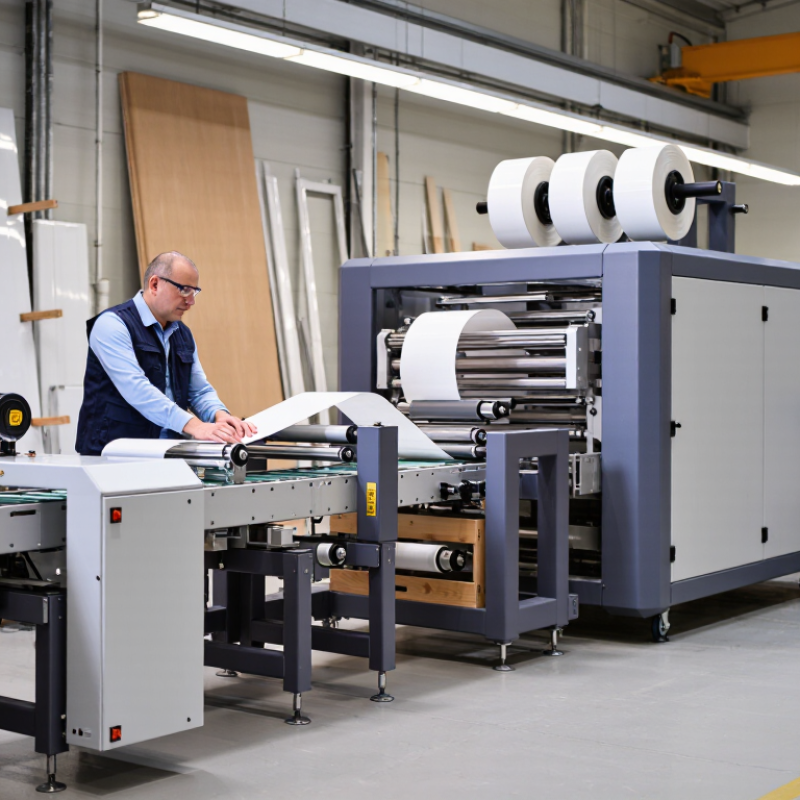
What Is a Profile Wrapping Machine?
What Is the Best Profile Wrapping Machine in 2026?
A profile wrapping machine is industrial equipment designed to cover long, narrow products with decorative or protective material. It commonly handles wood, plastic, aluminum, and composite profiles. The machine feeds each profile through guided rollers. Adhesive is applied with controlled pressure. Wrapping material then bonds around the surface. Cutting units finish the edges cleanly.
In 2026, the best machine depends on production needs, not marketing claims. Operators should examine wrapping speed, profile dimensions, adhesive control, changeover time, and safety features. A stable feeding system reduces wrinkles and uneven seams. Digital controls can improve repeatability, but they still require trained workers. In practice, no machine is perfect. A model that performs well on straight profiles may struggle with curved sections or textured surfaces. Real factory trials remain more reliable than impressive brochures.
Tips: Test your actual profile samples before purchasing. Check film tension at different speeds. Inspect wrapped corners under bright light. Ask whether cleaning and adjustments are simple. Small errors become expensive during long production runs. Also, measure noise, access space, and operator comfort. These details are easy to overlook.
What Is the Best Profile Wrapping Machine in 2026? - What Is a Profile Wrapping Machine?
| Evaluation Dimension | Typical Technical Data | Why It Matters | Recommended Choice for 2026 | Best-Suited Applications |
|---|---|---|---|---|
| Machine Function | A profile wrapping machine continuously applies decorative foil, veneer, paper, laminate, or other flexible materials to the surface of a rigid profile. | It creates a consistent finished surface on long, narrow components while reducing manual covering work. | Choose a continuous-feed machine with automatic material alignment and adhesive control. | Furniture components, interior trim, window and door profiles, wall panels, flooring accessories, and construction profiles. |
| Compatible Profile Materials | Common substrates include MDF, particleboard, wood, PVC, aluminum, steel, and composite profiles, depending on machine configuration. | The substrate affects adhesive selection, heating requirements, pressure settings, and surface preparation. | Select a machine with adjustable pressure rollers and interchangeable tooling for the intended substrate range. | Wood-based profiles, plastic extrusions, metal trims, and engineered composite sections. |
| Typical Profile Size | Many industrial systems handle profile widths of approximately 10–300 mm and profile heights of approximately 5–120 mm. Actual limits vary by tooling and machine design. | Correct dimensional capacity prevents edge lifting, incomplete coverage, and excessive material waste. | Choose a machine whose working range exceeds the largest planned profile by at least 10–20%. | Standard flat, rectangular, rounded, grooved, and moderately complex cross-sections. |
| Production Speed | Typical line speeds range from approximately 10–60 m/min. High-speed production lines can operate faster when profile geometry, adhesive, and covering material allow it. | Speed affects output, labor cost, adhesive curing, and the stability of the wrapped finish. | For mixed production, prioritize stable speed adjustment rather than maximum speed alone. | Low-volume customization, general industrial production, and high-volume profile manufacturing. |
| Adhesive System | Common options include hot-melt adhesive, PUR hot-melt adhesive, and water-based or solvent-free cold adhesive systems. | Adhesive choice influences bonding strength, heat resistance, open time, cleaning requirements, and environmental performance. | Use PUR hot melt when high moisture and heat resistance are required; use standard hot melt for many general-purpose applications. | Interior products, furniture components, moisture-resistant profiles, and demanding decorative surfaces. |
| Heating and Temperature Control | Hot-melt systems commonly use heated glue tanks, hoses, nozzles, or application rollers with electronically controlled temperature settings. | Stable temperature helps maintain adhesive viscosity and prevents weak bonding or material damage. | Choose independent temperature zones, digital monitoring, and over-temperature protection. | Thermoplastic films, decorative papers, laminates, veneers, and heat-sensitive coverings when properly configured. |
| Wrapping Coverage | Machines may wrap one face, two faces, three faces, or multiple sides of a profile in a single pass, depending on the roller and guide arrangement. | Coverage capability determines whether secondary operations are needed and affects total production time. | Select multi-side wrapping for profiles requiring a continuous decorative finish around corners and edges. | Visible furniture edges, door and window trims, skirting profiles, and decorative moldings. |
| Material Compatibility | Common covering materials include PVC film, PET film, PP film, decorative paper, CPL, HPL strips, and natural veneer. | Each material has different requirements for tension, temperature, adhesive quantity, and pressure. | Choose adjustable unwind tension, edge guides, and pressure rollers for mixed-material production. | Wood-grain finishes, solid colors, high-gloss surfaces, textured films, and natural wood surfaces. |
| Control and Adjustment | Modern systems commonly provide variable feed speed, adjustable roller pressure, adhesive temperature control, and recipe-based settings. | Digital adjustment improves repeatability when changing profile sizes, coverings, or adhesives. | Prioritize a touchscreen control system with stored production recipes and alarm diagnostics. | Factories producing multiple profile dimensions or frequent short production runs. |
| Changeover Capability | Changeover time depends on tooling, profile geometry, adhesive system, and the number of manual adjustments required. | Fast changeovers reduce downtime and make smaller production batches more economical. | Choose quick-adjust guides, marked settings, modular rollers, and tool-free or low-tool adjustments where available. | Contract manufacturing, customized profiles, and mixed-batch production. |
| Automation Level | Basic machines require more manual feeding and adjustment; advanced lines may include automatic feeding, edge control, cutting, defect detection, and production monitoring. | Automation can improve consistency and reduce operator dependence, but it increases initial investment and integration requirements. | Use semi-automatic equipment for flexible production and fully integrated automation for continuous high-volume output. | Small workshops, medium-sized factories, and automated industrial production lines. |
| Quality Control | Important quality indicators include complete adhesive transfer, clean edges, uniform tension, accurate alignment, wrinkle-free surfaces, and consistent bonding. | Visual defects and poor adhesion can lead to rework, material loss, and customer complaints. | Choose systems with stable pressure control, accurate guiding, and accessible inspection points. | Visible decorative components and products requiring consistent appearance across long runs. |
| Energy and Operating Efficiency | Energy consumption is mainly influenced by heater power, adhesive temperature, line speed, standby time, and compressed-air usage. | Efficient heating and reduced idle time can lower operating costs over the machine's service life. | Look for insulated heating zones, standby modes, automatic shutdown, and efficient pneumatic components. | Continuous production environments seeking lower energy use and improved operating-cost control. |
| Safety Features | Relevant features include emergency-stop circuits, guarded moving parts, temperature alarms, overload protection, and safe access around adhesive and heating areas. | Wrapping lines combine rotating rollers, heated components, adhesive systems, and moving profiles. | Select equipment with clearly accessible emergency stops, guarding, safety interlocks, and documented operating procedures. | All production environments, particularly facilities with multiple operators or shift-based operation. |
| Best Overall Selection Criteria | Working range, adhesive compatibility, stable guiding, controllable pressure, suitable speed, changeover time, safety, and serviceability. | The best machine is determined by the complete production process rather than by speed or purchase price alone. | For most 2026 applications, choose a digitally controlled, multi-side, adjustable machine compatible with the required substrate, covering material, and adhesive. | Manufacturers seeking repeatable quality, flexible production, and lower long-term operating risk. |
Note: The dimensions and speed figures shown are typical planning ranges for industrial profile wrapping equipment. Actual performance depends on profile geometry, substrate, covering material, adhesive, tooling, operator settings, and line configuration.