Best Thermal Cash Register Paper Types for Your Business Needs?
Choosing the right Thermal Cash Register Paper for your business is crucial. The paper you select can impact your customer experience, record-keeping, and long-term costs. Various types exist, each with unique features and benefits. You might feel overwhelmed by the options available.
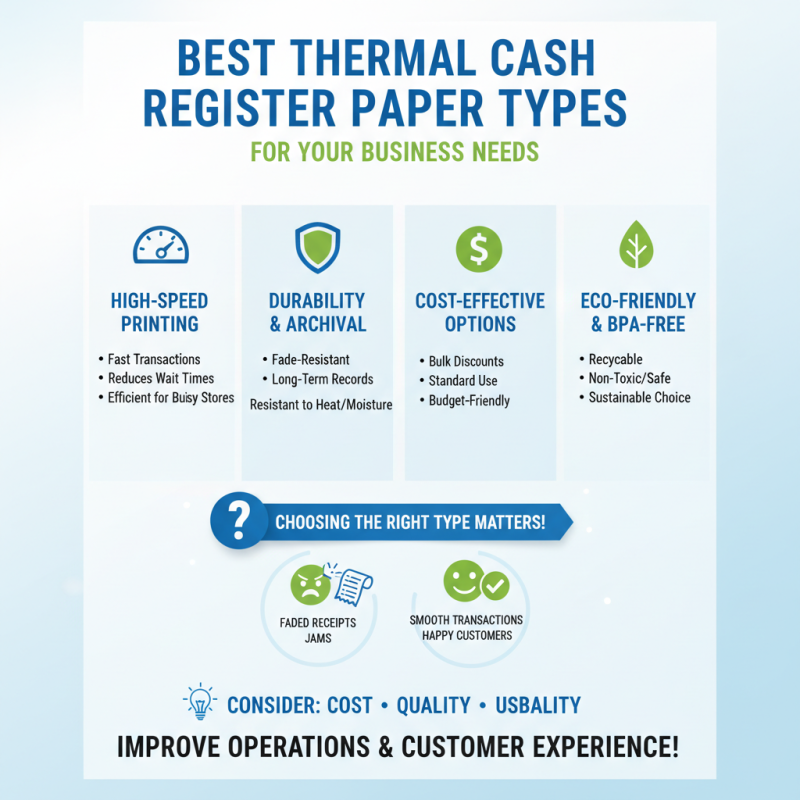
Understanding these differences is essential. For example, some thermal papers are designed for high-speed printers, while others prioritize durability. Choosing the wrong type can lead to issues, such as faded receipts or paper jams. These problems can frustrate both your employees and customers.
In this guide, we will explore the best options for Thermal Cash Register Paper. We aim to help you make informed decisions. Remember, the right choice not only improves transactions but also enhances your business operations. Reflect on your specific needs, and consider factors like cost, quality, and usability before making a final decision.
Understanding Thermal Cash Register Paper: An Overview
Thermal cash register paper is essential for many businesses. Understanding its types helps in making the right choice. This paper is used in receipt printers and offers quick printing without ink. Different businesses have varied needs, and the right paper affects operations.
When choosing thermal cash register paper, consider durability. Some papers fade quickly, while others last longer. The fade might lead to unreadable receipts over time. It’s frustrating for customers who need proof of purchase. Always test the paper's lifespan before making bulk purchases.
Remember to match the size of the paper with your printer. Not all printers work with every size. A too-small or too-large roll could cause issues. It’s best to consult printer specifications.
Tips: Keep a few extra rolls at hand to avoid running out during busy hours. Also, check the temperature rating for your environment; high heat can damage sensitive papers. Regularly inspect printed receipts for quality. This helps in assessing your paper choice.
Types of Thermal Cash Register Paper Available in the Market
When selecting thermal cash register paper, businesses face various options. The market features several types of thermal paper, each serving different needs. The most common are direct thermal and thermal transfer papers. According to a recent industry report, the global thermal paper market is projected to reach $5.9 billion by 2027, showcasing the growing demand for efficient printing solutions.
Direct thermal paper is simple and cost-effective. It reacts directly to heat from printer heads, eliminating the need for ink. This type is ideal for point-of-sale applications. However, it may fade when exposed to light and heat, which raises concerns about longevity. In contrast, thermal transfer paper uses ribbons to produce high-quality images. It offers better durability and smudge resistance. For businesses wanting clear, long-lasting receipts, this option is worth considering.
Another aspect to consider is the paper's width. Most thermal rolls come in standard widths of 2 ¼ and 3 inches. Choosing the right size can impact workflow efficiency. Misjudgments here could lead to delays or excess waste. Ultimately, businesses should assess their specific needs carefully. Finding the ideal thermal paper can significantly enhance customer experience and operational efficiency.
Factors to Consider When Choosing Thermal Cash Register Paper
Choosing the right thermal cash register paper is essential for any business. It can affect your printing quality and customer service. Several factors need consideration when selecting paper. One significant factor is the width of the paper. Most cash registers require specific widths. It's important to match the paper roll size to your machine.
Another aspect is the thermal coating. Some papers have a stronger coating. This affects the durability of printed receipts. High-quality paper lasts longer and resists fading. It can enhance customer experience too. You don’t want receipts that are hard to read.
**Tip:** Always check the paper thickness. Too thin might jam your printer. Too thick may not fit properly.
Consider the environment as well. Eco-friendly options exist but may vary in quality. It can be tough to find the right balance. The wrong choice can lead to frustration and wasted resources.
**Tip:** Test a small batch before committing. This saves time and ensures compatibility. Quality matters more than quantity.
Best Thermal Cash Register Paper Types for Your Business Needs
This chart compares various types of thermal cash register paper based on their key characteristics such as durability, cost, and print quality. Understanding these factors can help you choose the best paper for your business needs.
Benefits of Using High-Quality Thermal Cash Register Paper
Using high-quality thermal cash register paper offers several advantages for businesses. This type of paper provides clear, easily readable receipts. Customers appreciate well-printed details. A high-quality print reflects professionalism. When your receipts are legible, it reduces customer complaints. A smooth transaction builds trust.
Moreover, durability is important. Low-quality paper might fade quickly, losing essential information. This can lead to disputes over charges. High-quality options resist smudging and tearing. They perform better in various environments, whether hot or humid. Investing in better paper can actually save money in the long run. Frequent replacements are costly.
However, not all businesses recognize these benefits. Some might choose cheaper options to cut costs. But this decision can backfire. Customers may not return if their experience is unsatisfactory. Take a moment to reflect on your paper choice. It may seem minor, yet it affects your brand image. Quality matters in every detail, including receipts.
Applications of Thermal Cash Register Paper in Various Businesses
Thermal cash register paper plays a crucial role in various businesses. It's commonly used in retail settings for receipts. Restaurants use it too, especially for takeout orders and payment confirmations. Fast service is essential in these scenarios, making thermal paper a preferred choice for many.
In healthcare, thermal paper is utilized for printing prescriptions and patient receipts. The quick printing capability helps in reducing wait times. However, the quality of thermal paper can vary. Some options fade quickly, leading to potential issues with legibility later on. Businesses must choose wisely to avoid these pitfalls.
Another area is transportation, such as ticketing for public transit. Thermal paper enables fast production of tickets. Yet, the environmental impact of thermal paper needs consideration, as it often contains chemicals. Reflecting on these factors can help businesses make more informed decisions regarding their paper usage.