
A-B-C Blog

Who Are the Best Thermal Rolls Suppliers in China?

Choosing the best Thermal Rolls suppliers in China takes more than comparing prices. Buyers should check coating consistency, paper weight, roll dimensions, core fit, and winding quality. A sample may look clean under bright light, yet reveal pale printing or uneven edges after use. Ask suppliers for product specifications, recent quality records, and samples from the same production grade you plan to order.

For an illustrative perspective, Lin Wei, a fictional composite thermal-paper sourcing specialist, puts it this way: “A dependable roll must print clearly, feed smoothly, and stay consistent from batch to batch.” This is not a verified quotation from a real industry expert; it is a practical summary of common purchasing concerns. That distinction matters. Supplier claims deserve evidence, not just polished brochures.

This guide explains how to compare Chinese manufacturers and exporters by product range, customization, communication, and quality-control practices. It also considers practical details, such as whether a roll fits a receipt printer without slipping or leaving dusty residue near the cutter. Some suppliers may offer attractive prices but limited documentation. That is worth questioning. No single company is best for every buyer: retail chains, hospitals, and logistics firms often need different roll sizes and performance levels. Use the comparison as a starting point, then verify specifications directly before placing an order.
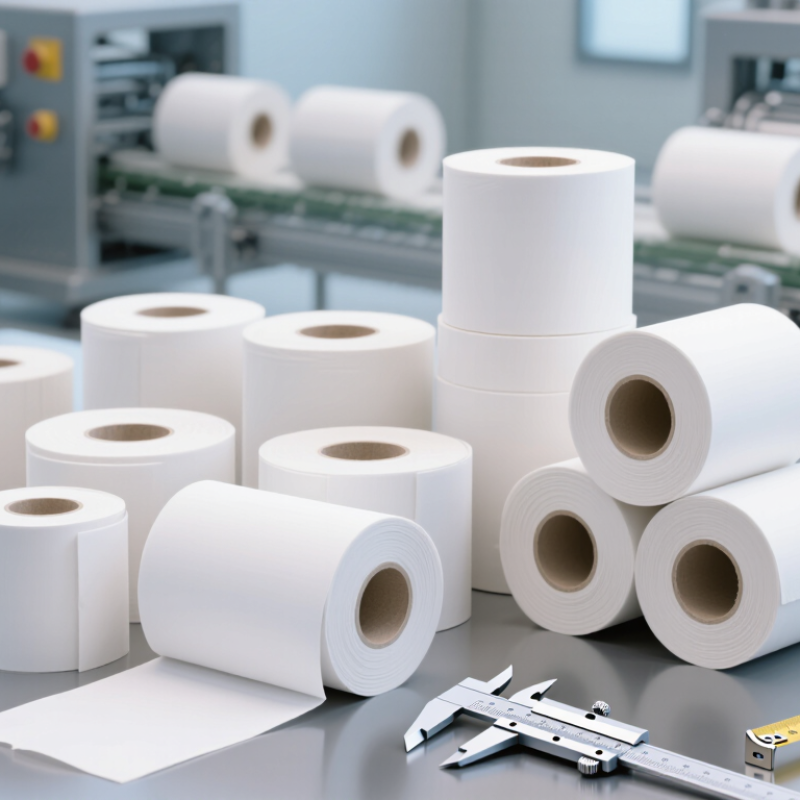
Who Are the Best Thermal Rolls Suppliers in China?

Thermal Rolls: Definition, Materials, and Common Uses

Thermal rolls are paper rolls with a heat-sensitive coating. In a direct thermal printer, the print head warms selected spots, creating dark text without ink or toner. It darkens with heat. Most rolls combine a paper base with a coated surface; some also include protective layers to resist moisture, oils, or abrasion. Coating formulas differ, so two rolls with similar appearance may perform differently.

Common uses include checkout receipts, queue tickets, payment records, and compact labels. In daily use, print clarity depends on more than the paper itself. Roll width, core diameter, paper thickness, and coating sensitivity must match the printer. A roll that is slightly too wide may rub against the housing, while a loose core can feed unevenly. Thermal paper may also fade with heat, sunlight, or prolonged contact with plastic. That detail is easy to overlook.

Tips: Check the printer manual for roll dimensions and recommended paper weight. Store spare rolls in a cool, dry place, away from windows and heaters. Test a small batch before placing a large order; compare crispness, feeding, and resistance to smudging. Supplier specifications are useful, but real printer testing matters too. I would not assume every “thermal” roll suits every machine.

China’s Thermal Roll Manufacturing and Supply Landscape

China’s thermal roll manufacturing landscape includes paper mills, coating lines, slitting workshops, and export distributors.

Some suppliers manage coating and converting in-house; others source base paper and focus on finishing. This can affect lead times, customization, and traceability. Buyers should confirm roll width, core diameter, winding direction, and length against printer requirements. Ask for consistent coating specifications and clear batch records.

Small details matter.

Supplier evaluation works best with physical samples and written specifications.

Check the cut edges, coating uniformity, print darkness, and how the image holds after handling. Test samples in the actual printer, not only under showroom conditions.

No checklist catches every variation. That is worth remembering.

Ask how rolls are packed for humid or long-distance transport, and whether repeat orders use consistent materials. Prices can differ with paper grade, order volume, and customization; the lowest quote may not reflect the full supply cost. A careful comparison should include production capacity, sample results, communication, and realistic delivery schedules.

Key Standards for Comparing Thermal Roll Suppliers

When comparing thermal roll suppliers in China, look beyond quoted price. Ask for the paper’s basis weight, roll length, width tolerance, core diameter, and coating specifications. These details affect printer fit and usable paper, not just the invoice. Request a sample from the same production grade you plan to order. Check print darkness, edge smoothness, and whether the paper feeds cleanly through your printer. Small differences matter.

Consistency is a key standard. Ask how the supplier checks coating uniformity, winding tension, and roll dimensions between batches. A practical evaluation includes printing a test pattern, then reviewing legibility after storage in ordinary office conditions. Heat and humidity can affect image retention, so ask for relevant test data and stated storage guidance. Confirm packaging protects the rolls from moisture and crushed edges during transit. Clear product specifications and traceable inspection records make claims easier to verify.

Tips: Measure a roll and test several sheets, not just one. Ask about defect handling, lead times, and production capacity in writing. A polished sample may not represent every batch; that is worth checking. Compare suppliers using the same checklist, and note any unanswered questions before placing a larger order.

Notable Thermal Roll Suppliers in China and Their Product Strengths

China’s thermal roll suppliers often differ more in production focus than in headline prices. Integrated mills may offer steady paper sourcing and consistent coating across large orders. Their strength is useful for buyers needing regular sizes and repeatable print density. Some also provide jumbo rolls for local converting.

Specialist converters can be more flexible. They slit rolls to specified widths, adjust core diameters, and pack cartons for retail counters or delivery terminals. Check the roll edges closely. Ragged cuts can cause jams in compact printers. Ask for sample rolls and test them with your actual devices. Print clarity, curl, and fading matter more than a polished catalogue.

Export-focused suppliers may handle custom labels, mixed-size orders, and protective packaging for long-distance shipping. Their documentation and communication can be helpful, though response speed varies. Request details on paper weight, coating consistency, roll length, and carton quantities. A sample is not the whole shipment. That point is easy to miss. Compare samples against a written specification, then confirm that production batches follow the same requirements. Some buyers focus too heavily on unit price; freight, damaged rolls, and inconsistent winding can change the real cost.

Who Are the Best Thermal Rolls Suppliers in China? - Notable Thermal Roll Suppliers in China and Their Product Strengths

Supplier Category Typical Product Range Common Product Strengths Customization Options What Buyers Should Check
POS thermal roll converters Thermal receipt rolls for retail point-of-sale terminals, restaurants, and payment devices. Focus on consistent roll dimensions, smooth feeding, clean cutting, and print clarity suited to everyday receipt use. Roll width, roll length, core size, paper weight, and plain or pre-printed formats. Confirm the paper width and core dimensions against the printer model. Ask for samples to check feeding, image quality, and roll length.
Jumbo-roll paper manufacturers Large parent rolls supplied to downstream converters, who slit and rewind them into finished rolls. Can support bulk production and provide base paper in different grades. Parent-roll supply may suit buyers with their own converting facilities. Parent-roll width, paper grade, basis weight, and coating specifications, subject to production capability. Check coating performance, roll consistency, packaging, and whether the supplier can provide technical data and traceable quality records.
ATM roll specialists Longer-format thermal rolls designed for automated teller machines and other unattended terminals. Products are generally selected for dependable machine feeding and readable printing across longer receipt or transaction records. Roll width, length, core dimensions, paper grade, and packaging configuration. Verify the exact equipment requirements, including roll diameter and core fit. Request testing under the intended printer conditions.
Thermal label and media suppliers Direct thermal label stock and related thermal media, alongside or instead of receipt paper rolls. Product expertise may cover label face stock, adhesive selection, liner options, and compatibility with direct thermal printing. Label size, shape, adhesive type, liner, roll direction, and winding configuration. Confirm printer compatibility and the label’s intended surface and service conditions. Direct thermal media does not require a thermal transfer ribbon.
Export-oriented roll converters Finished thermal receipt rolls prepared for wholesale, distribution, or private-label orders. May offer export packaging, mixed product configurations, and coordination of roll specifications for overseas buyers. Carton and inner-pack formats, roll dimensions, printed cores or packaging, and order quantities. Check sample approval, stated tolerances, packaging details, shipping terms, and applicable product documentation before placing a bulk order.

Supplier categories and capabilities shown are general industry descriptions, not rankings or claims about specific companies. Actual specifications, availability, and quality controls vary by supplier; verify them directly before ordering.

How Buyers Can Verify and Select a Supplier

China Paper Association’s 2023 annual report recorded 129.65 million tonnes of paper and paperboard production in China. That scale shows a deep manufacturing base, not that every thermal-roll supplier is dependable. Ask shortlisted factories for a recent production-lot report, material specification, and traceable batch number. Check that the company name on its business documents matches the exporter and invoice details. Small mismatch? Pause and ask why.

Verify the roll itself, not just a catalogue sample. Confirm paper grade, grammage, width, roll diameter, core size, and coating performance in writing. Request current quality-system certificates and confirm their scope and validity with the issuing body; certification alone does not prove consistent output. Test samples on your actual printer. Check for clear, even printing, clean edges, and paper dust after several rolls. Ask for documented testing of image retention and resistance to heat or light, with conditions and test dates. A glossy sample can still conceal batch variation.

Tips: Send the same test checklist to each supplier. Keep one approved roll as a reference, then compare incoming batches against it. If a supplier cannot explain a failed test clearly, reconsider.