
A-B-C Blog

Top NPK Compound Fertilizer Manufacturers in China

China’s fertilizer sector serves farms with varied soils, crops, and growing seasons. This guide introduces leading Npk Compound Fertilizer manufacturers in China and the qualities buyers can compare. A manufacturer’s name alone tells little. Product consistency matters.

Nobel laureate agronomist Norman Borlaug said, “Food is the moral right of all who are born into this world.” His words frame a practical question: how can nutrients support reliable harvests? NPK blends supply nitrogen, phosphorus, and potassium in measured proportions. Their value depends on matching the formula to crop needs and local soil conditions. It is not one-size-fits-all.

The manufacturers discussed here can be assessed through clear, verifiable details: stated nutrient ratios, granule uniformity, moisture control, production capacity, and quality-testing practices. Buyers may also review technical documents and request recent batch data. Look closely. A polished catalogue cannot prove consistent performance in the field. Nor should a large factory automatically outrank a smaller, well-documented producer.

This overview is a starting point, not a substitute for agronomic advice or independent product checks. Company information and specifications can change, so readers should confirm current details directly. Some comparisons will remain imperfect; public data is not always equally complete. That limitation deserves attention, not concealment. The goal is a grounded shortlist that helps importers, distributors, and growers ask better questions before choosing a supplier.
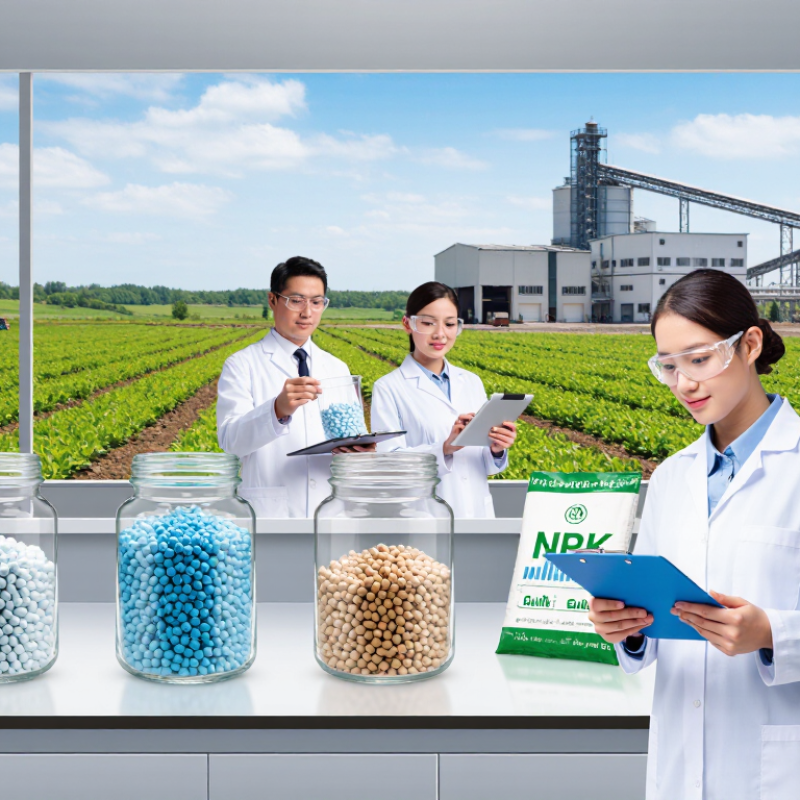
Top NPK Compound Fertilizer Manufacturers in China

Overview of China’s NPK Compound Fertilizer Industry

China’s NPK compound fertilizer industry serves a vast and varied farming base. The National Bureau of Statistics reported 695.4 million tonnes of grain output in 2023. Rice paddies, wheat fields, and orchards need different nutrient ratios, so producers offer formulas suited to specific crops and soils. Granules must also remain consistent during transport and spreading. Small differences matter.

The International Fertilizer Association’s 2024 outlook projected global fertilizer nutrient use at about 205 million tonnes in 2024/25. This wider demand context helps explain why Chinese producers face pressure to balance output, cost, and nutrient efficiency. In practice, soil testing and regional recommendations can guide NPK selection, but access and adoption vary across farms. That gap is real. National grain output shows the scale of agriculture, not the amount of NPK compound fertilizer consumed. Industry comparisons should therefore distinguish compound products from total fertilizer use. Lower nutrient loss is a clear goal, though better formulations alone cannot guarantee it. Application timing, soil conditions, and farmer guidance also shape results.

How NPK Compound Fertilizers Are Made

NPK compound fertilizer begins with a target nutrient ratio, such as 15-15-15. Manufacturers select nitrogen, phosphate, and potash sources to meet that specification. Some plants blend dry granules; others chemically react materials into a slurry before granulation. The route depends on the recipe, raw materials, and equipment. Small differences matter.

In a typical granulation line, measured solids enter a rotating drum or pan. Steam or liquid binders help fine particles form granules. The material then passes through a dryer and cooler. Screens separate usable sizes, while oversized and undersized particles often return for reprocessing. Dust collection also helps limit material loss. It is a physical process, not just mixing.

Quality checks cover nutrient content, moisture, particle size, and granule strength. Operators sample batches and adjust feed rates when results drift. Still, a lab sample cannot show every granule. That gap deserves attention. The International Fertilizer Association’s 2024 medium-term outlook estimated global fertilizer use at about 205 million tonnes of nutrients in 2024/25. That scale makes consistent production important, but careful sampling remains essential for each batch.

NPK Compound Fertilizers: Typical Grade Composition

Illustrative nutrient percentages for common NPK grades

NPK grade labels show the guaranteed percentages of nitrogen (N), available phosphate (P₂O₅), and soluble potash (K₂O), in that order. For example, 15-15-15 contains 15% of each listed nutrient by weight. Manufacturers may produce these grades using processes such as blending or granulation; formulations and production methods vary.

Key Criteria for Evaluating Chinese Manufacturers

When evaluating Chinese NPK compound fertilizer manufacturers, start with evidence, not polished brochures. Ask for recent product specifications and laboratory reports showing nitrogen, phosphate, and potassium content. Check that the tested product matches the grade you plan to buy. Small details matter. Verify that certificates are current and apply to the actual production site, rather than a related company or another facility.

Inspect how the manufacturer controls granule size, moisture, and batch consistency. Uneven granules can separate during handling, making accurate application harder. Ask how samples are collected and retained, and whether testing is performed in-house or by an independent laboratory. A factory visit can help, but it is not proof by itself. Request production records and traceability details for a recent batch. Ask for evidence.

Capacity deserves a practical check. Compare stated output with equipment, storage space, and the lead time quoted for your order. Discuss packaging, loading, and shipping documents before confirming specifications. Communication is part of quality: clear answers about nutrient tolerances and complaint handling are more useful than broad promises. If possible, test a small sample under relevant soil and crop conditions before scaling up. No checklist is perfect. A sample cannot predict every field result, but it can reveal questions worth asking.

Leading NPK Compound Fertilizer Manufacturers in China

Leading NPK compound fertilizer manufacturers in China serve farms with blends tailored to soil tests, crop cycles, and local application methods. Their capabilities matter in practical ways: consistent granule size helps spreaders distribute nutrients evenly, while controlled moisture reduces caking during storage. Buyers should request batch analyses for nitrogen, phosphate, and potash, plus details on nutrient availability and trace elements. Small details matter.

The International Fertilizer Association’s 2024 short-term outlook estimated global fertilizer demand at about 203 million tonnes of nutrients in 2023/24, with demand projected to reach roughly 205 million tonnes in 2024/25. This rising demand puts pressure on producers to balance output with dependable quality. Strong manufacturers typically maintain documented testing, stable raw-material sourcing, and clear product specifications. Still, a broad product catalogue does not prove batch consistency; buyers need current test results, not just a polished brochure.

For agricultural distributors, compare products by nutrient ratio, granule durability, dissolution behavior, and packaging suited to humid warehouses. Ask how factories handle changes in raw-material composition and whether they retain samples from each production batch. Not always simple. Even technically capable suppliers may communicate unevenly, so written specifications and pre-shipment inspection can prevent misunderstandings. IFA’s figures provide market context, but local soil analysis remains essential when selecting an NPK formulation.

Top NPK Compound Fertilizer Manufacturers in China - Leading NPK Compound Fertilizer Manufacturers in China

China NPK Compound Fertilizer Product and Manufacturing Overview

Category Data Dimension Representative Data Notes
Product formulation Balanced grade 15-15-15 (N-P₂O₅-K₂O) Illustrative grade; each figure represents the nutrient percentage by mass.
Product formulation High-analysis balanced grade 17-17-17 (N-P₂O₅-K₂O) Illustrative formulation; actual product specifications vary by supplier and market.
Product formulation Nitrogen-forward grade 20-10-10 (N-P₂O₅-K₂O) Illustrative formulation with a higher nitrogen proportion than phosphate or potash.
Product formulation Phosphate-forward grade 12-24-12 (N-P₂O₅-K₂O) Illustrative formulation with a higher phosphate proportion.
Nutrient labeling N-P-K convention Nitrogen (N), phosphate (P₂O₅), potash (K₂O) The three-number grade convention reports these nutrients in that order, as percentages by mass.
Manufacturing route Compound granulation Raw materials are processed together into granules. The route can produce granules in which nutrients are combined within the granule; process details depend on the product and plant.
Manufacturing route Bulk blending Separately manufactured fertilizer granules are mechanically mixed. Blend uniformity depends on compatible particle sizes and effective mixing.
Quality control Nutrient content Verification of declared N, P₂O₅, and K₂O values Testing and acceptance criteria should follow the applicable product specification and regulations.
Quality control Physical properties Moisture, particle-size distribution, caking, and granule strength Relevant properties depend on formulation, production method, packaging, and storage conditions.
Application planning Crop and soil suitability Select a grade based on crop nutrient needs and soil-test results. A single NPK ratio is not universally suitable for all crops, soils, or growth stages.
Standards reference Chinese national standard GB/T 15063-2020, Compound fertilizer Consult the current standard and applicable regulations for product-specific requirements.

Note: Formulations shown are illustrative examples, not a ranking or specification for any individual manufacturer. Confirm product labels and local requirements before purchase or application.

Products, Markets, and Distribution Channels of Top Manufacturers

China’s major NPK compound fertilizer manufacturers serve farms with granular blends, water-soluble products, and formulas adjusted for different crops and soils. Product selection often reflects local demand: a rice-growing area may need a different nutrient balance from an orchard region. Some producers also offer customized blends, though availability can depend on production schedules and order size. Details matter.

Large-volume orders commonly move through direct sales to agricultural cooperatives or commercial farms. Regional distributors and local dealers help reach smaller growers, while online business platforms may support product inquiries and smaller purchases. In export markets, manufacturers typically work with importers and distributors familiar with local product requirements. Delivery timing can be uneven during planting seasons, and distant customers may face higher freight costs.

Buyers should compare the stated nitrogen, phosphorus, and potassium content, packaging, and batch documentation rather than relying on broad product claims. Soil testing can help match a blend to field conditions. A label alone is not enough. Distribution coverage may look extensive on paper, but dependable local stock and practical agronomy support still vary by region.