How to Choose the Best Solar Panels Supplier for Your Needs?
Choosing the right solar panels supplier is crucial. As renewable energy gains popularity, many options are available. It's essential to select a supplier that meets your specific needs.
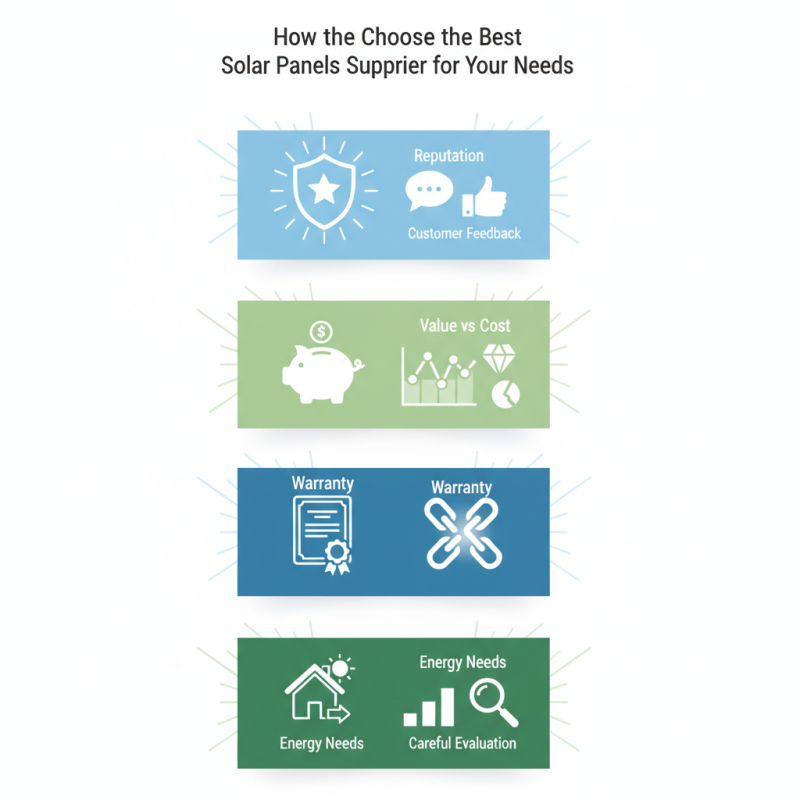
When assessing suppliers, consider their reputation. Look for customer feedback and industry reviews. A reliable supplier often has strong recommendations. Price is another important factor, but it shouldn't be the only consideration. Sometimes, lower costs may indicate compromised quality.
Additionally, check the warranty offered by the supplier. A robust warranty shows confidence in their product. Supplies with poor warranties could leave you vulnerable in the long run. Evaluate your energy needs and ensure the supplier's offerings align with them. Take your time. Reflect on what you value most before making a decision.
Identifying Your Solar Energy Needs Before Choosing a Supplier
Identifying your solar energy needs is crucial before choosing a supplier. Start by evaluating your energy consumption. Look at past utility bills. Consider your average monthly usage and peak demands. This data helps in determining the size of the solar system you require. Smaller households may only need a few panels, while larger homes might require an entire array.
Next, think about your energy goals. Are you aiming for grid independence? Or do you want to reduce your electricity bills? Clarifying your intentions can guide your choice of supplier. Some may specialize in residential solutions, while others focus on commercial setups. This is important. Not every supplier is equipped to meet all types of needs.
Additionally, consider the installation area. Is your roof suitable for solar panels? Does it receive enough sunlight? These factors not only influence the system's efficiency but can also affect your supplier's recommendations. Ask about warranties and maintenance support. A good supplier will provide detailed information. Reflect on all these aspects to find a suitable solar partner.
Researching Potential Solar Panel Suppliers and Their Offerings
When researching potential solar panel suppliers, it is essential to assess their offerings carefully. The International Renewable Energy Agency (IRENA) reports that the global solar capacity reached over 800 GW in 2022, emphasizing the industry's growth. This means many suppliers exist, but not all match your specific needs. Look for suppliers that provide a range of panels, as different technologies might suit various installations.
Quality often varies significantly among products. For instance, according to the National Renewable Energy Laboratory (NREL), efficiency levels of solar panels can range from 15% to over 22%. High-efficiency panels might cost more but can offer better long-term savings. Check the supplier’s warranty options, as a 25-year warranty may indicate confidence in their product.
Customer service is equally important. Some suppliers may lack immediate support when issues arise. This can lead to frustration when you need quick solutions. Investigate online reviews and testimonials. A positive reputation for response times can be a good indicator but beware of overly polished narratives. Real-world experiences can tell you more than marketing can. Assessing multiple angles helps ensure you find a supplier that not only meets but anticipates your needs.
Evaluating Supplier Qualifications and Industry Reputation
When selecting a solar panel supplier, evaluating qualifications and industry reputation is crucial. According to a recent report by the International Renewable Energy Agency (IRENA), companies with strong industry certifications tend to perform better. Look for suppliers with certifications such as UL 1703 or IEC 61215. These certifications indicate compliance with safety and performance standards, ensuring reliability in the long run.
A supplier's reputation can be gauged through customer reviews and industry awards. Research shows that companies with a high customer satisfaction rate often have a proven track record. Check online platforms and forums for genuine customer feedback. Recommendations from trusted industry professionals also provide valuable insights into a supplier’s reliability and service quality.
Tips: Always ask potential suppliers about their warranty terms. A solid warranty often reflects the company’s confidence in their products. Engaging with suppliers on social media can reveal their customer interaction style, which is an essential factor for future support. Evaluate their responsiveness and willingness to provide detailed answers to your queries. This process can expose gaps in their customer service model, prompting you to reflect on your choice.
Comparing Pricing, Warranty, and Financial Options
When selecting solar panels, pricing is a key factor. The average cost for solar panels in the U.S. ranges from $15,000 to $25,000 for a typical home installation. This price excludes additional costs. Factors such as installation complexity and location influence pricing. In some states, incentives can reduce these costs significantly.
Warranty options vary across suppliers. Most solar panel warranties last 25 years. Some may offer less coverage, which might reduce long-term value. Data shows roughly 10% of installations face issues within the first five years. A solid warranty protects your investment, especially if panels fail early in their lifespan.
Financial options also play a crucial role. Many suppliers provide various financing plans. Studies indicate that approximately 60% of homeowners opt for loans or leases. However, some financial options may not make sense for everyone. It’s essential to understand the long-term implications of each choice. Evaluating the total cost of ownership will help you make a better decision. Always ask questions about hidden fees or potential maintenance costs.
Comparison of Solar Panels Suppliers - Pricing, Warranty, and Financial Options
Assessing Customer Service and Post-Installation Support
When selecting a solar panels supplier, customer service plays a crucial role. A study by EnergySage found that over 75% of homeowners consider ongoing support as important when making their decision. Suppliers should provide comprehensive assistance that begins at installation and extends through the life of the system.
Post-installation support includes troubleshooting and maintenance. A supplier with a responsive customer service team can enhance the user experience. Data from Solar Innovation indicates that over 60% of users want quick answers to technical questions. Yet, many suppliers fall short in this area. They often lack effective communication channels, leaving customers frustrated. It's essential to assess customer satisfaction ratings to identify reliable suppliers.
Additionally, warranty services are critical. A recent report shows that 80% of customers value warranties that last 25 years or more. However, some companies do not honor these warranties properly. Research suggests that negative reviews often stem from inadequate follow-up service. This signals a need for potential buyers to investigate how suppliers handle assistance over time.