How to Choose the Best Sliding Roller for Your Needs?
Choosing the right sliding roller can feel overwhelming. There are many options available in the market. Each sliding roller serves different needs, making it crucial to identify what fits best for you.
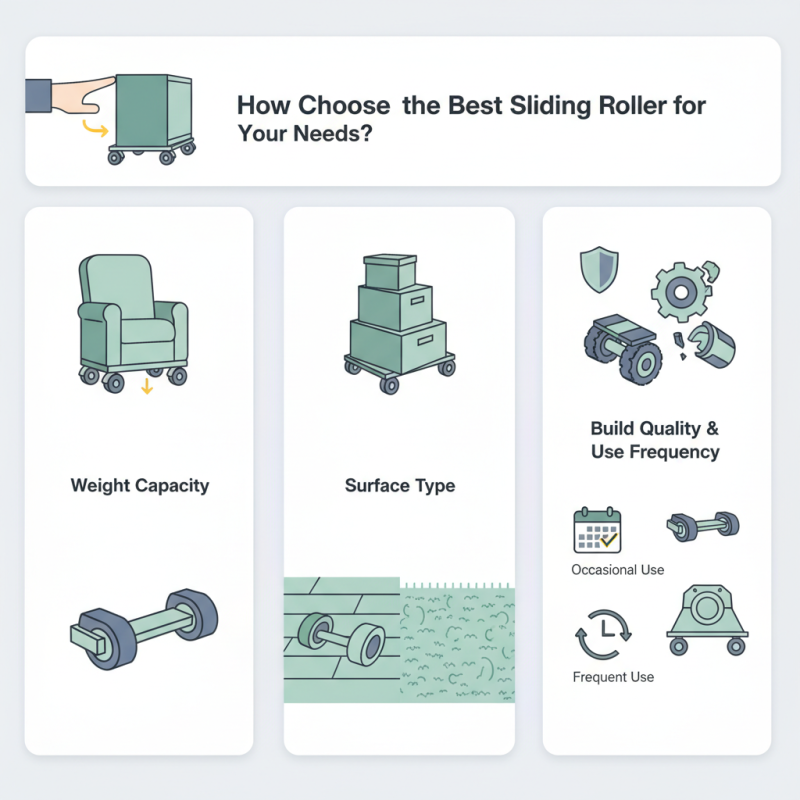
Consider the task at hand. Are you moving heavy furniture or lighter items? The weight capacity of the sliding roller is essential. Think about the surface too. Hard floors require different types than carpets. Failure to consider these details might lead to disappointment.
Examine the build quality. Some rollers are robust, while others are fragile. Investing in a durable sliding roller saves money in the long run. However, more expensive doesn’t always mean better. Reflect on your use frequency. A simple, affordable option might suffice for occasional use.
Understanding the Different Types of Sliding Rollers Available
When it comes to sliding rollers, understanding the types available can make a difference. Sliding rollers can be categorized into various materials and designs. The most common types are plastic, metal, and rubber. Each type has its own advantages and drawbacks.
Plastic sliding rollers are lightweight and affordable. They are ideal for lighter loads and indoor use. However, they may wear out faster than other materials. Metal rollers, on the other hand, are durable and can handle heavier weights. Still, they could rust if exposed to moisture. Rubber rollers provide excellent grip on surfaces but may not glide as smoothly.
Choosing the right type requires consideration of your specific needs. Think about the weight capacity and the surface you'll use them on. It’s important to balance durability with cost. Sometimes, the decision comes down to trial and error. Testing different types can lead to the best fit but may incur extra costs and time. So, be prepared to reflect on your choices as you go.
Evaluating the Load Capacity of Sliding Rollers for Your Project
When evaluating sliding rollers for your project, assessing load capacity is crucial. This capacity indicates how much weight a roller can support safely. According to industry data from the Material Handling Industry (MHI), many sliding rollers can handle loads ranging from 200 to 1,500 pounds. This broad range emphasizes the importance of selecting the right roller based on your specific application needs.
Consider the environment where the sliding roller will be used. Harsh conditions can reduce the effective load capacity. For example, exposure to moisture or corrosive elements may cause premature wear and tear. A recent report from the American Society of Mechanical Engineers (ASME) suggests regular maintenance can increase roller longevity, which is often overlooked. Furthermore, the roller design plays a role in its stability. A poorly designed roller can lead to accidents or damage.
Finally, it's essential to think beyond just numbers. The load capacity might seem adequate on paper but can be misleading. Real-world testing should not be sidelined. Conducting practical tests ensures the selected roller meets the demands of your project. Each project has unique requirements that need specific attention to detail. Ignoring this may lead to failures or inefficiencies down the line.
Considerations for Material and Durability in Sliding Rollers
When choosing sliding rollers, material and durability play key roles. Rollers made from high-quality materials ensure smooth operation. Common materials include plastic, rubber, and metal. Each material has its benefits and drawbacks. For instance, plastic is lightweight and resistant to corrosion. However, it may wear down faster under heavy loads.
Durability is another crucial factor. A roller that breaks easily is not worth the investment. Consider the roller's load rating and use conditions before selecting. Regularly check for wear and tear. Small cracks or deformities can lead to bigger issues down the line. Sometimes, cheaper options can be tempting. Yet, they might not withstand the test of time. Investing in well-made rollers often pays off.
Compatibility with existing systems is vital, too. Ensure the chosen roller fits seamlessly with your machinery or setup. A poor fit can lead to malfunctions. Remember to reflect on your specific needs. Regular use may require heavier, more durable rollers. Conversely, lighter tasks might only need basic options. Balancing cost and quality is essential for long-term satisfaction.
Assessing the Installation and Maintenance Needs of Sliding Rollers
When assessing the installation and maintenance needs of sliding rollers, consider various factors that affect their performance. The right sliding roller can enhance functionality, but improper installation may lead to inefficiency. According to industry reports, about 30% of sliding roller failures stem from inadequate installation practices.
Tip: Always follow guidelines closely during installation. Use correct tools and techniques to ensure rollers operate smoothly. Sometimes, small mistakes can lead to significant issues later.
Maintenance plays a critical role as well. Regular inspections are necessary. Experts suggest checking roller alignment and wear every six months. This helps to identify potential problems early. A study showed that routine maintenance can extend the lifespan of sliding rollers by up to 40%.
Tip: Create a maintenance schedule. Consistency can help prevent unexpected breakdowns. Remember that neglecting small repairs can lead to larger, costlier issues down the road. Not every installation will be perfect, and that’s okay. Learn from what goes wrong to improve future practices.
Sliding Roller Installation and Maintenance Needs
Selecting the Right Size and Design for Optimal Performance
Choosing the right sliding roller involves understanding size and design for optimal performance. A well-selected roller can enhance the efficiency of your operations significantly. Research indicates that the correct dimensions can improve load capacity by up to 30%. These statistics reflect the importance of making precise measurements before purchasing.
Consider the material of the roller. For example, heavier materials may provide more strength. However, lighter materials can result in better maneuverability. A study found that 40% of users prefer lighter designs for easier handling. It's crucial to evaluate your specific needs. Reflect on the environment in which the roller will be used. Indoor and outdoor settings may require different design features.
Design is as important as size. A roller with a wider surface may distribute weight better. This can prevent damage to flooring and extend the longevity of the equipment. Investigate if wheels with better grip are necessary for your tasks. Examine how these choices align with your operational goals. A poorly chosen roller can lead to inefficiencies and increased costs. Always think critically about your selections and their future impact.