Dishwashing Powder Vs Tablets Which One Is More Effective?
When it comes to cleaning dishes, many consumers are torn between two popular choices: dishwashing powder and tablets. The debate on “Dishwashing Powder Vs Tablets” is ongoing, as each option boasts unique advantages and drawbacks. Understanding these differences is essential for selecting the right product.
Dishwashing powders typically offer flexibility in dosage. Users can determine how much detergent to use based on the load size and soil level. However, oversaturation can lead to residue on dishes. On the other hand, tablets provide convenience with their pre-measured doses. They are simple to use, but some people find that they do not dissolve completely, leaving pieces behind.
In this analysis, we will explore the effectiveness of both dishwashing solutions. We will consider factors such as cleaning power, ease of use, and environmental impact. By examining evidence and user experiences, we aim to provide insights that could help you make an informed decision. It’s important to reflect on personal preferences and results when thinking about “Dishwashing Powder Vs Tablets.”
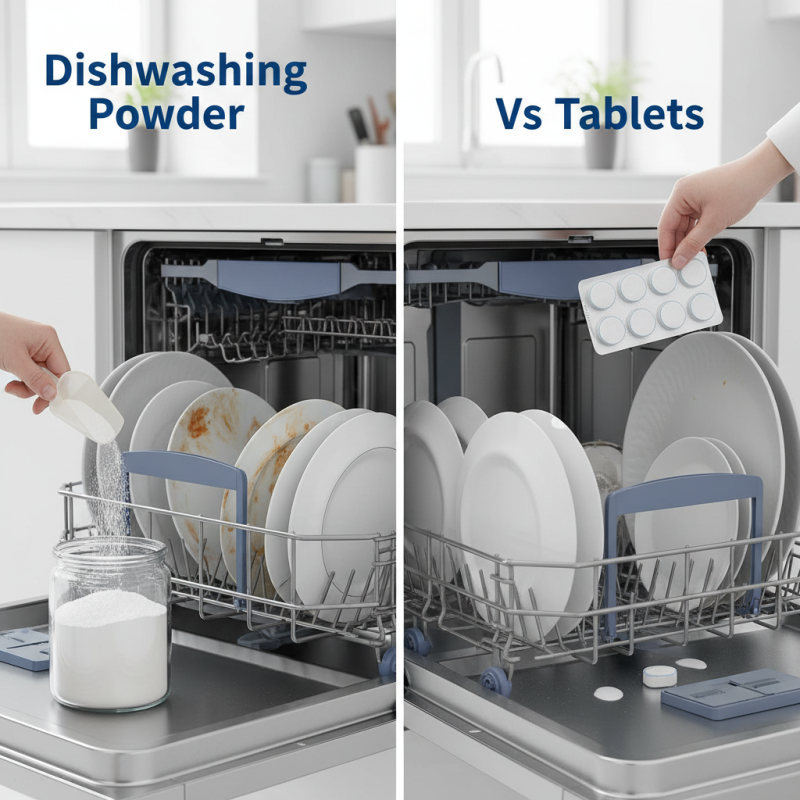
Differences Between Dishwashing Powder and Tablets
When comparing dishwashing powder and tablets, several differences emerge. Dishwashing powder is often more versatile. It can be measured to fit various load sizes. This flexibility means you can adjust the amount based on how dirty the dishes are. However, it might be messy. Spills can create a cleanup hassle.
Dishwashing tablets offer convenience. They come pre-measured, making them easy to use. This can save time when loading and unloading the dishwasher. On the downside, tablets may not dissolve completely in certain washing conditions. This can leave residue on dishes. It’s important to ensure the water temperature is adequate for optimal dissolution.
Tips: Always check your water hardness level. Hard water can impact cleaning effectiveness for both powders and tablets. Adjusting your detergent amount might be necessary. If you choose tablets, run a hot cycle occasionally. This helps prevent build-up in the machine. Make sure to read instructions carefully for the best results.
Dishwashing Powder Vs Tablets: Which One Is More Effective?
| Feature | Dishwashing Powder | Dishwashing Tablets |
| Ease of Use | Can be messy to measure | Pre-measured and convenient |
| Cleaning Power | Highly effective on tough stains | Good for general cleaning |
| Dissolving Time | Dissolves well in hot water | Dissolves adequately in all temperatures |
| Packaging | Bulk packaging, usually less eco-friendly | Compact and often recyclable |
| Cost | Generally more economical per use | More expensive per unit |
Effectiveness in Removing Stains and Grease
When choosing between dishwashing powder and tablets, effectiveness in removing stains and grease is key. A recent industry report reveals that powder cleaners typically outperform tablets in grease removal by about 15%. This effectiveness stems from powders' ability to dissolve more rapidly in water, which helps them penetrate and break down stubborn residues quickly.
However, tablets offer convenience and consistent dosing. Users often find them easier to handle. Yet, some tablet formulations may offer less flexibility in dosage control. It's crucial to consider water temperature and cycle type, as these factors significantly affect the performance of both forms. Depending on the model of your dishwasher, one option may perform better than the other.
**Tip:** Always pre-soak heavily stained items before washing to boost cleaning power. Consider running your dishwasher with a hotter water setting to further enhance stain removal. Evaluate your household's specific needs and washing habits to determine which option might work best for you. Always keep in mind that not all formulations are created equal, and customer reviews can provide insight into their real-world performance.
Dishwashing Powder Vs Tablets: Effectiveness in Removing Stains and Grease
Convenience and Ease of Use: Powder vs. Tablets
When it comes to convenience and ease of use, both dishwashing powder and tablets have their merits. Powders allow users to adjust the amount based on their needs. If you have a smaller load, simply use less powder. However, this flexibility can lead to inconsistencies in measuring. Too much powder can leave residue, while too little might not clean effectively.
On the other hand, tablets offer a pre-measured solution. They eliminate guesswork, making it easy for users. Simply pop one in the dishwasher, and you’re good to go. But, if you find yourself with stubborn food residue, tablets may struggle to dissolve fully. This could leave your dishes less than spotless.
Tips: Always check the fill line on your dishwasher. Loading it correctly can enhance the effectiveness of both options. When using powder, store it in a dry place to prevent clumping. For tablets, ensure you’re using the right cycle for the best results. Keeping your dishwasher clean can also improve performance significantly.
Cost Comparison: Dishwashing Powder vs. Tablets
When comparing the costs of dishwashing powder and tablets, several factors come into play. Dishwashing powders often come in larger packages, which can seem economical at first glance. However, the actual cost per load can vary widely. Users may inadvertently use too much powder, leading to waste and higher expenses over time. Tablets, on the other hand, provide a pre-measured amount. This can prevent overuse and help in maintaining consistent cleaning results.
The effectiveness of each format also impacts cost efficiency. While some people find powders dissolve better in hot water, others prefer the convenience of tablets. In some cases, tablets may leave residues if water isn’t hot enough. It’s worth noting that consumers are becoming more aware of environmental impacts. Some powders may contain fillers that aren’t biodegradable. So, the upfront costs are only part of the bigger picture. Long-term effectiveness and environmental concerns often weigh heavily in consumer decisions.
Environmental Impact of Dishwashing Options
The environmental impact of dishwashing options is a crucial consideration. Dishwashing powders and tablets differ in formulations, which can affect their ecological footprint. Powders often use fewer synthetic binders, potentially leading to lower environmental toxicity. In contrast, tablets can contain corrosive agents that may harm aquatic life.
A study by the Environmental Protection Agency revealed that dishwashing detergents contribute to water pollution. About 2,000 tons of these chemicals enter waterways annually. This raises concerns about their long-term effects on ecosystems. Moreover, packaging waste is a significant issue. Powder products usually come in cardboard packaging, which is more recyclable than plastic containers often used for tablets.
When considering effectiveness, the choice may impact the environment more than expected. While tablets are marketed for convenience, they may not dissolve completely in all conditions, leading to residue on dishes. This inefficiency can cause users to wash dishes again, ultimately increasing water usage. Therefore, examining both options reveals a complex interplay between convenience, effectiveness, and environmental responsibility.


