A-B-C Blog
Top 10 Laser Equipment Manufacturers for Global Buyers
Global buyers comparing the Top 10 Laser Equipment Manufacturers need more than polished brochures. The right supplier must match the process, production volume, budget, and service needs. A fiber laser for cutting sheet metal is not automatically suitable for marking delicate components or welding thick parts. Details matter.
Laser pioneer Theodore Maiman is often credited with the quip, “A laser is a solution looking for a problem.” It is a useful caution for buyers: impressive specifications mean little without a clear production need. This guide compares manufacturers through practical criteria, including product range, application focus, customization, documented performance, training, and after-sales support. Look for specific evidence, such as cutting samples, stated tolerances, warranty terms, and response times—not just broad claims. Ask how the machine performs during long shifts, and whether replacement parts are available near your facility.
A ranking has limits. Supplier capabilities change, and performance depends on materials, settings, operators, and maintenance. A machine that runs cleanly in a showroom may behave differently on a dusty factory floor. Buyers should verify claims with sample tests and written technical specifications. No short list can replace that work. Still, a careful comparison can help narrow the field and reveal questions worth asking before a purchase. The aim is not to declare one universal winner, but to help global buyers identify Laser Equipment manufacturers that fit their real operating conditions.
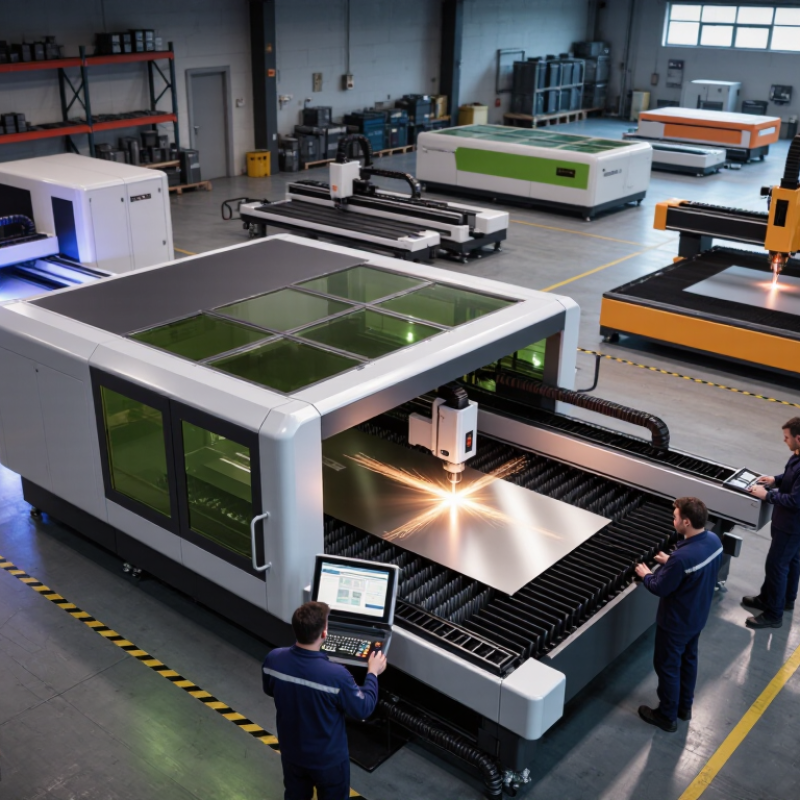
Understanding the Role of Laser Equipment Manufacturers
Laser equipment manufacturers do more than supply a cutting head or welding source. They turn laser physics into a stable production process. That means matching power, pulse settings, optics, motion systems, and extraction to the material and task. A steel sheet and a thin polymer behave differently under the same beam. Small choices matter.
According to the International Federation of Robotics’ World Robotics 2024 report, 541,302 industrial robots were installed worldwide in 2023. The figure is not laser-specific, but it shows why manufacturers increasingly need to support automation, interfaces, and repeatable handoffs between machines. A well-designed system should keep its focus steady, protect its optics from dust, and provide clear calibration and maintenance guidance.
Manufacturers also help buyers assess process quality before a line goes live. Practical trials can reveal edge burrs, heat marks, or inconsistent weld depth that a specification sheet may miss. A glossy brochure is not a process test. Ask for sample results, operating limits, and service response details. Then compare them against your own materials and shift conditions. Even careful planning has gaps; a factory floor often reveals them.
Key Laser Technologies and Equipment Categories
Laser equipment covers several technologies, and each interacts with materials differently. Fiber lasers are widely used for cutting and welding metals, while CO2 systems often process wood, acrylic, and other nonmetals. UV lasers can produce fine marks with limited heat impact, though results depend on the material. Ultrafast lasers suit delicate microprocessing where a small heat-affected zone matters. Small differences matter. Wavelength, pulse duration, power, and beam quality all influence the finished edge or mark. A test coupon reveals more than a headline power rating.
Equipment categories include cutting, welding, marking, engraving, and surface-cleaning systems. Cutters may use sheet beds or enclosed work areas; the right choice depends on part size and production volume. Welding equipment ranges from handheld units to automated cells with fixtures and motion control. Marking systems vary in speed, working area, and suitability for curved parts. Cleaning systems need trials on the actual coating or substrate. A clean-looking surface is not always an undamaged one. Buyers should compare sample results, extraction needs, maintenance access, and operator training. Specifications can mislead. Ask suppliers to document test conditions, including material grade and thickness. No setup is perfect. Real production may expose trade-offs that a short demonstration misses.
| No. | Equipment Category | Common Laser Technology | Typical Applications | Key Buyer Evaluation Points |
|---|---|---|---|---|
| 1 | Flat-Sheet Laser Cutting Systems | Fiber lasers are widely used for cutting metals; CO₂ lasers are also used for certain non-metal materials. | Cutting sheet metal for fabrication, machinery, electrical enclosures, and automotive components. | Check the material and thickness range, cutting head and controls, automation options, extraction, safety features, and local service support. |
| 2 | Tube and Profile Laser Cutting Systems | Fiber laser cutting, commonly configured for round, square, rectangular, and other supported profiles. | Processing tubes and structural profiles for furniture, construction, transport, and industrial equipment. | Confirm compatible profile sizes, loading and unloading method, chuck configuration, cut accuracy, and support for the required part geometries. |
| 3 | CO₂ Cutting and Engraving Machines | CO₂ lasers, often selected for processing non-metallic materials. | Engraving and cutting materials such as wood, acrylic, paper, textiles, and some plastics, subject to material suitability. | Verify the approved material list, working area, ventilation and filtration requirements, motion-system accuracy, and applicable fire-safety provisions. |
| 4 | Laser Welding Systems | Fiber and other solid-state laser sources; systems may be manual, robotic, or integrated into production lines. | Joining metal components in automotive, appliance, electronics, and general manufacturing applications. | Assess joint design, material combination, penetration and weld-quality requirements, process monitoring, operator training, and enclosure requirements. |
| 5 | Laser Cleaning Equipment | Usually pulsed or continuous-wave solid-state lasers, selected according to the substrate and contaminant. | Removing rust, oxides, paint, or surface residues from suitable parts and surfaces. | Request trials on representative parts; evaluate substrate effects, cleaning rate, fume extraction, operating distance, and laser-safety controls. |
| 6 | Laser Marking and Engraving Systems | Fiber, CO₂, and UV lasers are used for different materials and marking requirements. | Adding identification codes, serial numbers, logos, and traceability marks to products and components. | Match wavelength and pulse characteristics to the material; check code readability, marking speed, fixture needs, software integration, and traceability workflow. |
| 7 | Precision Micromachining Systems | Ultrashort-pulse lasers, including picosecond and femtosecond systems, can limit heat transfer in suitable processes. | Fine cutting, drilling, structuring, and surface processing of electronics, medical-device components, and precision parts. | Evaluate feature size, throughput, material response, positioning accuracy, process stability, and measurement methods for verifying results. |
| 8 | UV Laser Processing Systems | Ultraviolet lasers, including frequency-converted solid-state sources, are used for selected fine-marking and processing tasks. | Fine marking and processing of selected plastics, glass, electronics, and other wavelength-sensitive materials. | Confirm performance on the exact material and surface finish; compare contrast, edge quality, cycle time, source maintenance, and safety requirements. |
| 9 | Excimer Laser Processing Systems | Ultraviolet excimer lasers, commonly used in specialized industrial and scientific processes. | Applications can include surface treatment, precision ablation, and selected microfabrication processes. | Review wavelength, pulse energy and repetition needs, gas-handling and maintenance requirements, process integration, and operating costs. |
| 10 | Laser Powder Bed Fusion (Metal Additive Manufacturing) | Typically uses a focused laser to selectively fuse regions of a metal powder bed, layer by layer. | Producing complex metal parts and prototypes for aerospace, medical, tooling, and industrial applications. | Check qualified materials, build volume, process monitoring, powder handling, post-processing needs, part qualification, and total cost per usable component. |
How Global Buyers Can Evaluate Laser Equipment Suppliers
Choosing a laser equipment supplier starts with the job, not the brochure. Define the materials, thicknesses, required throughput, and expected working hours. Then compare wavelength, power, spot size, and cooling requirements against those needs. A machine that performs well on thin sheet may struggle with your actual production mix.
Ask suppliers to process representative samples, not just their best demonstration piece. Record edge quality, cycle time, and any rework under consistent conditions. Request written acceptance criteria, installation details, operator training, and a clear list of warranty exclusions. Small details matter. A two-week wait for a common spare part can cost more than a lower purchase price saves.
Check how the supplier handles service after installation. Ask who diagnoses faults, typical response times, and which parts are stocked locally. References from buyers with similar materials and workloads can reveal issues a sales call will not. Review relevant quality and safety documentation for your market, and verify claims independently where possible. No checklist catches every surprise. Even careful testing may not reproduce months of real production, so keep some room for uncertainty when comparing suppliers.
Typical Wavelengths of Industrial Laser Types
A technical reference for comparing laser equipment options when evaluating suppliers.
Values show common nominal wavelengths in micrometres (μm); exact specifications vary by system. Wavelength helps assess material compatibility, but does not by itself indicate equipment quality. Also verify power, processing results, safety compliance, warranty, and service support.
Top 10 Laser Equipment Manufacturers for Global Buyers
A useful comparison of the top 10 laser equipment manufacturers for global buyers should start with the work each machine must perform. Cutting thin sheet metal, marking serial numbers, and processing wood require different power levels, motion systems, and safety features. A polished catalog can look convincing, but sample results on your actual material are more revealing. Ask for test cuts, edge photos, and settings used during the demonstration.
Compare more than purchase price. Check installation support, operator training, spare-part availability, and the manufacturer’s response time across your region. A machine may run smoothly during a short demonstration, yet daily production exposes weak extraction, difficult calibration, or slow service. Small details count. Confirm whether the quoted package includes lenses, chillers, software, and delivery requirements. These costs can change the real budget.
For international buyers, review documentation, language options, electrical compatibility, and the process for remote troubleshooting. Request references from customers with similar materials and production volumes, then ask what required maintenance after the first year. Rankings can guide research, but they rarely fit every factory. I would also leave room for doubt: published speed figures may use ideal settings and simple test pieces. A measured trial in your own workflow is usually a better basis for a purchase decision.
Comparing Manufacturers by Applications, Support, and Compliance
Choosing laser equipment for global production starts with the job, not the catalogue. A machine suited to thin-sheet cutting may struggle with reflective metals, thick sections, or fine engraving. Compare each manufacturer’s stated applications with sample parts, material grades, thickness ranges, and required edge quality. Ask for a practical test using your own files. A polished demo is useful, but repeatability across several runs matters more.
Support becomes visible after installation. Check response hours, regional technician coverage, spare-part lead times, operator training, and remote troubleshooting procedures. Request a sample service plan and clarify what it excludes. Small details matter. A low purchase price can become expensive when a lens, sensor, or control component is unavailable. Support promises can be difficult to compare, so request written service targets and verify them with references when possible.
Tips: Request documentation for applicable safety and quality requirements in the destination market, including machine labels, electrical records, and user manuals in the required language. Ask who maintains each certificate and whether configuration changes affect its scope. Keep records of test results and support commitments. A table helps, but it can oversimplify. Treat it as a starting point.