2026 Top Melamine Faced Plywood Types for Global Buyers
Global buyers are entering 2026 with higher expectations for surface quality, core stability, and documented emissions performance. Melamine Faced Plywood now serves kitchens, wardrobes, retail fixtures, offices, and hospitality interiors. Its clean surface resembles a finished board, yet its plywood core offers useful screw-holding strength and dimensional stability.
“Performance begins beneath the decorative surface,” says plywood manufacturing specialist Dr. James K. Smith. His observation is simple, but often overlooked. A bright white melamine layer cannot repair voids, weak bonding, or uneven veneer construction. Buyers should inspect the panel’s core, overlay adhesion, edge quality, thickness tolerance, and formaldehyde documentation. Small details matter.
The leading 2026 types include standard interior panels, moisture-resistant grades, fire-retardant options, structural melamine plywood, low-emission panels, and textured decorative surfaces. Each type suits a different project. A wardrobe may need a smooth, scratch-resistant finish. A shop counter may require stronger edges and better impact resistance. A humid interior demands more than attractive color.
Global sourcing also requires careful comparison. EN 13986, CARB Phase 2, TSCA Title VI, and other regional requirements may influence purchasing decisions. Certification names alone do not guarantee consistent production. Buyers should request current test reports, batch information, sample panels, and clear grading details.
Some decisions remain imperfect. “Water-resistant” can be misunderstood. It does not mean unlimited outdoor exposure. This guide examines the strongest Melamine Faced Plywood choices for 2026, while questioning the shortcuts that create expensive failures. Expect practical comparisons, visible quality clues, and considerations for safer, more reliable international procurement.
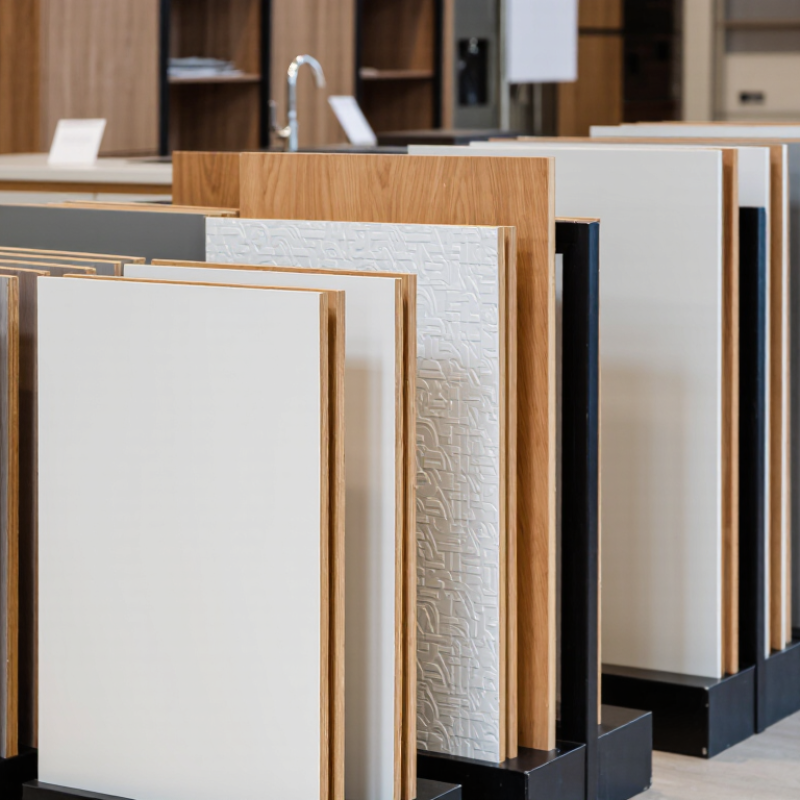
Core Structure and Definition of Melamine Faced Plywood
Melamine faced plywood is a composite panel with a plywood core and a melamine resin surface. The core contains thin wood veneers, usually cross-laminated for strength and dimensional stability. A decorative paper layer is impregnated with melamine resin, then pressed onto the panel under controlled heat and pressure. The resin cures into a hard, sealed surface.
A typical structure includes the front melamine layer, a plywood veneer core, adhesive lines, and a balanced rear face. Some panels also use a protective overlay for improved scratch resistance. The plywood core largely controls screw holding, flatness, and edge strength. Inspect the exposed edge closely. Consistent veneer layers and narrow glue lines suggest better manufacturing control, although appearance cannot prove internal quality. Melamine surfaces resist everyday stains and abrasion, but they are not automatically waterproof.
Global buyers should request the panel thickness, tolerance, veneer composition, surface finish, moisture condition, and formaldehyde emission data. Applicable test standards should be identified clearly. Edge sealing may be necessary in humid rooms or near sinks. A sample should remain in the intended environment before installation, because movement can appear after temperature changes. It is easy to trust a glossy face. That can mislead. Some panels look excellent while hiding core gaps or uneven bonding. A small sample offers useful evidence, but it is not complete proof.
Key Melamine Faced Plywood Types for Global Buyers in 2026
For global buyers, melamine faced plywood should be classified by core, surface, and performance.
The main types include standard interior panels, moisture-resistant panels, fire-retardant panels, and low-emission panels.
Standard panels suit cabinets, shelving, and office furniture. Moisture-resistant grades are safer for kitchens and humid rooms. They are not waterproof, however. That distinction is often missed.
FAOSTAT’s Forestry Production and Trade database places global wood-based panel production at hundreds of millions of cubic metres annually. This scale increases buyer choice, but also creates inconsistent specifications. Low-emission plywood, commonly tested under E0 or E1 requirements, supports healthier indoor applications.
Buyers should request formal test reports for formaldehyde release, bonding strength, and thickness tolerance. A printed certificate alone is not enough.
Surface type also affects value. Smooth matte melamine supports modern cabinetry, while woodgrain textures hide light scratches and fingerprints.
Deep textures can improve appearance but may collect dust. Fire-retardant melamine faced plywood requires verified reaction-to-fire testing, not only a supplier statement.
The 2024 UNECE/FAO Forest Products Annual Market Review highlights uneven regional demand and trade conditions, so availability can change quickly.
In practice, moisture exposure, edge sealing, and panel storage often matter as much as the selected grade. Perfect panels are uncommon. Careful inspection remains necessary.
Surface Finishes, Core Materials, and Performance Features
2026 Top Melamine Faced Plywood Types for Global Buyers
Surface finishes shape both appearance and daily durability. Matte melamine reduces glare in offices and retail interiors. Woodgrain embossing adds texture that feels closer to natural timber. High-gloss surfaces reflect more light, but they show fingerprints quickly. Anti-fingerprint finishes can help on cabinet doors and reception counters. Small samples matter because screen colors often mislead buyers.
Core material controls strength, weight, and machining behavior. Birch plywood usually offers firm screw holding and stable edges. Poplar cores are lighter and easier to handle during installation. Hardwood and combi cores can provide a practical balance between cost and stiffness. Check veneer gaps, core layering, and panel flatness before ordering. A clean cut edge reveals more than a sales image.
Performance should match the application, not only the price. Kitchen panels need moisture resistance and reliable edge sealing. Shelving requires strong screw retention and limited deflection under load. High-traffic furniture benefits from abrasion-resistant surfaces. Ask for test data covering surface wear, bonding strength, moisture exposure, and formaldehyde emissions. Confirm panel thickness tolerance and packaging quality for long-distance shipping. Damaged corners can ruin otherwise acceptable plywood.
No finish solves every problem. In practice, darker textures may hide dust but expose scratches. A heavier core may improve rigidity, yet increase labor costs. Buyers should compare samples after cutting, drilling, and wiping. That step is easy to skip. It should not be.
2026 Top Melamine Faced Plywood Types for Global Buyers
Comparative performance of common melamine faced plywood configurations, based on typical surface durability and moisture-suitability characteristics of their finish and core construction.
| Plywood Type | Typical Surface Finish | Typical Core Material | Common Use |
| Standard Interior MF Plywood | Smooth or lightly textured melamine paper | Poplar, eucalyptus, or mixed hardwood veneer | Furniture, shelving, wall panels |
| Moisture-Resistant MF Plywood | Decorative melamine surface with sealed edges | Moisture-resistant hardwood or eucalyptus veneer | Kitchens, bathrooms, retail interiors |
| Exterior-Grade MF Plywood | Durable melamine overlay with protected edges | Exterior-bonded hardwood veneer | Semi-exposed areas and demanding interiors |
| Fire-Retardant MF Plywood | Melamine surface over treated substrate | Fire-retardant treated plywood core | Commercial interiors and public buildings |
The chart uses a practical comparative index from 1 to 5 rather than a single universal laboratory rating. Actual performance depends on veneer species, adhesive system, melamine overlay weight, edge sealing, thickness, manufacturing tolerances, and the applicable regional standard.
International Buying Criteria, Standards, and Supply Considerations
2026 Top Melamine Faced Plywood Types for Global Buyers
International Buying Criteria, Standards, and Supply Considerations
Melamine faced plywood suits cabinets, wardrobes, wall panels, and commercial interiors. Buyers can choose poplar, birch, hardwood, or mixed-core panels. Each core changes weight, screw holding, surface stability, and price. Birch usually supports demanding furniture parts, while poplar reduces overall weight. Details matter.
Check thickness tolerance, panel squareness, veneer quality, and melamine bonding before placing a large order. Ask for test reports covering formaldehyde emissions, surface abrasion, moisture resistance, and bonding strength. Depending on the destination, buyers may need compliance with EN 13986, TSCA Title VI, or other regional requirements. Certification for responsible wood sourcing can also support customs files and customer audits. Do not guess.
Supply reliability depends on more than factory capacity. Confirm minimum order quantities, production lead times, loading plans, and replacement terms for damaged panels. A pre-shipment inspection should measure random sheets, not only selected samples. Examine pallet wrapping closely. Poor edge protection can create swollen corners after a long sea journey. Container moisture absorbers may help, but they cannot correct wet plywood.
A low quotation can hide inconsistent core density or unstable color matching. This is where procurement teams sometimes need to slow down. Request a control sample, approve a written specification, and compare future batches against it. Even experienced buyers should review assumptions when climate, regulations, or project use changes.


