What Are the Top Types of Thermal Sticker Labels?
A Thermal Sticker Label can look like a small, simple part of a package. In daily use, it carries important details: a barcode, shipping address, product name, or date code. Choosing the right type affects how clearly that information prints and how well it stays attached. A label that works on a dry cardboard box may fail on a chilled container or a curved bottle. Small details matter.
This guide explores the top types, including direct thermal and thermal transfer labels, plus common paper and synthetic facestocks. Each option has trade-offs. Direct thermal printing avoids ribbons and suits many short-term uses, but heat and sunlight can cause prints to fade. Thermal transfer printing uses a ribbon and can produce more durable marks when paired with a suitable label material. Paper is often practical for everyday packaging; synthetic materials may better handle moisture or abrasion. These are useful starting points, not guarantees.
The right choice depends on the printer, surface, storage conditions, and expected label life. Check adhesive compatibility, too: a strong bond on cardboard may be a poor fit for a reusable container. When specifications are unclear, print and apply sample labels under real working conditions. It takes extra time. It can prevent a frustrating mismatch. Some decisions remain imperfect, since temperature, handling, and surface cleanliness vary. The sections ahead compare the main types and explain what to consider before selecting one.
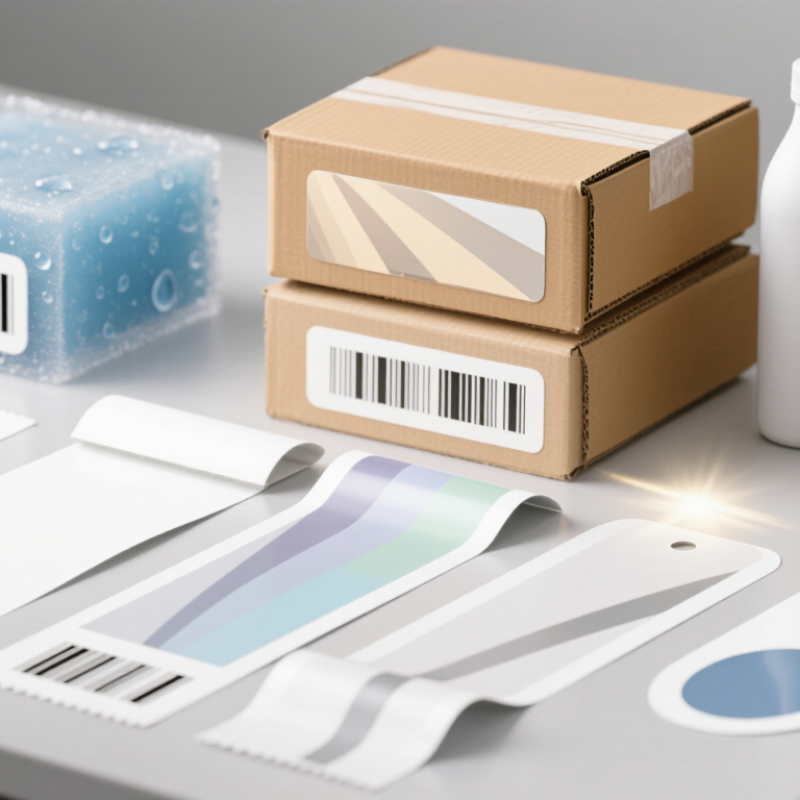
How Thermal Sticker Labels Are Classified
Thermal sticker labels are best classified by how they form an image, what they are made from, and how they attach. Direct thermal labels use heat-sensitive coating, so no ribbon is needed. They suit shipping labels and short-life inventory tags, but heat, sunlight, and friction can darken or fade the print. Thermal transfer labels use a ribbon that transfers ink onto the label surface. They generally last longer, making them useful for product identification and storage environments. A small test label can reveal whether the print survives rubbing and warm handling.
Material is another useful distinction. Paper labels work well on dry cartons and shelves; synthetic films better tolerate moisture, oils, or repeated handling. Adhesives also vary: removable options lift more easily, while permanent adhesives grip more firmly. Linerless labels have no backing paper, unlike conventional rolls, and can reduce release-liner waste. The right choice depends on the surface, exposure, and required life—not just printer compatibility.
Market data gives useful context, but not a buying rule. Smithers’ report The Future of Label Printing to 2028 estimates the global label market at about $46.5 billion in 2023, with growth projected to $50.9 billion by 2028. That broad market includes many label technologies, not only thermal stickers. This distinction is easy to miss. In practice, test the actual label on the real container; curved, dusty, or cold surfaces can behave differently from a clean sample card.
Top Types of Thermal Sticker Labels
Thermal labels are commonly classified by their printing method. Direct thermal printing uses heat-sensitive labels and requires no ribbon; thermal transfer printing uses a ribbon to transfer ink onto the label. The chart counts the label and, where applicable, the ribbon as core printing consumables. The printer is not included.
Direct Thermal Labels: Structure and Common Uses
Direct thermal labels use a simple stack: a paper face, a heat-sensitive coating, pressure-sensitive adhesive, and often a release liner. Inside the coating, heat from the printhead triggers a reaction between a dye and a developer, forming dark marks. No ink ribbon is needed. Some labels have a protective topcoat, which can improve resistance to moisture and abrasion, though it does not make them permanent.
They suit shipping labels, checkout receipts, warehouse picking, and grocery scales, where printing must be quick and economical. A barcode rolls off the printer; staff apply it to a carton or product. Grand View Research estimated the global labels market at about US$48 billion in 2023, reflecting the broad demand for labeling across industries. Fortune Business Insights estimated the thermal paper market at about US$4.3 billion that year. These figures cover wider markets, not direct thermal labels alone.
The trade-off is durability. Heat, sunlight, oils, and friction can darken or fade the image, so labels stored near a warm loading dock may become hard to scan. I would test the actual label against the product surface and expected storage conditions. Easy to overlook. A topcoat can help, but choosing a direct thermal label for long-term outdoor identification is still a decision worth questioning.
Thermal Transfer Labels: Structure and Common Uses
Thermal transfer labels are built in layers. The printable face stock sits on top, with a heat-sensitive coating that receives ink from a ribbon during printing. Beneath it, pressure-sensitive adhesive holds the label to a surface, while a release liner protects the adhesive until application. Face materials vary: paper suits many dry, indoor uses, while synthetic films can better tolerate moisture, rubbing, or handling. The right choice depends on the label’s environment, not just its appearance.
Small details matter. A printer heats selected areas of the ribbon, transferring ink onto the label to form text, barcodes, or symbols. This method is commonly used for shipping labels, product identification, warehouse locations, and asset tracking, where clear, durable information is useful. Ribbon and face-stock compatibility affects print quality, so a combination should be tested before a large run. In a busy packing area, a barcode may look sharp on screen but still fail when printed too lightly or placed on a curved package. It is easy to overlook that. Adhesive performance also changes with surface texture, temperature, and application pressure; a label that sticks well to a clean carton may lift from a dusty tote. The “best” construction is sometimes a practical compromise.
Specialty Thermal Labels for Challenging Environments
Specialty Thermal Labels for Challenging Environments
Thermal labels face more than ordinary shelf conditions. Freezer doors collect condensation; warehouse cartons scrape against pallets; outdoor equipment sees sunlight and rain. Direct thermal stock can darken or fade with heat and light, so thermal-transfer printing is often a stronger choice for long-life identification. A synthetic face stock, resin ribbon, and a carefully matched adhesive can resist moisture, abrasion, and some chemicals. The exact combination matters. A durable top layer cannot rescue an adhesive that releases from a cold, dusty surface.
Barcode quality needs checking, not guessing. GS1’s General Specifications use the ISO/IEC 15416 grading scale, which rates linear barcode print quality from 0.0 to 4.0. A crisp-looking code may still scan poorly after rubbing or exposure. Test finished labels under the real conditions they will face: apply them at the expected temperature, then expose them to moisture, handling, and relevant cleaning agents. Small trials can reveal weak adhesion before a full production run.
Tips: Confirm both application and service temperatures with the label supplier. Test on the actual container surface, and verify barcode grades after exposure. Keep a sample for comparison. A little inconvenient, but useful.
How to Match Label Types to Printing and Application Needs
Direct thermal labels suit short-lived shipping, pick-and-pack, and checkout labels. They need no ribbon, so changes are quick and printer setup is simple. Heat-sensitive coatings can darken with sunlight, friction, or prolonged heat, however. For a parcel moving through a hot loading bay, test whether the print remains readable after handling. Smithers’ report, The Future of Label Printing to 2028, estimated global label-printing market value at about US$49.9 billion in 2023. That broad market figure is not a forecast for thermal labels alone, but it reflects how many applications depend on reliable identification.
Thermal transfer labels fit longer-life uses, including equipment tags, inventory labels, and products exposed to moisture or abrasion. Match the face material and ribbon to the surface: paper often works for dry indoor shelves, while synthetic films can better tolerate damp handling. Adhesive matters just as much. A label on a curved plastic container may lift even when its print looks perfect. Check the printer’s supported media width, core size, and ribbon type, then run a small batch under real storage conditions. That trade-off matters. It is easy to over-specify durability and raise costs, or to choose a low-cost label that fades too soon. A short test can reveal both problems before routine use.


