What Are Stainless Steel Syringes Used For?
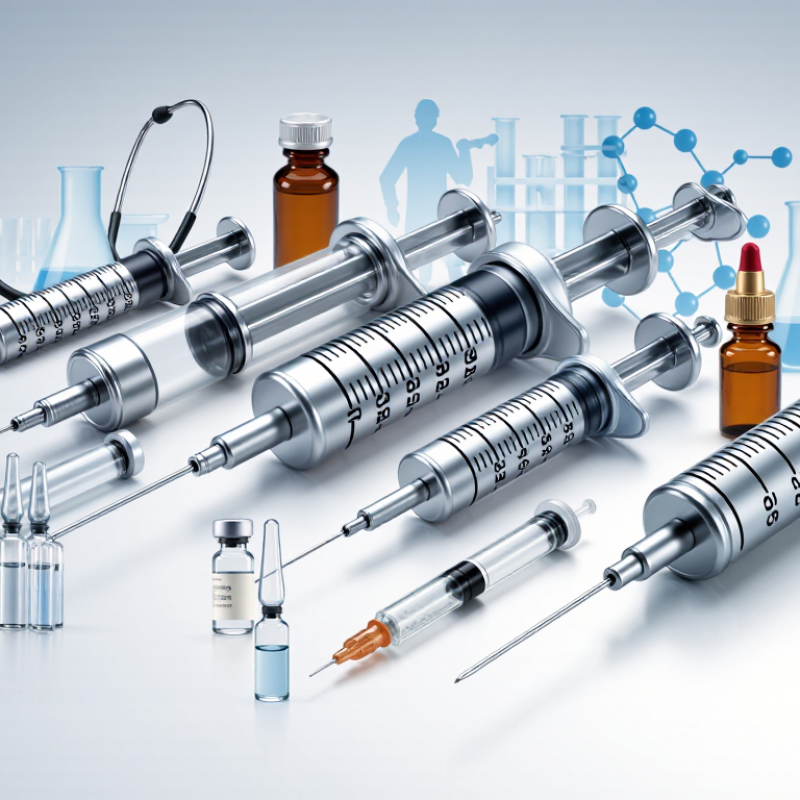
Stainless Steel Syringes serve specialized roles where strength, precision, and chemical resistance matter. Unlike common disposable plastic syringes, they can withstand repeated sterilization when designed for reuse. Their rigid barrels support accurate dosing, while stainless steel needles resist bending during demanding procedures. These features make them useful in laboratories, veterinary clinics, chromatography, industrial dispensing, and selected medical applications.
The World Health Organization estimates that roughly 16 billion injections occur worldwide each year. This figure highlights the importance of safe, reliable injection equipment. However, most routine clinical injections still use sterile, single-use devices. Stainless Steel Syringes are more relevant when durability or material compatibility becomes critical. In analytical laboratories, gas-tight models can transfer solvents and gases with controlled volume. In veterinary practice, metal syringes may support repeated handling and autoclave cycles. Industrial technicians also use them for lubricants, adhesives, coatings, and other measured fluids.
Precision matters.
Standards such as ISO 7886 address sterile, single-use syringes, while ISO 11040 covers prefilled syringe systems. These standards help manufacturers verify performance, cleanliness, and functional safety. Industry reports from Grand View Research and Fortune Business Insights describe continuing growth in global syringe demand, driven by healthcare, research, and manufacturing. Yet, market growth does not automatically prove that steel is the best choice. Cleaning quality, cross-contamination risk, corrosion resistance, and local regulations require careful evaluation. This article examines what Stainless Steel Syringes are used for, where they perform well, and where their limitations deserve closer attention.
Stainless Steel Syringe Construction: 304/316L Steel and Gauge Selection
What Are Stainless Steel Syringes Used For?
Stainless steel syringes are used for precise liquid sampling, laboratory analysis, and controlled dispensing. They often handle solvents, oils, calibration fluids, and other demanding liquids. Their rigid barrels support repeatable measurements under regular laboratory or industrial conditions.
Construction affects reliability. 304 stainless steel offers good general corrosion resistance and is suitable for many routine applications. 316L stainless steel contains molybdenum, improving resistance to chlorides and harsher chemical environments. Its low carbon content also helps reduce corrosion around welded areas. However, steel selection alone does not guarantee compatibility. The liquid, temperature, exposure time, and cleaning method must be checked together. Small details matter.
Gauge selection changes how the syringe performs. A larger gauge number usually means a narrower needle bore. Fine gauges suit low-viscosity liquids and delicate dosing, but they can clog easily. Thicker liquids usually need a wider bore and lower flow resistance. Shorter needles can reduce dead volume, while longer needles may reach recessed containers. In practical testing, I would compare the selected gauge with the actual liquid temperature, since viscosity can change noticeably. Gauge charts help, but they are not perfect. A syringe that feels precise with water may become frustrating with oil. Inspect the barrel, tip, and seal after cleaning, then confirm smooth movement before critical measurements.
HPLC Sampling: 1–100 µL Syringes for Precise Chromatographic Injection
Stainless steel syringes are precision tools for transferring small liquid volumes. In HPLC, they commonly support manual and automated chromatographic injection. A 1–100 µL syringe can introduce samples with controlled, repeatable volume. That control affects peak area, retention-time interpretation, and quantitative accuracy. At this scale, a tiny air bubble can distort the result. The narrow needle also helps reach injection ports cleanly. Experienced analysts select the needle style and volume range for the instrument and sample matrix.
Reliable HPLC sampling begins before the injection. Rinse the syringe with a compatible solvent, then condition it with the sample when appropriate. This reduces dilution and carryover between runs. Draw liquid slowly. Keep the needle tip below the surface. Watch for bubbles. A visible bubble can make a 10 µL draw less accurate than expected. The plunger should move smoothly, without forcing resistance. Excessive pressure may damage delicate parts or create leakage around the seal.
Stainless steel also offers strong chemical resistance for many routine solvents and analytical samples. However, it is not universally compatible with every formulation. Check solvent compatibility and clean the syringe immediately after use. Inspect the needle for blockage, bending, or residue. I still recheck volume delivery when results look unusually high or low. Small handling errors remain possible, even with careful technique. Calibration checks and consistent injection timing help reveal them. In some workflows, an autosampler syringe may require different cleaning and maintenance steps.
Gas Sampling: Airtight Syringes for Trace Analysis and Pressure Testing
What Are Stainless Steel Syringes Used For?
Gas Sampling: Airtight Syringes for Trace Analysis and Pressure Testing
Stainless steel syringes are used to collect, transfer, and inject gas samples. Their rigid bodies resist deformation during repeated laboratory work. When fitted with reliable seals, they limit gas loss and outside contamination. This matters when measuring trace compounds in very small concentrations.
In routine sampling, technicians may connect the syringe to a sampling port with a locking needle or valve. They purge the internal path before collection. Then, they draw a measured volume slowly to reduce turbulence and pressure changes. A clear volume scale supports repeatable transfers. Clean handling is essential. Fingerprints, moisture, and leftover solvents can affect sensitive results.
These syringes also support pressure testing for instruments and sealed lines. The operator introduces a known gas volume and observes pressure behavior over time. However, a standard syringe is not a replacement for certified high-pressure equipment. Its pressure rating, seal material, and connection type must match the application. No sampler is perfect. Even a tiny valve leak can distort a trace analysis. I have seen sampling errors blamed on the instrument when the real problem was poor purging. Regular leak checks, calibration records, and controlled storage make the process more dependable. Reflection helps too: a result that looks precise may still represent a contaminated sample.
Industrial Dosing: 0.5–100 mL Syringes for Chemicals and Lubricants
What Are Stainless Steel Syringes Used For?
Stainless steel syringes support controlled industrial dosing from 0.5 to 100 mL. Operators use them for solvents, process chemicals, oils, greases, and calibration fluids. Their rigid barrels resist swelling, cracking, and repeated pressure better than many plastic alternatives. A 10 mL syringe can deliver measured lubricant into a narrow bearing port. A 0.5 mL model suits small-volume additives or laboratory-scale process checks. Larger 50–100 mL syringes help transfer viscous fluids without opening large containers.
The global industrial lubricants market reached about USD 71.6 billion in 2023, according to Grand View Research’s industry report. That scale increases demand for cleaner, repeatable dosing tools. Stainless steel also supports easier cleaning between compatible fluids. However, “stainless” does not mean universal chemical resistance. Chlorides, strong acids, and some solvents can still damage components or seals. Material compatibility must be checked against concentration, temperature, and exposure time.
ISO 9001-based quality systems commonly require documented calibration and traceability for measuring equipment. Syringe performance should therefore be verified by gravimetric testing, not assumed from the barrel label.
Small errors matter. A 0.2 mL deviation in a 1 mL dose equals a 20% error.
Needle selection, plunger force, and fluid viscosity can change the result. In practice, operators should record dose size, fluid temperature, cleaning method, and inspection date. The process may look simple. It is not always repeatable.
Cleaning and Reuse: 121°C Autoclave Sterilization for Stainless Steel Models
Stainless steel syringes are used for laboratory sampling, analytical transfers, and dispensing heat-resistant liquids. Their rigid barrels tolerate repeated handling better than many disposable alternatives. Reuse, however, depends on validated cleaning and sterilization procedures. Residue can hide inside the barrel, needle hub, or plunger seal. That small detail matters.
Cleaning should begin immediately after use. Flush the syringe with suitable water, then use a compatible laboratory detergent. Rinse until no foam or visible film remains. Disassemble removable parts when the instructions permit. The U.S. FDA’s reusable-device guidance emphasizes cleaning before sterilization because organic soil can shield microorganisms. Visual inspection alone is imperfect. I would not call it foolproof.
Tips: For steam sterilization, follow the device instructions and load the autoclave loosely. The CDC’s disinfection guideline lists 121°C for about 30 minutes in a gravity-displacement cycle, excluding heating and drying time. Actual performance depends on load density, packaging, altitude, and chamber calibration. Use a chemical indicator for each load and biological monitoring according to your facility’s policy. After the cycle, allow complete drying before storage. Wet metal can develop stains and encourage contamination during handling. Inspect the needle, barrel, and seal for corrosion, blockage, cracks, or poor movement. A damaged syringe should leave service, even when it looks clean. Record cycle conditions, operator checks, and reuse counts for traceability.
What Are Stainless Steel Syringes Used For? - Cleaning and Reuse: 121°C Autoclave Sterilization for Stainless Steel Models
| Application | Typical Material or Task | Why Stainless Steel Is Used | Cleaning and Reuse Considerations |
| Laboratory liquid transfer | Aqueous solutions, solvents, reagents, and prepared samples | Rigid construction, low permeability, and good resistance to many laboratory chemicals | Rinse immediately after use; confirm that the syringe, plunger, seals, and fittings are compatible with the specific solvent. |
| Chromatography and analytical sampling | Small-volume samples and mobile-phase or sample preparation tasks | Stable dimensions can support repeatable manual delivery and reduce adsorption compared with some plastics | Use a sequence of compatible rinses when required; avoid leaving salts or buffers to dry inside the barrel or needle. |
| High-temperature liquid handling | Liquids handled above the practical temperature range of common disposable plastics | Metal components generally tolerate heat better than standard plastic barrels | Allow the syringe to cool before handling; verify the temperature rating of non-metal seals, hubs, and accessories. |
| Viscous or particulate-containing liquids | Oils, concentrated solutions, suspensions, and other difficult-to-transfer liquids | Durable construction is suitable for repeated controlled use when the opening and plunger design are appropriate | Flush promptly with a compatible cleaning liquid; inspect the needle and outlet for blockage before reuse. |
| Controlled dispensing and dosing | Repeated manual measurement of liquids in laboratory or production workflows | Reusable construction can reduce disposable waste and provide consistent handling when calibrated and operated correctly | Check plunger movement, leakage, graduations, and connection integrity before each reuse cycle. |
| Non-clinical fluid injection or sampling | Equipment testing, instrument maintenance, and controlled technical procedures | Mechanical strength and reusability are useful for technical environments | Do not assume laboratory syringes are suitable for human or veterinary injection; use only products specifically approved for that purpose. |
Recommended Cleaning and 121°C Autoclave Workflow
| Step | Process | Practical Guidance | Key Control Point |
| 1 | Immediate pre-rinse | Flush the barrel, needle, and fittings with a suitable liquid before residues dry. | Use a rinse that is compatible with the handled material and syringe components. |
| 2 | Detergent cleaning | Clean with a laboratory detergent and water according to the detergent instructions; use a soft brush only where appropriate. | Avoid abrasive tools that can scratch surfaces or damage seals. |
| 3 | Rinse and drain | Rinse thoroughly with clean water or another validated rinse, then drain the syringe completely. | Residual detergent or chemicals may interfere with later samples and sterilization. |
| 4 | Inspection | Check for blockage, corrosion, bent needles, damaged seals, cracks, leakage, and restricted plunger movement. | Remove damaged or corroded components from service. |
| 5 | Autoclave sterilization | For autoclavable stainless-steel models, use saturated steam at 121°C. A commonly used exposure range is approximately 15–30 minutes after the load reaches the target temperature. | The validated cycle depends on load size, packaging, equipment, and the manufacturer’s instructions; 121°C alone does not define a complete cycle. |
| 6 | Drying and cooling | Allow the syringe to dry and cool in a clean condition before assembly, storage, or use. | Moisture trapped in the barrel or fittings can promote contamination or corrosion. |
| 7 | Post-cycle verification | Confirm that the syringe remains clean, intact, leak-free, and functional before returning it to service. | Retire the syringe if sterilization causes deformation, seal failure, discoloration, or impaired accuracy. |
Important: Reuse and autoclaving are appropriate only when the complete syringe assembly is explicitly rated for these conditions. Stainless steel may tolerate 121°C steam, but seals, adhesives, plastic hubs, lubricants, and other accessory materials may have different limits. Always follow the applicable operating instructions and validate the cleaning and sterilization process for the intended use.


