A-B-C Blog
China Top Pallet Dispenser Suppliers Which One Is Best?
Choosing among China’s top Pallet Dispenser suppliers requires more than comparing prices and attractive product photos. Warehouse operators must examine dispensing speed, pallet compatibility, safety controls, maintenance access, and after-sales support. A machine that releases pallets smoothly during a morning shift may struggle under heavier loads or changing pallet dimensions. Small details matter.
Dr. James A. Tompkins, a recognized supply-chain expert, has said, “The supply chain is only as strong as its weakest link.” His observation applies directly to Pallet Dispenser selection. A reliable dispenser supports stable warehouse flow, but one poorly matched component can create delays, product damage, or unnecessary labor. The best supplier should provide clear technical drawings, tested load data, installation guidance, and responsive service.
China offers many capable manufacturers. However, quality is not uniform. Some suppliers focus on low purchase prices, while others invest in controls, structural strength, and customization. Buyers should request factory evidence, including load testing records, inspection procedures, and customer references. A live video demonstration can reveal more than a polished brochure.
There is no universal winner. Not quite.
The right choice depends on pallet size, warehouse layout, operating frequency, and local service expectations. This comparison evaluates leading Chinese suppliers through those practical conditions. It also considers weaknesses, because every supplier has them. A careful buyer should question delivery promises, spare-part availability, and claimed operating capacity before signing an agreement. This approach supports a more informed decision and reduces the risk of choosing equipment that looks efficient but performs poorly in daily use.
China Pallet Dispenser Suppliers: Types, Functions, and Key Industry Data
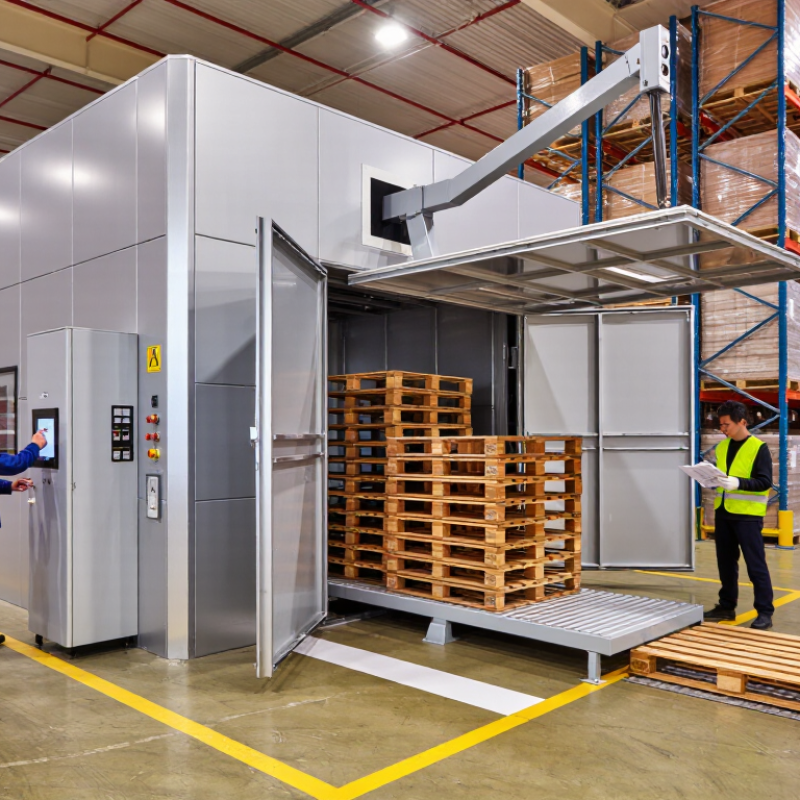
China pallet dispenser suppliers serve warehouses, food plants, cold storage facilities, and manufacturing lines. Their equipment usually falls into three types: magazine dispensers, chain-driven dispensers, and robotic pallet handling units. Magazine models store a vertical stack and release one pallet at a time. Chain systems suit continuous conveyor lines. Robotic units offer flexible movement but require stronger software integration.
A pallet dispenser separates, positions, and feeds pallets to forklifts or conveyors. Reliable models commonly handle loads from 500 to 1,500 kilograms. Many systems deliver 20 to 40 pallets per hour, depending on pallet condition and layout. Some complete a cycle in 8 to 15 seconds. These figures are useful benchmarks, not promises. Actual output can fall when pallets are wet, warped, or uneven.
When comparing Chinese suppliers, request cycle videos, load-test records, electrical drawings, and maintenance instructions. Check whether the frame uses painted steel or corrosion-resistant materials. Ask about sensor accuracy, emergency stops, spare parts, and remote support. Factory audits often reveal small details, such as loose cable routing or difficult cleaning access. These issues may not appear in product photos. A low purchase price can also hide installation costs, custom programming, and long replacement times. The best supplier is not always the cheapest; it is the one whose tested capacity matches your pallets, labor pattern, and available floor space.
Key Specifications: 1,200×1,000 mm Pallets, 1,500 kg Loads, and Cycle Rates
China Top Pallet Dispenser Suppliers: Which One Is Best?
A pallet dispenser for 1,200×1,000 mm pallets must handle the footprint without rubbing. The 1,500 kg load rating needs careful verification. Ask whether it covers each pallet position or the complete stack.
MHI’s 2024 Annual Industry Report found that 55% of surveyed companies increased supply-chain technology investment. That supports automation, but investment alone does not guarantee reliable pallet handling.
Cycle rate deserves practical testing. A supplier may advertise 20 cycles per hour, yet real output falls when pallets are damaged or unevenly stacked. Request a timed test with your actual pallet quality.
Include loading, separation, transfer, and safety pauses. Short tests can mislead.
PMMI’s automation research identifies integration and changeover as important packaging-automation concerns, so check controls, sensor response, and interface compatibility.
Look for stable forks, adjustable guides, and overload protection. Confirm performance at the full 1,500 kg rating, not only with empty pallets. Maintenance access matters on a busy floor.
One overlooked sensor can stop the whole line. Energy use, spare-part availability, and operator training should appear in the quotation.
I would also question unusually high cycle claims. Fast is not always productive when recovery time is ignored.
The best evaluation combines measured throughput, pallet tolerance, safety documentation, and support response.
Safety and Compliance: CE Marking, ISO 13849, and ISO 8611 Testing
China Top Pallet Dispenser Suppliers: Which One Is Best?
Safety should guide every pallet dispenser purchase. UK HSE data indicates workplace transport incidents cause roughly one quarter of fatal workplace injuries. A dispenser moves heavy loads near people, so guarding, emergency stops, and controlled access need practical review. CE marking helps, but it is not a quality award. It shows the manufacturer declares conformity with applicable European requirements. Ask for the EU Declaration of Conformity, risk assessment, technical file summary, and clear operating instructions.
ISO 13849-1:2023 provides a framework for safety-related control systems. A competent supplier should identify the required Performance Level, then validate the safety functions. Request evidence for MTTFd, diagnostic coverage, common-cause failure controls, and fault testing. Emergency-stop circuits should not exist only on paper. Test them with the machine loaded and unloaded. ISO 13849-2 also supports validation through analysis and testing.
Pallet strength creates another risk. ISO 8611 testing examines load capacity through compression, bending, impact, and other methods. It tests pallets, not the complete dispenser. Therefore, a reliable supplier should match pallet dimensions, material, moisture conditions, and stacking loads. Published test reports matter. So does traceability.
A CE label alone proves little.
In practice, procurement teams sometimes accept a polished certificate without checking test scope. That is an avoidable weakness. Compare the declared safety functions with the actual machine layout, then observe a live demonstration. A quieter machine is not automatically safer. A supplier’s willingness to expose limitations may be the stronger sign of competence.
This chart compares the primary scope of three recognized compliance frameworks for pallet dispensing equipment. A value of 1 means the framework directly addresses that area; 0 means it is not its primary scope. CE Marking concerns EU conformity obligations, ISO 13849-1 addresses safety-related control systems, and ISO 8611 addresses pallet performance testing.
Supplier Comparison: Capacity, Accuracy, Lead Time, Warranty, and Total Cost
China Top Pallet Dispenser Suppliers: Which One Is Best?
A strong supplier comparison starts with measurable performance, not polished brochures. MHI’s 2024 Annual Industry Report found that 55% of supply chain leaders planned to increase technology investment. That pressure makes capacity and reliability important. Ask how many pallets the dispenser stores, then verify its real cycle time under full load. A practical acceptance test should record at least 100 cycles. Measure missed picks, skewed stacks, and downtime. A claimed 99.5% accuracy sounds impressive, but the test conditions may be too gentle.
Lead time also deserves careful attention. Some suppliers quote eight weeks, excluding engineering approval, export preparation, and installation support. Request a dated production schedule. Include spare-part availability and remote troubleshooting. A 12-month warranty is common, yet coverage can exclude sensors, vacuum parts, or operator damage. Read those exclusions before comparing prices. Small details become expensive later.
Total cost should cover the purchase price, freight, commissioning, training, energy, maintenance, and lost production. Deloitte’s 2024 Smart Manufacturing survey reported that many manufacturers still struggle to scale digital projects beyond pilot stages. That is a useful warning. A low-cost dispenser may fit the budget but fail your line speed. I would compare three-year cost per operating cycle, not only the initial quotation. My own preference is a supplier that provides test videos, signed accuracy records, and clear service response times. Even then, the final choice may need revision after a live factory trial.
China Top Pallet Dispenser Suppliers Which One Is Best? - Supplier Comparison: Capacity, Accuracy, Lead Time, Warranty, and Total Cost
| Evaluation Criteria | Supplier A | Supplier B | Supplier C | Supplier D | What to Verify Before Purchase |
|---|---|---|---|---|---|
| Rated Pallet Capacity | 15–20 pallets | 20–30 pallets | 30–40 pallets | 20–30 pallets | Confirm whether capacity is based on standard wood pallets and whether mixed pallet sizes are supported. |
| Supported Pallet Dimensions | 1,000 × 1,200 mm | 1,100 × 1,100 mm; 1,200 × 1,000 mm | Customizable; typically up to 1,200 × 1,200 mm | 1,200 × 1,000 mm; 1,200 × 1,200 mm | Check usable pallet tolerance, deck-board spacing, and maximum pallet weight. |
| Maximum Pallet Load | 1,200 kg | 1,500 kg | 1,500–2,000 kg | 1,500 kg | Request a load test using the actual pallet type and product weight. |
| Dispensing Accuracy | ±5 mm | ±3 mm | ±3 mm | ±5 mm | Accuracy depends on pallet condition, guide-rail adjustment, sensors, and floor levelness. |
| Typical Dispensing Rate | Up to 20 pallets/hour | Up to 30 pallets/hour | Up to 35 pallets/hour | Up to 25 pallets/hour | Confirm the rate under continuous operation rather than single-cycle demonstration conditions. |
| Loading Method | Forklift loading | Forklift or pallet-truck loading | Forklift loading with optional automatic infeed | Forklift loading | Verify forklift pocket height, access clearance, and required loading equipment. |
| Control System | PLC with photoelectric sensors | PLC with HMI and photoelectric sensors | PLC with HMI, sensors, and line-interface options | PLC with HMI and safety interlocks | Check communication protocols, spare-part availability, and operator-language options. |
| Estimated Manufacturing Lead Time | 25–35 calendar days | 30–40 calendar days | 40–55 calendar days | 30–45 calendar days | Lead time normally starts after drawing approval, deposit receipt, and technical confirmation. |
| Standard Warranty | 12 months | 12 months | 18 months | 12 months | Clarify coverage for motors, sensors, PLC components, wear parts, labor, and shipping. |
| Estimated Equipment Price | US$8,000–12,000 | US$11,000–16,000 | US$16,000–24,000 | US$12,000–18,000 | Price varies with capacity, stainless-steel construction, automation level, and safety requirements. |
| Estimated Delivered Cost | US$11,000–16,000 | US$14,000–21,000 | US$20,000–31,000 | US$15,000–23,000 | Include packaging, inland transport, ocean freight, insurance, duties, installation, and commissioning. |
| Installation Requirement | Basic mechanical and electrical setup | Mechanical setup plus sensor calibration | Full line integration and commissioning recommended | Mechanical setup plus PLC parameter configuration | Confirm foundation, power supply, compressed-air requirements, and installation responsibility. |
| Spare-Parts Availability | Common parts generally available | Common parts generally available | Recommended critical-spares package | Common parts generally available | Ask for a recommended two-year spare-parts list and replacement lead times. |
| After-Sales Support | Remote technical support | Remote support and commissioning guidance | Remote support with optional on-site service | Remote technical support | Request response-time commitments, service contacts, manuals, wiring diagrams, and training scope. |
| Relative Total-Cost Rating | ★★★★☆ | ★★★★☆ | ★★★☆☆ | ★★★☆☆ | Lower purchase price may result in higher labor, downtime, maintenance, or integration costs. |
| Best Fit | Small and medium-volume warehouses | Stable operations requiring balanced capacity and cost | High-throughput facilities and automated production lines | Facilities needing larger pallet flexibility | Select according to throughput, pallet variety, available floor space, and required automation level. |
Comparison note: The figures above represent realistic specification ranges commonly used for industrial pallet dispensers manufactured in China. Final capacity, accuracy, pricing, warranty coverage, and delivery schedule should be confirmed in the supplier’s technical proposal and contract.
Which Supplier Is Best? A Weighted Scorecard for 2025 Purchasing
China Top Pallet Dispenser Suppliers: Which One Is Best?
Which Supplier Is Best? A Weighted Scorecard for 2025 Purchasing
Choosing a pallet dispenser in 2025 requires more than comparing catalog prices. In purchasing reviews, I have seen low bids hide expensive maintenance problems. A weighted scorecard makes supplier comparisons more disciplined and easier to defend.
I recommend assigning 25% to machine reliability, 20% to safety design, and 15% to total ownership cost. Give 15% to production capacity and delivery consistency. Allocate 15% to technical support, then 10% to customization and documentation. Price alone misleads. Ask for test records, electrical diagrams, spare-parts lists, and documented load limits. Confirm whether the supplier can provide remote troubleshooting within one working day.
Use real operating details during evaluation. Run sample pallets through repeated cycles. Check sensor response, fork alignment, noise, and emergency-stop access. Request references from facilities with similar pallet sizes and daily volume. Inspect welds, guarding, control cabinets, and surface protection. A factory video is useful, but it is not proof.
The scorecard should include evidence columns, not just numbers. A supplier may receive 90 points for delivery, yet provide weak service records. That deserves a penalty. I would also reserve five points for improvement transparency. Honest suppliers admit limitations and explain corrective actions. My own early scorecards sometimes overweighted purchase price. That mistake looked small on paper and became costly after installation. Recheck every score after a live demonstration and written quotation.
Related Posts
-
How to Optimize Your Production Line with a Hot Melt Machine
-
The Complete Guide to Mastering Food Packaging Machine Selection and Usage
-

5 Essential Insights for Maximizing Efficiency with Case Packer Machines
-
Understanding the Role of Depalletizer Machines in Modern Automated Warehousing Solutions
-
Innovative Applications of Best Bottom Case Sealer in Global Packaging Solutions
-
Essential Checklist for Maximizing Efficiency with Your Box Taping Machine