
A-B-C Blog

Why Choose Nitrate Based Fertilizer for Crop Production?

Nitrate Based Fertilizer can give crops nitrogen in a form roots can absorb directly. That can matter when young plants are building leaves, or when a crop needs a timely nutrient supply. Granules dissolve into moist soil; in a well-managed field, they support steady growth rather than guesswork. But no fertilizer works everywhere.

Dr. Robert Mikkelsen, a soil fertility specialist, has emphasized matching nitrogen decisions to crop demand and field conditions. A concise paraphrase of his guidance is this: nitrogen rates and timing should fit the crop, soil, and growing conditions. That practical idea helps explain why growers consider nitrate-based products for vegetables, cereals, and other crops. The exact value depends on the formulation, application timing, weather, and soil.

There is a trade-off. Nitrate moves readily with water, so heavy rain or excess irrigation can carry it below the root zone. That means the same fast availability that helps a crop can require careful management. Field testing, realistic yield goals, and split applications can guide decisions; local agronomic advice matters too. The choice is not automatic. Nor is every field predictable. A grower may still face uneven soil or shifting weather, and fertilizer alone cannot fix those problems. Used thoughtfully, Nitrate Based Fertilizer can be a useful part of crop nutrition, not a substitute for sound field management.
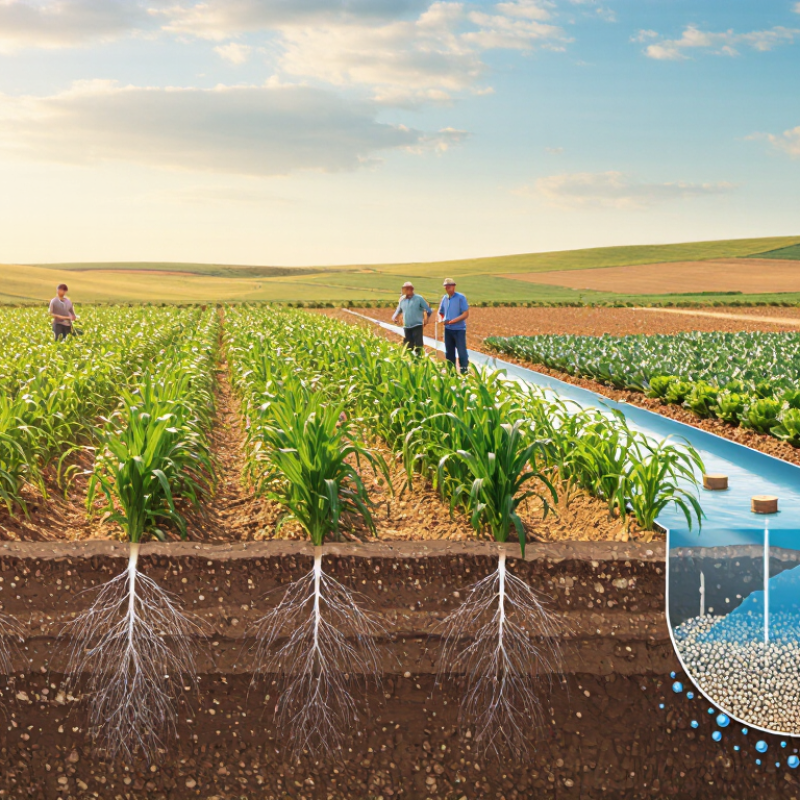
Why Choose Nitrate Based Fertilizer for Crop Production?

What Nitrate-Based Fertilizers Are

Nitrate-based fertilizers are products that supply nitrogen in nitrate form, written as NO₃⁻. This form dissolves readily in water and can be absorbed by plant roots. Not all products are alike. Some also supply calcium or potassium, while others contain ammonium nitrogen alongside nitrate. Nutrient ratios, solubility, and recommended uses vary by formulation. That distinction matters.

Growers may choose a nitrate-containing fertilizer when crops need readily available nitrogen, but the right choice depends on crop stage, soil conditions, and a soil test. Some soluble formulations can be applied through irrigation systems designed for fertigation. Follow the product directions. Nitrate moves with water, so heavy rain or excess irrigation can carry it below the root zone. More is not better. Even a suitable fertilizer may perform poorly if application timing ignores local conditions. Check the nutrient analysis, measure application rates carefully, and watch how the crop responds. That last step is easy to overlook.

Why Choose Nitrate-Based Fertilizer for Crop Production?

Nitrate-based fertilizers supply nitrogen in nitrate form; some products also contain ammonium nitrogen. The chart compares the typical total nitrogen content shown in common fertilizer grades.

Calcium nitrate and potassium nitrate also supply calcium and potassium, respectively. Actual nutrient guarantees can vary by product and formulation; check the fertilizer label for nitrogen forms and analysis.

How Nitrate Supplies Nitrogen to Crops

Nitrate-based fertilizer supplies nitrogen in the nitrate ion, which crop roots can absorb from soil water. After uptake, nitrate moves through the plant and is converted into forms used to build amino acids, proteins, and chlorophyll. These compounds support leaf growth and photosynthesis. The process takes energy, so nitrate is not a magic switch for rapid growth.

That matters. A healthy green leaf still depends on more than nitrogen: water, light, temperature, and other nutrients all play a part. In the field, growers can use soil tests, crop appearance, and plant tissue analysis to guide application rates. A pale lower leaf may signal nitrogen shortage, but it is not proof on its own. I still find that visual diagnosis can be misleading.

Nitrate dissolves readily and can become available quickly, which can help crops during periods of active growth. But dissolved nitrate moves with water. Heavy rain or excessive irrigation may carry it below the root zone, especially in coarse soils. Timing smaller applications to crop demand can improve uptake, though local soil and weather conditions matter. A field after rain deserves a closer look before more fertilizer is applied.

How Crops Absorb and Use Nitrate

Nitrate reaches crop roots dissolved in soil water, then crosses root-cell membranes through nitrate transport proteins. Water flow helps carry it upward through the xylem to leaves and growing tissues. The pathway is direct, but not effortless. Dry soil can restrict nitrate movement and root access.

Inside the plant, nitrate is not yet amino acid nitrogen. Nitrate reductase converts it to nitrite; plastids then reduce nitrite to ammonium, which the plant incorporates into amino acids. This process uses energy, so healthy leaves and functioning roots matter. University of Minnesota Extension’s corn nitrogen uptake guidance reports peak uptake near 4–5 pounds of nitrogen per acre per day around the V10–V14 growth stages. Timing matters. That figure describes corn under particular growing conditions, not every crop or field. It also shows why nitrate supply should track crop demand: too little during rapid growth can limit development, while excess nitrate may remain vulnerable to leaching. A field’s soil moisture, temperature, and rooting depth can shift the useful window, and sometimes the crop’s needs are harder to predict than a schedule suggests.

Benefits of Nitrate-Based Fertilizers in Crop Production

Nitrate-based fertilizers provide nitrogen in a form that crop roots can absorb directly. That can matter. In actively growing maize, leafy vegetables, or fruit crops, timely nitrogen supports chlorophyll production, protein formation, and new growth. When applied in measured amounts, nitrate can help address crop demand without waiting for soil microbes to convert ammonium. The response still depends on crop stage, soil conditions, and weather.

Many nitrate fertilizers dissolve readily, making them useful in fertigation and other precise application systems. Water carries the dissolved nutrients into the root zone, where plants can take them up. Some formulations also supply calcium or potassium, but nutrient content varies, so check the product analysis and soil test. Nitrate moves easily with water. Heavy rain or excessive irrigation can carry it below the roots, wasting nutrients and increasing losses. Split applications and careful irrigation help limit that risk. In practice, a field rarely follows the plan exactly; leaf color, crop growth, and rainfall records can reveal when adjustments are needed.

Factors to Consider When Choosing and Applying Nitrate Fertilizers

Nitrate-based fertilizers supply nitrogen in a form crops can take up quickly. That can help during rapid growth, but nitrate also moves easily with water. Choosing a product starts with the crop’s nitrogen demand, soil test results, and the nutrients already supplied by manure or previous applications. More is not automatically better. Excess nitrogen can encourage leafy growth while increasing the risk of nitrate loss.

Match the application rate to crop stage and soil conditions. A soil test gives a useful baseline, though it cannot predict every change in the field. Sandy soils often need smaller, more frequent applications than heavier soils because nitrate can leach below the root zone. Texture matters. The calendar can be wrong by a week, so check crop development and recent weather before applying. Timing matters.

Place fertilizer where developing roots can reach it, while avoiding direct contact with seeds or young roots unless the product directions allow it. Split applications can reduce losses, especially where rainfall is frequent or irrigation is used. Avoid applying just before heavy rain. Rain changes everything. With irrigation, use enough water to support uptake without pushing nitrate beneath the roots. Watch crop color and growth, but do not rely on appearance alone; nutrient symptoms can overlap. Keep simple records of rates, dates, rainfall, and field response. Those notes may reveal that a familiar schedule needs adjusting.

Why Choose Nitrate Based Fertilizer for Crop Production? - Factors to Consider When Choosing and Applying Nitrate Fertilizers

Factor to Consider What to Assess Relevant Fertilizer Example Practical Application Guidance
Crop nitrogen demand Estimate nitrogen needs from crop type, yield goal, soil tests, previous crops, and locally recommended nutrient plans. Nitrate-containing products provide nitrogen in a form plants can absorb directly. Ammonium nitrate commonly contains about 34% total nitrogen, approximately half as nitrate-N and half as ammonium-N. Set the total seasonal nitrogen rate using local recommendations; do not select a rate based only on the fertilizer’s nitrogen percentage.
Speed of nitrogen availability Consider how quickly the crop needs nitrogen and whether the soil is cool or biological conversion may be slow. Nitrate-N is immediately available for root uptake, while ammonium-N must first be taken up or transformed in the soil. Apply near periods of active crop uptake. Avoid applying more nitrate-N than the crop can use before heavy rainfall or irrigation.
Leaching risk Assess soil texture, drainage, rainfall, irrigation management, rooting depth, and groundwater sensitivity. Nitrate ions are mobile in soil water and can move below the root zone, particularly in sandy or freely draining soils. Where leaching risk is high, consider smaller split applications, match irrigation to crop needs, and avoid applications before forecast heavy rain.
Additional nutrient requirements Use soil and tissue tests to identify whether potassium or calcium is also required. Potassium nitrate is commonly labeled 13-0-46 (N-P2O5-K2O). Calcium nitrate commonly contains about 15.5% N and 19% calcium, though formulations vary. Choose a product that fits the full nutrient plan. Account for accompanying nutrients to avoid overapplying potassium or calcium while meeting nitrogen needs.
Application method Check whether the product is suitable for broadcasting, fertigation, or a specific placement method. Many nitrate fertilizers dissolve readily in water; product solubility and compatibility depend on the formulation. Follow the product label and equipment guidance. For fertigation, check water quality and compatibility, and flush irrigation lines as recommended.
Timing and placement Match nutrient availability to crop growth stages and the location of active roots. Nitrate fertilizers can support crops during periods of rapid nitrogen uptake, but nitrate is not held strongly by most soils. Use locally recommended timing and placement. Keep fertilizer away from direct seed contact where concentrated salts could injure germinating seeds or seedlings.
Soil pH and salinity Review soil pH, electrical conductivity, drainage, and crop sensitivity to salts. Different nitrate products contribute different accompanying ions; for example, sodium nitrate adds sodium, while potassium nitrate adds potassium. Consider the complete product composition, especially in saline or sodic soils and for salt-sensitive crops. Base corrective actions on soil and water tests.
Rate calculation Calculate product quantity from the nitrogen target and the guaranteed analysis on the product label. For a product labeled 15.5% N, supplying 60 kg N/ha requires about 387 kg product/ha (60 ÷ 0.155), before adjusting for other nitrogen sources. Use the label’s guaranteed nutrient analysis and account for all nitrogen already supplied by manure, irrigation water, or other fertilizers.
Environmental and safety considerations Consider local nutrient regulations, nearby water bodies, storage conditions, and product-specific handling requirements. Nitrate loss can contribute to water-quality problems. Some nitrate fertilizers also have specific storage and handling precautions listed on their labels. Store products as directed, prevent spills, follow local regulations, and use soil testing and nutrient management planning to reduce excess application.

Note: Nutrient analyses can vary by product and region. Confirm the guaranteed analysis on the label and follow local agronomic recommendations; example rates are for calculation illustration, not universal prescriptions.