A-B-C Blog
Why Are Containers and Packaging Important?
Containers And Packaging are easy to overlook when a product arrives safely on a doorstep. Yet a cracked jar, damp carton, or leaking bottle quickly shows why the package matters. It protects goods from impact, moisture, light, and contamination during storage and transport. Packaging also helps people identify products, read instructions, and handle them with confidence. Small details count: a tight lid, a clear label, or a box that fits without rattling.
Packaging educator and author Walter Soroka gives a widely used definition: “Packaging is the science, art, and technology of enclosing or protecting products for distribution, storage, sale, and use.” That idea reaches beyond the box itself. Containers And Packaging connect product design with manufacturing, shipping, retail, and everyday use. A suitable design can reduce damage and make filling, stacking, and opening easier. It can also help businesses use materials more carefully, though no single package solves every problem.
There are trade-offs. Extra layers may add protection, but they can also mean more material and harder disposal. A lighter package may save space, yet fail under rough handling. The right choice depends on the product, route, climate, and user. It should be tested, not merely admired on a screen. This work can seem unglamorous. It is not. A package that performs well makes its value visible only by preventing trouble—and even experienced teams sometimes need to rethink their first design.
Containers and Packaging: Definitions, Materials, and Core Functions
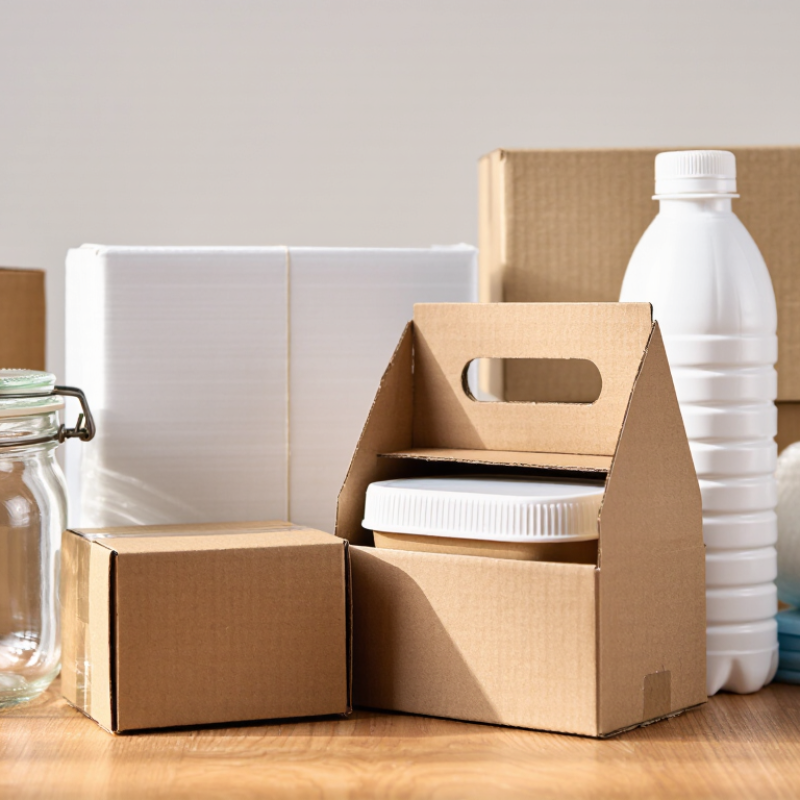
A container is the vessel or enclosure that holds a product. Packaging is the wider system around it, including closures, cushioning, labels, and shipping materials. The terms overlap in everyday use. In practice, the neat distinction can get fuzzy.
Materials serve different needs. Glass offers a strong barrier against moisture and gases, but it is heavy and can break. Metal containers are durable and protect contents from light. Paperboard is light and easy to shape, though it may need a coating to resist moisture. Plastics vary widely in flexibility, clarity, and barrier performance. Molded fiber can cushion fragile goods. No material is ideal for every product.
Packaging must contain, protect, and help preserve products through storage and transport. A tight closure may matter for a liquid; cushioning matters more for a ceramic mug. Packaging also carries practical information, such as handling instructions and product details. Its shape affects stacking, opening, and disposal. These choices involve trade-offs. A thicker wall may improve protection but add weight and material use. Testing under realistic conditions—such as vibration during shipping—can reveal weaknesses that a tidy specification misses. Even then, real handling is not always predictable.
How Packaging Protects Products During Storage and Transport
Containers and packaging protect products long before customers handle them. During transport, cartons face vibration, sudden stops, shifting loads, and pressure from stacked goods. A snug fit helps prevent items from knocking together. Paper padding or molded inserts can cushion fragile corners, while sturdy outer boxes help resist crushing. Small gaps matter. Even a well-made container can fail if its contents slide around.
Storage brings different risks. Dust, humidity, temperature changes, and prolonged stacking can weaken materials or affect product quality. A sealed liner may help keep moisture away, but it cannot fix a damp warehouse. Clear handling labels and readable product information also help workers store and move cartons correctly. Packaging is not a perfect shield; teams should match its strength and design to the product, journey, and storage conditions. This step is easy to underestimate.
Tips: Test a packed sample with gentle drops and a short vibration check. Look for crushed edges, loose contents, and damp spots. Adjust the cushioning or box size when needed, then check again.
Food Packaging and Loss Prevention: FAO Reports 13.2% of Food Lost After Harvest
Why Are Containers and Packaging Important?
FAO estimated that 13.2% of food was lost between harvest and retail in 2021. That figure points to a practical problem: food can spoil or become damaged long before it reaches a shop. Tomatoes bruised in a deep pile, grain exposed to damp air, or fish kept warm during transport may all lose quality. Packaging cannot prevent every loss. But well-chosen containers can reduce some common causes.
A sturdy, ventilated crate can protect produce from crushing while allowing heat to escape. Dry, sealed containers help keep grain away from moisture and pests. For chilled foods, insulated boxes and reliable temperature control can slow spoilage during delays. The right choice depends on the food, journey, climate, and handling practices. A package that works well for apples may trap too much moisture around leafy greens.
There is a trade-off. Heavy or costly packaging may be hard for small farms to reuse, while flimsy containers can fail after a few trips. Packaging also cannot fix poor storage or rough handling on its own. Sometimes the obvious solution is not the best one. Measuring damage at each stage, then testing containers under real transport conditions, can reveal what actually helps—and what needs rethinking.
| Dimension | Fact or Function | Why It Matters for Food Loss |
|---|---|---|
| Global food-loss estimate | The FAO estimate highlighted here is 13.2% of food lost after harvest and before retail. This is a global estimate, not a rate that applies equally to every food or region. | Losses before retail can reduce the quantity of food available for sale or consumption. Appropriate packaging is one of several measures that can help protect food during handling, storage, and transport. |
| Measurement scope | The FAO Food Loss Index concerns food losses from post-harvest stages up to, but excluding, retail. | Packaging can be relevant along this supply chain, but it does not by itself address all causes of loss, such as inadequate infrastructure, handling practices, or market conditions. |
| Physical protection | Containers and packages can help protect food from crushing, abrasion, punctures, and contamination during handling and transport. | Protection suited to the product can reduce damage that makes food unmarketable or inedible. Packaging needs differ for fragile produce, grains, liquids, and other foods. |
| Moisture and gas control | Packaging materials can help limit moisture exchange or control exposure to gases. The required barrier depends on the food and its storage conditions. | Managing moisture and gas exposure can help preserve quality. A package that is too restrictive or otherwise unsuitable can also impair product quality, so material and design matter. |
| Temperature management | Insulated containers can help slow temperature changes, while packaging may support—but cannot replace—appropriate refrigeration or a reliable cold chain. | Temperature-sensitive foods need suitable storage and transport conditions. Packaging is most effective when used alongside proper temperature control. |
| Ventilation for fresh produce | Perforations or ventilated crates can allow airflow around some fresh produce. The appropriate level of ventilation depends on the commodity and conditions. | Suitable airflow can support cooling and help avoid trapped heat or excess moisture during storage and transport. |
| Handling and transport | Standardized, stackable containers can make loading, stacking, and movement more orderly and can reduce handling damage when used correctly. | Stable loads and careful handling can help prevent crushing and spillage between farms, storage facilities, processors, and markets. |
| Identification and traceability | Labels can communicate information such as product identity, handling instructions, and dates where applicable. | Clear information can support stock rotation and appropriate handling. Labels should be accurate and readable throughout the intended supply-chain journey. |
| Packaging trade-offs | Packaging uses materials and can create waste. Its amount and design should be appropriate to the food, distribution route, and available recovery or recycling systems. | Loss prevention should be balanced with material use and end-of-life impacts. More packaging is not automatically better; the goal is packaging that provides necessary protection without unnecessary material. |
| Source note: The 13.2% figure is presented as the FAO estimate cited in the supplied title. FAO food-loss estimates describe aggregate losses across defined supply-chain stages; packaging effects vary by food, location, and handling conditions. | ||
Packaging’s Environmental Footprint: 40% of Global Plastic Waste (OECD, 2019)
Containers and packaging matter because they protect food, medicines, and everyday goods during storage and transport. Yet protection has a cost. The OECD reported in 2019 that packaging accounted for about 40% of global plastic waste. That figure makes a familiar object—a clear wrapper or takeaway lid—part of a much larger environmental problem.
Packaging often has a short useful life. A parcel may arrive in minutes, while its film, padding, and tape can remain waste for far longer. Some items are difficult to recycle because they combine materials, carry food residue, or lack collection options nearby. The exact outcome depends on local waste systems, so a recycling symbol alone does not guarantee that an item will be recycled. Small details matter.
Better choices begin before disposal. A producer can reduce unnecessary layers, choose materials that local facilities accept, or design a container for repeated use. Reuse is not automatically better in every case; cleaning, transport, and durability also affect its footprint. That part is easy to overlook. As consumers, we can favor minimal packaging where practical, but responsibility should not rest on household sorting alone. Clear data and convenient collection are needed to turn design improvements into less waste.
Packaging Waste in Europe: 188.7 kg per Person in 2021 (Eurostat)
Why Are Containers and Packaging Important?
Packaging Waste in Europe: 188.7 kg per Person in 2021 (Eurostat)
Europe’s packaging footprint is tangible: Eurostat reports that the EU generated 188.7 kg of packaging waste per person in 2021. That is nearly four full suitcases of material for each resident. Paper and cardboard made up 40.3% of the total by weight, while plastic accounted for 19%. These figures cover packaging waste, not every item discarded at home.
Recycling helps, but it does not erase the burden. Eurostat recorded a 64.0% packaging recycling rate in 2021; the remaining waste still needs collection and treatment. The OECD’s Global Plastics Outlook also identifies packaging as the largest source of plastic waste, representing 40% globally in 2019. The comparison is imperfect: one figure covers EU packaging of many materials, while the other covers global plastic waste. Still, both point to a practical question: could some packaging be avoided or made easier to sort? A clean cardboard box is straightforward; a food-stained, mixed-material wrapper is not.
Tips: Choose products with less unnecessary wrapping when practical. Flatten clean boxes, and keep recyclable packaging free of food residue. Check local sorting guidance; rules and accepted materials can differ. Small habits help, though they cannot replace better packaging design.
Related Posts
-
Case Erector Machine Top Tips for Optimal Efficiency?
-
Advantages of Using Box Taping Machines for Efficient Packaging Solutions
-
The Complete Guide to Mastering Food Packaging Machine Selection and Usage
-
Innovative Applications of Best Bottom Case Sealer in Global Packaging Solutions
-
Why Choose a Robotic Case Packer for Your Packaging Needs?
-
Revolutionizing Your Production Line with Innovative Industrial Packing Machines