
A-B-C Blog

Why Is Gelatin Powder Used?

Gelatin Powder is used because a small amount can change how a food feels, sets, and holds its shape. In a chilled dessert, it can turn a liquid mixture into a tender gel. In gummies, it helps create a springy bite. In some kitchens, it also stabilizes foams and helps prevent ingredients from separating. The result depends on more than the powder itself. Temperature, hydration time, acidity, and dosage all matter.

Grand View Research estimated the global gelatin market at approximately US$4.26 billion in 2023 and projected continued growth through 2030. This commercial forecast reflects demand across food, pharmaceutical, and other applications; it does not, by itself, prove that gelatin suits every recipe. Food scientist Richard W. Hartel, whose work focuses on confectionery and food structure, offers a useful expert perspective: gelatin’s function is to help control texture, not simply add bulk. That is a paraphrase of his research, not a direct quotation.

Look closely at a gummy or a spoonful of panna cotta. Their texture comes from controlled setting, not magic. Still, gelatin is not foolproof. A rushed soak can leave stubborn granules, while excessive heat or an unsuitable recipe can weaken the final set. Understanding why Gelatin Powder is used means looking at both its technical functions and its limitations. That distinction matters.
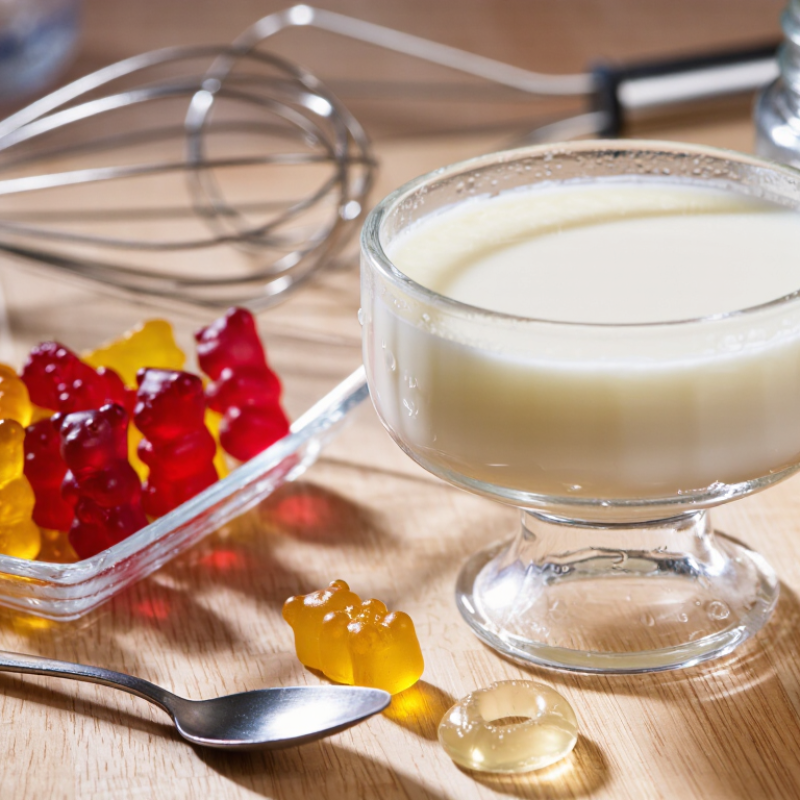
Why Is Gelatin Powder Used?

What Gelatin Powder Is and Where It Comes From

Why Is Gelatin Powder Used?

What Gelatin Powder Is and Where It Comes From

Gelatin powder is a protein ingredient made by processing collagen, the structural protein found in animal connective tissue. Common raw materials include pig or cattle skin and bones; some gelatin also comes from fish. The source can affect dietary suitability, so the ingredient label matters. Gelatin is not plant-based, though plant-derived gelling agents can serve similar purposes.

During production, collagen-rich material is cleaned and treated with water and heat. The resulting gelatin is filtered, dried, and milled into a pale powder. In a home kitchen, a spoonful may look unremarkable, but after soaking in cool water, it swells into soft granules. Warm it gently, and those granules dissolve. As the mixture cools, it can hold liquid in a tender gel. Small details matter: boiling it hard or adding it unevenly can affect the final texture.

That behavior explains its use in foods such as molded desserts, marshmallows, and some dairy products. It can also help bind or thicken a mixture. Gelatin varies by source and processing, so setting strength is not identical across products. This is easy to overlook when following a recipe. Check the package instructions, and remember that a firm set does not reveal where the gelatin came from.

How Gelatin Powder Works When Mixed with Liquid

Gelatin powder does not thicken liquid instantly. Its first job is to absorb water. Sprinkle it over cool liquid and leave it undisturbed for several minutes; the granules swell into a soft, sponge-like mass. This step, often called blooming, helps prevent dry clumps from forming when the mixture is heated. Then warm the liquid gently, stirring until the swollen gelatin dissolves. Avoid a hard boil, especially during prolonged cooking, because excessive heat can weaken its setting power.

The change becomes visible as the mixture cools. Gelatin proteins form a loose network that holds water in place, turning a pourable liquid into a trembling gel. The firmness depends partly on the gelatin’s Bloom strength. The Gelatin Manufacturers Institute of America’s Gelatin Handbook describes commercial grades spanning roughly 50–300 Bloom; higher Bloom generally means a firmer gel at the same concentration. Bloom is a standardized test, not a direct measure of how much powder every recipe needs. Small differences in acidity, sugar, and liquid volume can change the result. The process is simple, but not foolproof: a warm bowl may look thin, then set more firmly after several hours in the refrigerator.

Why Gelatin Powder Is Used in Food Preparation

Why Is Gelatin Powder Used?
Why Gelatin Powder Is Used in Food Preparation

Gelatin powder gives food structure without adding a strong flavor. In chilled desserts, it helps liquid set into a sliceable gel; in mousse, it supports a soft, airy texture. It also stabilizes some fillings and glazes, helping them hold their shape during serving. The effect depends on the recipe and the powder’s strength.

Bloom strength measures how firm a gelatin gel becomes. The Gelatine Manufacturers of Europe’s technical handbook describes commercial grades spanning roughly 50–300 Bloom. Higher-Bloom gelatin generally sets more firmly, so recipes may need adjustments when grades change. For best results, sprinkle powder over cool water and let it swell before gently dissolving it in warm liquid. Boiling it for a long time can weaken its setting performance. Small details matter.

Tips: Weigh gelatin rather than measuring by spoon. Chill a test portion before setting a whole batch, especially when using acidic fruit or changing the gelatin grade. A little too much can make a dessert rubbery.

Why Is Gelatin Powder Used? - Why Gelatin Powder Is Used in Food Preparation

Food Preparation Purpose What Gelatin Does Common Examples Practical Preparation Notes
Creating a gel When dissolved and cooled, gelatin forms a network that holds liquid in a soft, springy gel. Gelatin desserts, panna cotta, aspics, and set fillings Sprinkle powder over cool liquid and let it hydrate before dissolving it gently in warm liquid. Follow the recipe for proportions and chilling time.
Thickening and setting chilled foods Gelatin adds body and helps mixtures hold their shape after cooling, without relying on starch. Chilled custards, mousse, cheesecake fillings, and fruit desserts Gel strength depends on the amount and type of gelatin, the recipe’s liquid and other ingredients, and the setting conditions.
Stabilizing whipped mixtures In suitable recipes, gelatin helps a foam retain its structure by forming a supporting network as it cools. Some whipped cream toppings, mousses, and marshmallow-style confections Use a recipe designed for gelatin. Add it in a fluid, evenly mixed form; poorly incorporated gelatin can form lumps or strands.
Improving texture Gelatin can provide a smooth, tender, or elastic texture, depending on its concentration and the food. Gummies, soft-set desserts, and certain confectionery products Different gelatin strengths and formulas produce different textures, so substitutions may require testing or recipe adjustments.
Helping mixtures hold together Once cooled, gelatin can bind ingredients into a sliceable or molded preparation. Layered desserts, molded savory dishes, and some chilled fillings Allow enough time for the mixture to cool and set before unmolding or cutting.
Providing a melt-in-the-mouth texture Gelatin gels soften and melt with warmth, giving many gelatin-set foods their characteristic tender texture. Jellies, panna cotta, and some mousse desserts Gelatin is not interchangeable with every plant-based gelling agent; agar, for example, sets and melts differently.
Supporting a clear, smooth result Properly dissolved gelatin can set a liquid without the graininess associated with undissolved powder. Clear dessert gels and some molded preparations Hydrate it fully and avoid boiling it for an extended time. Straining can help remove undissolved particles if needed.
Setting fruit mixtures Gelatin can help fruit juices or purées become a chilled gel or filling. Fruit gels, chilled pie fillings, and layered fruit desserts Some fresh fruits, including pineapple, kiwi, papaya, and figs, contain enzymes that can interfere with gelatin setting. Cooking the fruit can deactivate these enzymes.

How Gelatin Powder Is Used in Medicine and Other Products

Gelatin powder is used in medicine because it forms a flexible, water-soluble material when processed correctly. In hard capsules, it creates shells that hold measured doses of powders or granules. Soft capsules use gelatin with plasticizers to contain oils and liquid formulations. Some tablets also use it as a binder or coating ingredient. Not a cure-all. Formulators must check moisture, strength, and compatibility, since these properties affect capsule performance and product stability. Pharmaceutical-grade gelatin is assessed against applicable quality specifications, and manufacturers test batches before use.

Outside medicine, gelatin helps set desserts, stabilize whipped products, and improve texture in some confectionery. It can also serve as a film-forming ingredient in personal-care products. Grand View Research estimated the global gelatin market at about USD 3.5 billion in 2023 and projected a 6.1% compound annual growth rate from 2024 to 2030. That market figure covers varied uses; it does not measure medical demand alone. The source material matters, too. Gelatin properties can vary with processing and raw-material origin, so one powder may not perform like another. That detail is easy to overlook.

What Determines the Amount of Gelatin Powder Needed

The amount of gelatin powder depends on the texture you want, the liquid’s volume, and the powder’s Bloom strength. A delicate panna cotta needs less setting power than a sliceable molded dessert. The Gelatin Manufacturers Institute of America’s Gelatin Handbook describes commercial gelatin strengths ranging roughly from 50 to 300 Bloom. Higher-Bloom gelatin generally sets more strongly, so a recipe may need less of it. But Bloom strength is not the only variable.

Sugar, acidity, fat, and serving temperature can all change how a gel feels. A tart fruit mixture may set differently from sweetened cream, while a warm room can soften the finished dessert. Weigh gelatin and liquid rather than relying on spoon measures; powder settles, and spoonfuls vary.

Hydrate the powder in cool liquid before dissolving it, then test a small batch and adjust. Small changes matter. Kitchen tests can disagree with the recipe, especially when ingredients or brands of gelatin vary.

That uncertainty is worth recording: note the powder weight, total liquid weight, Bloom rating, and chilling time. A brief test in a chilled ramekin can reveal whether the set is too soft before you prepare a full batch.