A-B-C Blog
What Is a Case Packer Machine and How Does It Work?
A Case Packer Machine is the quiet link between product filling and warehouse-ready shipping. It collects individual containers, arranges them into a programmed pattern, and places them into corrugated cases. Depending on the design, it may load bottles, cartons, pouches, cans, or trays. The machine then closes the case, seals it, and sends it toward palletizing.
Jorge Izquierdo, Vice President of Market Development at PMMI, has stated, “Automation works best when it is designed around the entire packaging process.” That idea matters here. A case packer is not simply a faster pair of hands. It must match the product shape, case dimensions, line speed, and sealing method. Sensors check product position. Servo drives control movement. Guides prevent cartons from tipping. Small adjustments often decide whether the line runs smoothly or stops every few minutes.
The working cycle looks simple. Products enter on a conveyor. A grouping system forms the required count. A loading mechanism pushes or lowers that group into an open case. Flaps fold. Tape or adhesive seals the package. It sounds easy.
It is not always easy.
Poor case quality, uneven products, or incorrect timing can create jams and damaged packaging. Operators still need practical experience. They inspect wear points, verify changeover settings, and watch unusual noise or movement. This guide explains how a Case Packer Machine works, what its main components do, and where real-world performance can fall short.
What Is a Case Packer Machine?
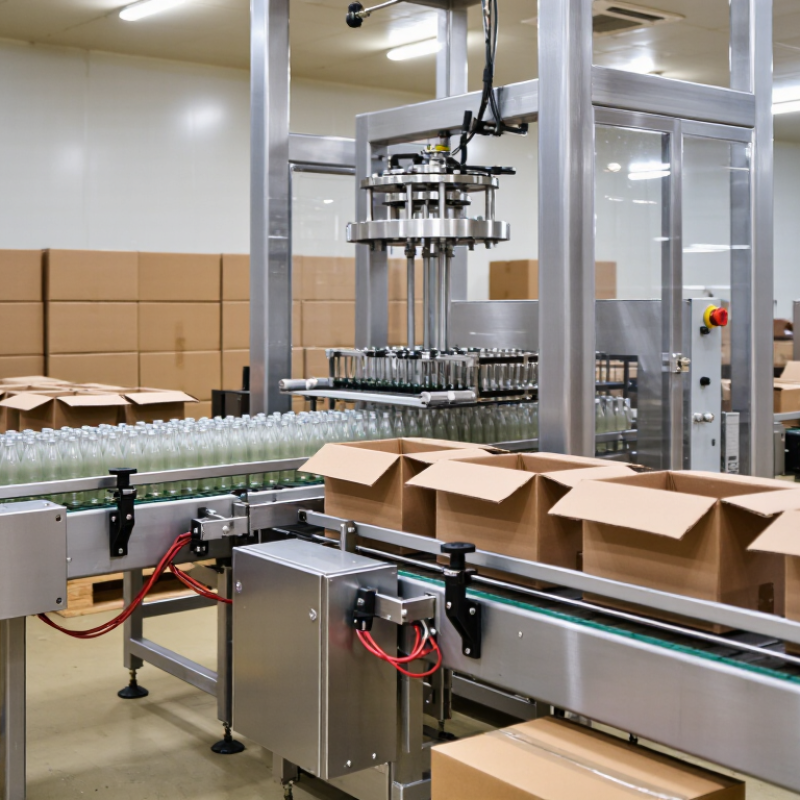
A case packer machine is an automated system that places individual products into shipping cases. It commonly handles cartons, pouches, bottles, or trays. The machine receives products on an infeed conveyor. Sensors count and arrange them into a planned pattern. A robotic arm, push mechanism, or pick-and-place unit then loads them into an open case. The case is folded, sealed, and discharged for transport.
Case packers can be vertical, horizontal, intermittent, or continuous-motion models. The right design depends on product shape, case size, speed, and changeover frequency. Grand View Research estimated the global packaging machinery market at about USD 52.83 billion in 2023. Its report also projected a 4.7% compound annual growth rate from 2024 to 2030. This growth reflects stronger demand for automation, but speed alone is not enough. A poorly matched machine can create jams, product damage, and costly downtime. In practice, installation is rarely plug-and-play. That assumption deserves questioning.
Tips: Check the full product path before choosing a machine. Measure product spacing, case tolerances, sealing strength, and operator access. Ask for verified output data using your actual products. PMMI industry reports repeatedly identify labor availability and automation efficiency as major packaging investment drivers. Still, maintenance skill matters. Clean sensors, accurate guides, and well-trained operators often determine daily reliability more than headline speed.
What Is a Case Packer Machine and How Does It Work?
A case packer automatically groups products, forms or opens a shipping case, loads the products into the case, and seals it for transport. This representative cycle uses a 7.5-second operating sequence, equivalent to approximately 480 cases per hour when the machine runs continuously without stoppages.
What Are the Main Components of a Case Packer?
A case packer machine places products into shipping cases with controlled speed and repeatable movements. Its main components work together like a small production team. The product infeed conveyor receives items from the previous machine and spaces them evenly. Guides, belts, or timing screws may correct product position before packing begins. This stage looks simple, but poor spacing can cause repeated stoppages.
The case magazine stores flat cartons and releases them one at a time. A carton erector opens each blank and forms its basic shape. Vacuum cups, grippers, or mechanical arms usually handle this movement. The packing station then loads products into the open case. Depending on the product, a robotic arm, side-loading unit, or pick-and-place head may be used. Sensors check product presence, carton position, and opening alignment. Small errors matter here. A single tilted carton can interrupt the entire line.
After loading, the case closing unit folds the flaps and prepares the package for sealing. Adhesive applicators or tape heads may secure the case, while a discharge conveyor transfers it to the next process. The control panel coordinates timing, speed, and fault messages. Safety guards and access switches protect operators during operation. In real installations, these components rarely perform perfectly without adjustment. Dust, uneven cartons, and product size changes can affect reliability. A technician may need to refine sensor positions or conveyor speeds after observing the machine under actual production conditions.
How Does a Case Packer Machine Work Step by Step?
A case packer machine automatically places products into shipping cases, reducing repetitive manual handling. In practice, the process begins with product infeed. Belts, sensors, or robotic pickers align cartons, pouches, bottles, or trays at a controlled speed. A forming unit opens a flat case and squares its corners. Small misalignments can still cause trouble.
The machine then groups products according to the programmed case pattern. A pick-and-place arm, collating system, or drop-loading section transfers the group into the open case. Guides support the product during loading, especially when packages are flexible or uneven. The case flaps fold next, and adhesive or tape seals the top. Sensors check product presence, case position, and closure quality before discharge. An operator usually adjusts recipes, replenishes case blanks, and investigates rejected cases. The machine is not completely “hands-off.”
PMMI reported that North American packaging machinery shipments reached about 10.2 billion dollars in 2022, an 11.8% increase from the previous year. This growth reflects stronger investment in automation and labor-saving equipment (PMMI, 2023 State of the Industry). Grand View Research also valued the global packaging machinery market at approximately 45.3 billion dollars in 2023, with continued growth expected through 2030. These figures describe packaging machinery broadly, not case packers alone. That distinction matters. Actual performance depends on product shape, case strength, changeover time, and operator training. A properly tested line may run smoothly, but real production often exposes weaknesses that specifications overlook.
What Types of Products and Cases Can It Handle?
A case packer machine loads products into shipping or display cases with controlled speed and accuracy. It can handle cartons, bottles, cans, pouches, trays, jars, and wrapped multipacks. The suitable format depends on product shape, stiffness, weight, and orientation.
Common case styles include regular slotted cartons, wraparound cases, open-top trays, and retail-ready packs. A machine may pick products robotically, collate them into rows, or push them into a formed case. Fragile glass containers need gentle gripping and stable dividers. Flexible pouches require careful alignment because they can collapse or shift. PMMI’s 2024 State of the Industry report identifies food, beverage, and pharmaceutical packaging as major machinery demand sectors. This reflects the wide product range case packers must accommodate. However, one machine rarely performs every task equally well.
Tips: Test real products, not samples only. Measure case compression, product spacing, and changeover time. Confirm the machine handles damaged cartons and slight size variation. These small issues often create serious stoppages. Smithers’ packaging industry research also highlights automation, efficiency, and material reduction as continuing priorities. A lighter case may reduce shipping weight, but it can require gentler loading. The trade-off deserves practical testing.
What Is a Case Packer Machine and How Does It Work? - What Types of Products and Cases Can It Handle?
| Data Dimension | Typical Information | How It Applies to Case Packing |
|---|---|---|
| Machine definition | An automated packaging system that groups individual products and loads them into shipping cases or cartons. | It replaces or reduces manual case-loading work while improving packing consistency and throughput. |
| Basic operating sequence | Product infeed → product collation → case forming or case presentation → loading → case closing → discharge. | Sensors, conveyors, guides, and programmable controls coordinate each step and detect common faults. |
| Common loading methods | Top-load, side-load, drop-load, wraparound, and robotic pick-and-place. | The suitable method depends on product rigidity, orientation, case style, required speed, and handling sensitivity. |
| Rigid packaged products | Cans, bottles, jars, cartons, trays, tubs, and rigid containers. | These products are generally easy to collate and load because they maintain their shape during handling. |
| Flexible packaged products | Pouches, bags, sachets, flow-wrapped items, and soft packs. | They may require controlled belts, product guides, vacuum or gentle gripping, and special collation devices. |
| Fragile products | Glass containers, decorated packages, delicate food items, and easily scratched products. | Low-drop loading, cushioned contact surfaces, controlled acceleration, and accurate product positioning help reduce damage. |
| Typical case styles | Regular slotted cartons, wraparound cases, trays, open-top cases, and partitioned cases. | Case compatibility is determined by board construction, flap layout, dimensions, and the required sealing method. |
| Case materials | Corrugated fiberboard is most common; coated board and reusable plastic cases may also be used in selected applications. | Material stiffness and surface friction affect case forming, product insertion, and closure reliability. |
| Typical case capacity | Often approximately 4–48 units per case, depending on product size, weight, and pack pattern. | Larger or heavier products usually require fewer units per case and stronger case construction. |
| Typical throughput | Approximately 5–30 cases per minute for many automated applications; higher rates are possible with specialized systems. | Actual output depends on product dimensions, case count, loading pattern, changeover frequency, and line layout. |
| Product size range | Small sachets and cartons through larger containers and bundled products. | Each machine has defined minimum and maximum product dimensions; irregular shapes may require custom tooling. |
| Case sealing options | Pressure-sensitive tape, hot-melt adhesive, tuck flaps, stitching, or no closure for open trays. | The choice depends on shipping strength, appearance, equipment compatibility, and operating environment. |
| Changeover requirements | Adjustments may be needed for product dimensions, case dimensions, pack count, and loading orientation. | Tool-free adjustments, recipe controls, and automatic settings can reduce changeover time. |
| Quality and safety features | Product presence sensors, case detection, overload protection, guarding, emergency stops, and fault alarms. | These features help prevent empty cases, product jams, incorrect counts, and unsafe access during operation. |
| Best-fit applications | Food and beverage, household goods, personal care, pharmaceuticals, consumer goods, and industrial components. | Case packers are most beneficial where products are standardized, demand is consistent, and manual packing limits productivity. |
Note: Performance ranges are general industry guidelines. Final suitability depends on product geometry, packaging materials, case specifications, and line configuration.
How Can Case Packer Performance Be Maintained and Improved?
A case packer loads products into cartons, closes the cartons, and prepares them for transport. It may use belts, guides, robotic arms, or mechanical pushers. The machine depends on accurate timing between product flow, carton forming, and sealing.
Consistent performance starts with daily observation.
Operators should check loose fasteners, worn belts, blocked sensors, and uneven carton openings. A small buildup of dust can change product alignment. Clean sensors with approved materials, not rough cloths that may scratch their surfaces. Lubricate moving parts according to the equipment manual. Too much lubricant can attract dust and create new problems.
Measure carton rejection rates, stoppages, cycle speed, and sealing quality. These figures reveal gradual decline before a serious failure occurs. Product size and carton strength should remain within defined specifications. Small changes can overload guides or cause crooked packing.
When changing formats, adjust one setting at a time and test several cartons. This method takes longer, but it makes faults easier to trace.
Training also affects output.
An experienced operator notices unusual vibration or a delayed carton flap. Still, experience can create overconfidence. I have seen teams ignore minor misalignment until damaged cartons increased.
Planned maintenance should include inspections of chains, bearings, grippers, and electrical connections. Replace damaged components promptly, using compatible parts and documented procedures.
Performance improvement is not always faster operation. A slower, stable cycle may protect products, reduce waste, and produce better long-term results.
Related Posts
-
5 Essential Insights for Maximizing Efficiency with Case Packer Machines
-
Why Choose a Case Packer Machine for Your Production Needs?
-
Top 10 Tips for Choosing a Robotic Case Packer?
-
How to Choose the Best Bottom Case Sealer?
-
How to Choose the Right Bottom Case Sealer for Your Business Needs
-
Elevating Global Standards with Best Package Machine from China