


How to Choose a Case Erector Machine in 2026
Choosing a Case Erector Machine in 2026 starts with the cartons your team actually runs, not the fastest number on a brochure. Record carton dimensions, board types, daily volume, and how often operators change formats. A machine that handles one carton size beautifully may slow production when several sizes arrive before lunch. Small details matter.
Compare rated speed with your real packing-line pace, then check how cartons transfer to filling and sealing. Ask how adjustments are made, whether tools are needed, and how quickly an operator can clear a misfeed. Look closely at guarding, accessible controls, sensor placement, and routine maintenance points. These practical features affect uptime as much as headline output. There is no shortcut.
Also measure the available floor space, including room for loading blanks and servicing the machine. Confirm that the supplier can explain installation needs, operator training, spare-parts availability, and support response times. Request a demonstration using your carton blanks and realistic production conditions, if possible. A clean test with a single carton is useful, but it cannot reveal every jam or awkward changeover. That part is easy to overlook.
This guide outlines how to compare machine styles, specifications, costs, and supplier support. It also points out questions worth asking before purchase. No checklist can replace a careful line assessment, and a few assumptions may need revisiting once operators test the equipment. A better choice is the one that fits your cartons, workflow, and team—not just the machine with the largest speed claim.
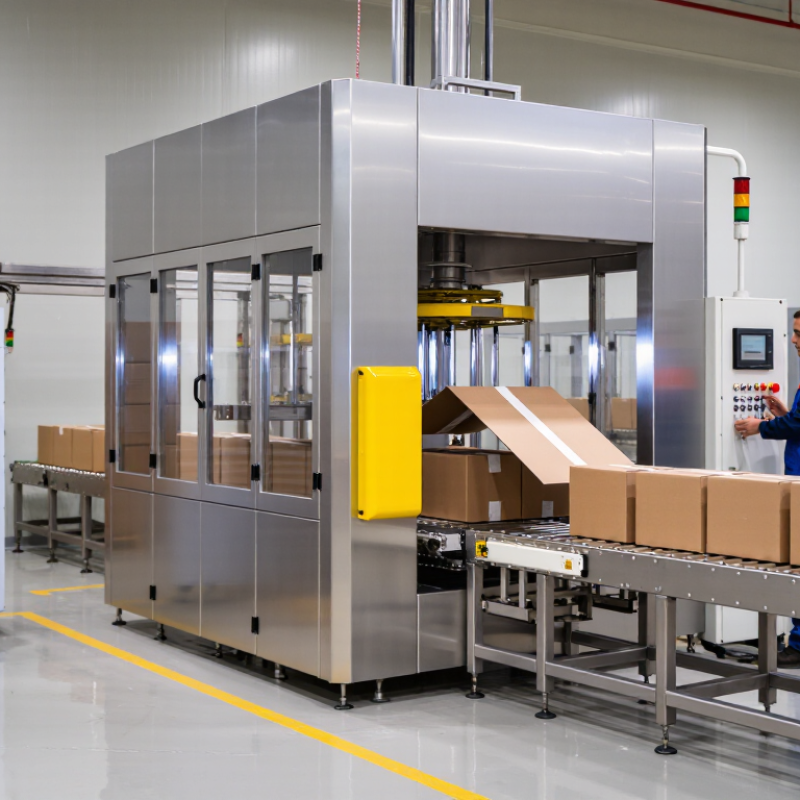
Identify Your Case Sizes, Output Goals, and Production Needs
Start with the cartons, not the machine. Record each case’s length, width, and height, including the smallest and largest sizes you actually run. Confirm blank dimensions, board quality, and whether cases arrive consistently flat. A sample that erects neatly by hand may still jam when blanks vary. Measure changeovers per shift, too. Frequent size changes can make adjustment time more important than a headline speed.
Set an output target in good cases per minute, not just the machine’s rated speed. Include breaks, replenishment, minor stops, and downstream packing limits. Deloitte and the Manufacturing Institute projected that 1.9 million U.S. manufacturing jobs could go unfilled by 2033. That makes labor availability worth including in your production plan, but it does not automatically justify full automation. MHI’s 2024 Annual Industry Report found that 55% of surveyed organizations planned to increase supply-chain technology investment. Treat this as context, not a case-erector specification.
Ask suppliers to demonstrate your actual cartons at your intended rate. Watch the magazine refill, tape or glue application, and recovery after a misfeed. Track good cases over a representative shift. A short test can flatter any machine. One detail is easy to miss: a fast erector may only move a bottleneck downstream. Record the line’s real constraints before comparing quotes, and leave room for honest uncertainty in the target.
| Decision Area | Information to Collect | Example Planning Data | What It Means for Machine Selection |
|---|---|---|---|
| Case size range | Measure the inside length, width, and height of every case style. Record the smallest and largest sizes, plus frequently used sizes. | Example SKU set: 250 × 180 × 150 mm, 400 × 300 × 250 mm, and 550 × 400 × 350 mm (L × W × H). These are example carton sizes, not universal machine limits. | Check the machine’s published minimum and maximum blank and erected-case dimensions. Confirm that all dimensions fall within its range and that changeovers are practical. |
| Case style and board | Identify the case design, corrugated-board grade, flute, print or coating, and the condition of incoming blanks. | Many shipping cases use regular slotted container (RSC) style blanks. Confirm board specifications and blank tolerances with the carton supplier. | Blank stiffness, score quality, warp, and surface finish can affect pickup, squaring, and sealing. Test representative production blanks before purchase. |
| Output goal | Calculate required good cases per minute, planned run hours, and the number of downstream packing lines served. | Indicative screening bands: up to about 10 cases/min for lower-volume needs; about 10–25 cases/min for many mid-range applications; above about 25 cases/min for higher-throughput lines. | These are planning bands, not guaranteed machine ratings. Confirm rated speed and sustained output with the exact case, closure method, blank feed, and line configuration. |
| Product mix and changeovers | Count active case sizes and estimate how often operators switch between them. | Example: 3 case sizes with 4 size changes per shift. Record current changeover time and acceptable target time. | Frequent changes favor accessible adjustment points, clear setup references, and repeatable settings. Ask whether adjustments are manual, tool-assisted, or recipe-controlled. |
| Blank supply and loading | Document blank dimensions, stack quantity, replenishment frequency, and whether operators can load blanks while the machine runs. | Example: blanks supplied in stacks and replenished by an operator during production. Stack capacity and loading method depend on the chosen machine. | Compare magazine capacity and refill access with staffing and run length. Confirm that blank orientation and stack condition match the feeding system. |
| Bottom closure | Choose pressure-sensitive tape or hot-melt adhesive based on case requirements and downstream handling. | Tape and adhesive are both common closure methods. Required tape width, adhesive pattern, and case-seal performance depend on the application. | Check consumable availability, changeover needs, maintenance, and sealing performance. Validate closure on actual cartons and products. |
| Line integration | Measure available floor space and conveyor height. Identify upstream blank delivery and downstream packing or conveying equipment. | Record the available footprint, conveyor direction, operator access, and target line rate before requesting a layout. | Confirm machine dimensions, infeed and discharge orientation, guarding, controls interface, and any accumulation or transfer equipment required. |
| Utilities and operating conditions | Check available electrical supply, compressed-air capacity, operating temperature, dust, and cleaning requirements. | Utility requirements vary by machine configuration. Obtain voltage, air-pressure, air-consumption, and environmental requirements from the equipment supplier. | Verify that site utilities can support the machine and that the selected design suits the facility’s safety and sanitation requirements. |
| Acceptance testing | Agree on test cartons, target speed, changeover procedure, and acceptable case quality before ordering. | Test the smallest, largest, and most difficult-to-handle case styles using production-representative blanks and closure materials. | Use documented results to confirm reliable erection, square cases, consistent bottom sealing, and performance at the required production rate. |
Planning note: Example dimensions and output bands are for initial comparison only. Final compatibility and performance depend on the specific machine configuration, carton specifications, materials, and production conditions.
Related Posts
-
10 Best Case Erector Machines for Global Buyers?
-
Top 10 Carton Erecting Machines You Should Know About?
-
Envisioning Tomorrow: The Evolution of Case Erector Machines in Packaging Industries
-
2026 Best Box Erector Machine for Efficient Packaging Solutions?
-

The Ultimate Guide to Choosing the Right Pallet Dispenser for Your Business Needs
-

How to Choose the Best Automatic Carton Sealing Machine for Your Packaging Needs