A-B-C Blog
Who Are the Top Packaging Machine Manufacturers in China?
Choosing a packaging equipment supplier in China is not simply a price comparison. A line may need to fill glass bottles, seal pouches, print batch codes, or handle several formats without lengthy changeovers. Small details matter: clean welds, accessible controls, spare-part availability, and a technician who answers after installation. The stakes are practical.
Grand View Research’s Packaging Machinery Market Size, Share & Trends Analysis Report estimates the global market at about US$46.4 billion in 2023, with projected growth of 5.3% annually from 2024 to 2030. This is a worldwide estimate, not a China-only figure. Still, it shows why buyers are scrutinizing automation, production flexibility, and dependable service. A Package Machine may look impressive in a showroom; sustained output on a real factory floor is a different test.
This guide examines Chinese manufacturers through more than headline capacity or attractive quotations. It considers equipment range, customization, quality controls, export experience, technical support, and the clarity of each company’s specifications. These factors help distinguish a specialist in cartoning or labeling from a supplier capable of integrating a full packaging line. There is no perfect ranking. Public performance data can be uneven, and a strong factory may still be the wrong fit for a particular product. Treat the shortlist as a starting point, then verify references, test samples, and confirm service arrangements before committing.
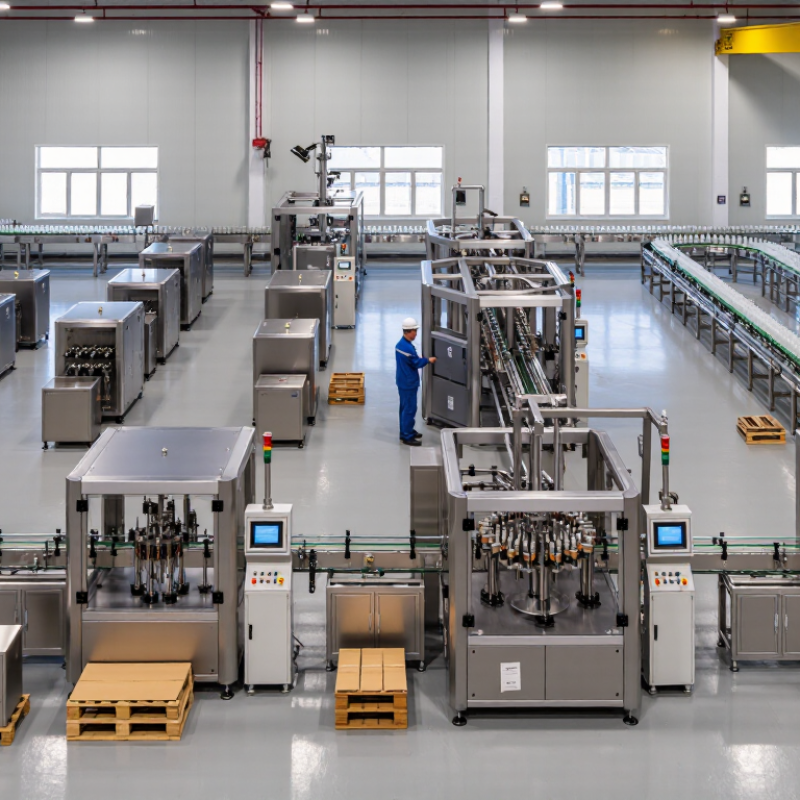
Define the Industry: China’s Packaging Sector Reached ¥1,156.4bn in 2023
China’s packaging sector generated ¥1,156.4 billion in revenue in 2023, according to the China Packaging Federation’s 2023 industry statistics. That figure covers a broad industrial base, including paper, plastics, metal, glass, and packaging machinery. It is not the value of packaging-machine sales alone. The distinction matters.
For equipment manufacturers, this scale points to substantial demand from factories handling food, personal care, medicines, and household goods. A busy filling line may run hundreds of containers per minute, while operators monitor seal quality, label alignment, and material waste. Buyers increasingly assess more than headline speed: changeover time, cleaning access, spare-parts availability, and integration with inspection systems can shape a machine’s real productivity. Small details count.
The sector’s size is clear, but revenue alone says little about margins or automation investment. The China Packaging Federation’s industry total does not separate machinery purchases from packaging-material sales. That is an imperfect measure of equipment demand. Still, it gives manufacturers useful context: China has a large packaging ecosystem, yet suppliers must verify demand by application, production scale, and after-sales requirements before recommending a line.
Classify Machinery by Function: Filling, Forming, Sealing, and Cartoning
China’s packaging-machine manufacturers are easier to compare by function than by broad claims of “full-line” capability. Filling machines meter liquids, powders, or granules into containers; check nozzle accuracy and product changeover time. Forming machines shape cartons, trays, or flexible packs from flat stock. Sealing units close packs with heat, pressure, or adhesive. Cartoners erect cartons, load products, and close flaps. Different jobs. One production line may combine all four, but speed is only useful when each machine handles the actual pack material and product consistently.
Market data helps frame the opportunity, not rank individual suppliers. Grand View Research estimated the global packaging machinery market at about USD 46.4 billion in 2023, with projected annual growth of 5.3% from 2024 to 2030. The International Federation of Robotics reported 276,288 industrial robot installations in China in 2023, around 51% of global installations. That figure indicates substantial automation activity; it does not prove packaging-specific expertise. Buyers should request test videos using their own containers, film, and product. Check changeover steps, seal integrity, fill-weight variation, and access to spare parts. A tidy brochure can hide awkward cleaning or slow format changes. I would verify those details on the factory floor.
Who Are the Top Packaging Machine Manufacturers in China? - Classify Machinery by Function: Filling, Forming, Sealing, and Cartoning
This table compares common packaging-machine functions and configurations. It focuses on equipment capabilities and package types rather than company or brand names.
| Machine Function | Primary Operation | Common Machine Types | Typical Package Formats | Common Materials or Products | Typical Controls and Checks | Common Line Connections |
|---|---|---|---|---|---|---|
| Filling | Measures and dispenses a specified amount of product into a container or package. | Liquid piston, pump, or gravity fillers; powder auger fillers; multihead weighers for granular products. | Bottles, jars, cans, cups, pouches, and bags. | Liquids, pastes, powders, granules, and free-flowing solid products. | Fill-volume or weight settings; container detection; no-container/no-fill functions; checkweighing where included. | Often paired with container unscramblers, conveyors, cappers, labelers, and case packers. |
| Forming | Shapes packaging material into a container or package before or during product loading. | Thermoformers for trays or cups; roll-stock pouch and bag formers; form-fill-seal machines. | Thermoformed trays and cups, sachets, pillow bags, and stand-up pouches. | Flexible films and laminates; thermoforming webs may use plastic sheet structures suited to the package design. | Film registration; forming-temperature settings; forming-depth or mold settings; web-tension control. | May connect directly to filling and sealing stations, or to denesters, conveyors, and downstream cartoning equipment. |
| Sealing | Closes a package to protect its contents and help maintain package integrity. | Heat sealers, continuous band sealers, tray sealers, induction sealers, and vacuum or modified-atmosphere sealers. | Film bags, pouches, lidded trays, cups, and bottles with compatible closures or liners. | Heat-sealable films, laminates, lidding materials, and compatible induction-seal liners. | Seal temperature, pressure, and dwell-time settings; some systems include vacuum or gas-flush controls and seal inspection. | Commonly installed after filling or forming and before labeling, coding, inspection, or cartoning. |
| Cartoning | Forms or erects cartons, loads products, and closes the cartons. | Horizontal cartoners for products loaded sideways; vertical cartoners for top-loaded products; carton erectors and closers. | Folding cartons and other carton formats designed for automatic erection and closure. | Paperboard cartons; products may include bottles, tubes, blister packs, pouches, and multipacks. | Carton-presence checks; product-in-carton detection; flap and closure monitoring; rejection of detected faults on equipped systems. | Often follows filling, sealing, labeling, or inspection and may feed case packing and palletizing equipment. |
Profile Leading Chinese Manufacturers by Product Range and Export Reach
China’s leading packaging machine manufacturers are best compared by line coverage, not catalog size alone. Some specialize in filling, capping, and labeling; others build cartoning, case-packing, and palletizing systems. A smaller group integrates several stages, including conveyors, inspection units, and changeover controls. Buyers should ask for product-specific throughput data, not just maximum speed. A fast machine may slow down when containers vary.
The China Packaging Federation reported that China’s packaging industry recorded about RMB 1.15 trillion in operating revenue in 2023. This figure covers the wider packaging industry, not machinery makers alone, but it signals a substantial domestic production base. Export reach needs separate checking. UN Comtrade records trade under categories such as HS 842230 for filling, closing, sealing, and labeling machinery. Destination data can help buyers assess whether a supplier ships beyond nearby markets. It does not prove local service quality.
For export-ready equipment, compare manuals, spare-part availability, electrical options, and remote support. Ask for references using similar packages and production speeds. Details matter. A line handling glass bottles may need different change parts from one handling pouches. Some supplier claims are hard to compare. That is worth questioning. A factory video shows a machine running, but not necessarily its sustained output, cleaning time, or performance after months of use.
Compare Suppliers Using Line Speed, Changeover Time, and Pack Accuracy
China offers packaging-machine suppliers across a wide range of capacities, but headline speed rarely predicts real output. PMMI’s 2023 State of the Industry report put U.S. packaging machinery shipments at $10.9 billion in 2022, up 7.5% year over year. That figure reflects investment, not guaranteed performance.
Ask each supplier to run your actual product and packaging material. Record good packs per minute across a sustained production run, including jams, rejects, and replenishment pauses. Speed alone misleads.
Changeover time deserves an observed test. Time a switch between two real formats, including tool changes, recipe loading, adjustments, and the first acceptable pack. Agree on start and stop points beforehand; otherwise, an “eight-minute changeover” may exclude important steps.
For pack accuracy, request sample results for fill-weight variation, seal quality, coding position, or component placement, depending on the package. Check the sample size and reject criteria, too.
A single perfect sample proves little. Compare results under the same product, operator, and shift conditions, then ask for repeat trials.
I would still treat supplier test data cautiously until production-floor results confirm it.
Verify Quality and Safety Credentials: ISO 9001, ISO 22000, and CE Marking
When comparing packaging machine manufacturers in China, treat certificates as evidence to inspect, not a shortcut to trust. ISO 9001 indicates a documented quality management system; it does not prove every machine will perform consistently. Ask for the current certificate, its issuing body, validity dates, and the precise company and factory listed. Check that its scope covers machine design or production, rather than an unrelated activity. Small detail, big difference.
For food-packaging lines, ISO 22000 may show that food-safety risks are managed across relevant processes. It does not automatically certify every material or finished package. Request the risk assessment, cleaning instructions, and material declarations for product-contact parts. CE marking applies to equipment placed on the European market under applicable requirements; ask for the EU Declaration of Conformity and supporting technical documentation. During a factory test, inspect guards, interlocks, emergency stops, and wiring labels. A neat file can still hide a weak build. Compare certificate details with the machine nameplate, then test the actual model at realistic speed and load. Paperwork can be difficult to interpret, but that uncertainty deserves attention—not a quick yes.
Related Posts
-
7 Best Packing Machines for Global Buyers?
-
Top 10 Carton Erecting Machines You Should Know About?
-
Elevating Global Standards with Best Package Machine from China
-
The Complete Guide to Mastering Food Packaging Machine Selection and Usage
-
Understanding the Benefits of Using a Pallet Dispenser for Your Warehouse Operations
-

Understanding the Challenges with Best Container Packaging Solutions